| Piú viste |

OPP-SOL012.jpgUndisturbed Soil - Sol 12 (natural colors; credits: Dr G. Barca)55 visitenessun commentoMareKromium
|
|
SOL807-2N198008906EFFAR00P1987R0M1.jpgPossible indirect evidence of Mars' "reddish" Sky - Sol 807 (MULTISPECTRUM; credits: Lunexit)55 visitenessun commentoMareKromium
|
|

ZZ-Mercury-Craters-Unnamed_Rayed_Crater-209510.jpgRayed Crater on Mercury55 visiteJust above and to the left of center of this image is a small crater with a pronounced set of bright rays extending across Mercury's surface away from the crater. Bright rays are commonly made in a crater-forming explosion when an asteroid strikes the surface of an airless body like the Moon or Mercury. But rays fade with time as tiny meteoroids and particles from the Solar Wind strike the surface and darken the rays. The prominence of these rays implies that the small crater at the center of the ray pattern formed comparatively recently.
This image is 1 in a planned set of 99. Nine different views of Mercury were snapped in this set to create a mosaic pattern with images in 3 rows and 3 columns. The WAC is equipped with 11 narrow-band color filters, and each of the 9 different views was acquired through all 11 filters. This image was taken in filter 7, which is sensitive to light near the red end of the visible spectrum (750 nm), and shows features as small as about 6 Km (about 4 miles) in size.
The MESSENGER team is studying this previously unseen side of Mercury in detail to map and identify new geologic features and to construct the Planet’s geological history.
Mission Elapsed Time (MET) of image: 108827618MareKromium
|
|
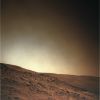
SOL1434-2N253666065EFFAX05F0006L0M1.jpgMartian Sky... (1) - Sol 1434 (MULTISPECTRUM; credits: Lunexit)55 visitenessun commentoMareKromium
|
|
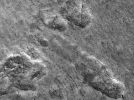
PSP_006690_2280_RED_abrowse-02.jpgFeatures of Acidalia Planitia (extra-detail mgnf)55 visiteThis HiRISE extra-detail mgnf (358 x 266 mt or 392 x 291 yards) shows incipient scalloped terrain in the Southern Slopes of the Crater.
Scalloped terrain — depressions with scalloped edges and polygonal fractures — has been interpreted as a sign of surface caving, perhaps due to sublimation (evaporation) of underlying ice.MareKromium
|
|

as15-86-11619.jpgAS 15-86-11619 - Hadley Rille Panorama (1)55 visiteCaption NASA:"Hadley Rille from the first Station 6 Sampling Site".MareKromium
|
|

Venusian_Atmosphere_and_the_Solar_Wind-Interaction.jpgInteraction between Venus and the Solar Wind55 visiteCaption ESA:"Mars, Earth and Venus are immersed in a flow of plasma, a ionised and highly variable gas originating from the Sun, called the Solar Wind. While Earth has a Planetary Magnetic Field, which can deviate its flow, Venus (and Mars) don’t.
Gases in the upper atmospheres of these Planets are ionised, and can thus interact with the Solar Wind. Venus is as large as Earth and it is difficult for its Atmosphere to escape due to the Planet’s Gravity. The Solar Wind is the best source of energy to accelerate the upper atmosphere’s charged particles, giving them enough energy to escape. This is why Venus loses its atmosphere due to interaction with the Solar Wind.
To understand this phenomenon, the key questions that the instruments studying plasma on Venus Express must answer are: what and how much of the Atmosphere is lost, and where is it lost? Right now, solar activity is at its minimum in the 11-year cycle, making the Solar Wind weaker than average.
The critical question now is how solar wind interacts with Venus when solar activity is low".MareKromium
|
|

Venus-South_Pole-00.jpgThe South Pole of Venus (False Colors; credits: ESA)55 visiteCaption ESA:"This is a false-colour image taken with the Venus Monitoring Camera (VMC) on board ESA’s Venus Express.
It shows the full view of the Southern Hemisphere from Equator (Dx) to the Pole.
The South Pole is surrounded by a dark oval feature. Moving to the right, away from the Pole and towards the Equator, we see streaky clouds, a bright mid-latitude band and mottled clouds in the convective Sub-Solar Region.
This image was taken in the ultraviolet at 365 nanometres on 23 July 2007 as Venus Express was about 35.000 Km from the Surface of the Planet".MareKromium
|
|

PSP_007043_2650-BLUE-MarsPolarDunes2_hirise_big-01.jpgSand Dunes Thawing on Mars (Natural Colors; credits: Lunexit)55 visitenessun commentoMareKromium
|
|
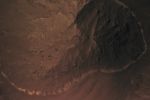
PSP_006969_1725_RED_abrowse-01.jpgThe Floor of Noctis Labyrinthus (extra-detail mgnf - MULTISPECTRUM; credits: Lunexit)55 visiteThe most striking feature of many of these knobs is a thin, bright band which often wraps around the edges near the bottom, as in this extra-detail mgnf. This image was acquired in order to investigate whether this is an exposed layer of rock or the shoreline of a former body of water.
HiRISE resolves details of the bright band that indicate that this is an unusual layer of rock, rather than an old shoreline. In several places, the band is broken up along cracks, sometimes forming boulders. This indicates that the band is solid rock, while material left on a shoreline should be loose sediments. It is now exposed as rings and arcs where erosion has cut deeply enough to expose the layer.
This band must indicate some unusual event in the geologic history of the region when a different type of rock was deposited; it is strikingly different in color from the other rocks. Although it is not a shoreline, it could be material that was deposited on the floor of a much older lake or sea and then buried by other rock; it could also have been laid down by other sedimentary processes or as volcanic ash.
MareKromium
|
|
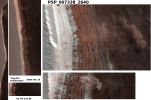
PSP_007338_2640_hires.jpgCaught in Action: Avalanches on North Polar Scarps (false colors; credits: NASA)55 visiteAmazingly, this image has captured at least four Martian avalanches, or debris falls, in action. It was taken on February 19, 2008, by the High Resolution Imaging Science Experiment (HiRISE) camera on NASA's Mars Reconnaissance Orbiter.
The image to the left shows the context of where these avalanches occurred, with white boxes indicating the locations of the more detailed image portions shown to the right. All images are false color. Material, likely including fine-grained ice and dust and possibly including large blocks, has detached from a towering cliff and cascaded to the gentler slopes below. The occurrence of the avalanches is spectacularly revealed by the accompanying clouds of fine material that continue to settle out of the air. The largest cloud (upper images) traces the path of the debris as it fell down the slope, hit the lower slope, and continues downhill, forming a billowing cloud front. This cloud is about 180 meters (590 feet) across and extends about 190 meters (625 feet) from the base of the steep cliff. Shadows to the lower left of each cloud illustrate further that these are three dimensional features hanging in the air in front of the cliff face, and not markings on the ground. Sunlight is from the upper right.
Cameras orbiting Mars have taken thousands of images that have enabled scientists to put together pieces of Mars' geologic history. However, most of them reveal landscapes that haven't changed much in millions of years. Some images taken at different times of year do show seasonal changes from one image to the next, however, it is extremely rare to catch such a dramatic event in action. (Another, unrelated, active process that has been captured by Mars cameras are dust devils.) Observing currently active processes is often a useful tool in unlocking puzzles of the past for scientists studying the Earth. Working from primarily still images, it is harder for scientists studying Mars to rely on this tool. The HiRISE image of avalanching debris is a very rare opportunity to directly do so.
The scarp in this image is on the edge of the dome of layered deposits centered on Mars' north pole. From top to bottom this impressive cliff is over 700 meters (2300 feet) tall and reaches slopes over 60 degrees. The top part of the scarp, to the left of the images, is still covered with bright (white) carbon dioxide frost which is disappearing from the polar regions as spring progresses. The upper mid-toned (pinkish-brownish) section is composed of layers (difficult to see here) that are mostly ice with varying amounts of dust. The darkest deposits below form more gentle slopes, less than 20 degrees, and are mainly composed of two materials: mid-toned layers, possibly ice-rich, that form small shelves, and more mobile, wide-spread, sand-sized dark material. The wavy forms on the flatter areas to the right are dunes.
The upper, steepest section, which appears highly fractured due to blocks pulling away from the wall, is the likely source zone for the falls. The precise trigger mechanism is not yet known, although the disappearance of the carbon dioxide frost, the expansion and contraction of the ice in response to temperature differences, a nearby Mars-quake or meteorite impact, and vibrations caused by the first fall in the area, are all possible contributors.
By comparing images taken before the fall (such as HiRISE image PSP_007140_2640) and after the fall, we may be able to see where material has disappeared from the steep scarp and where it has appeared on the gentler slopes below, possibly as larger blocks, diffuse streaks, or other debris deposits. By imaging this scarp throughout the polar summer, we may be able to determine how much material falls over a given time period. These observations would help determine how much, and at what rate, ice is being eroded from the cliff. Understanding the processes and rates of erosion will help determine how the polar landscape has evolved, and help reveal how volatiles, such as water and carbon dioxide ices and gases, move around Mars.
The precise composition of the ice-dust mixture making up layers in the upper, steepest section of scarp is not known. However, detailed measurements of the volume of material removed, the configuration of the source area, and the steepness of the slope can be used to estimate physical properties of the material that may relate to composition.
The complete image, HiRISE PSP_007338_2640, is centered at 83.7 degrees latitude, 235.8 degrees east longitude. The image was taken at a local Mars time of 1:05 PM and the scene is illuminated from the west with a solar incidence angle of 70 degrees, thus the sun was about 20 degrees above the horizon. At a solar longitude of 34.0 degrees, the season on Mars is northern spring.
NASA's Jet Propulsion Laboratory, a division of the California Institute of Technology in Pasadena, manages the Mars Reconnaissance Orbiter for NASA's Science Mission Directorate, Washington. Lockheed Martin Space Systems, Denver, is the prime contractor for the project and built the spacecraft. The High Resolution Imaging Science Experiment is operated by the University of Arizona, Tucson, and the instrument was built by Ball Aerospace and Technology Corp., Boulder, Colo.
MareKromium
|
|
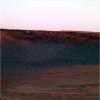
SOL068-1.jpgOn the Edge of Bonneville: the Heat-Shield - Sol 68 (True Colors; credits: Dr G. Barca)55 visitenessun commentoMareKromium
|
|
| 25353 immagini su 2113 pagina(e) |
 |
|
|
|
|
1870 | |
|
|
|
|





