| Piú viste |
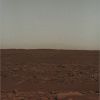
SOL068-x_pubeng_gusev_rim_sol68_full-A093R1.jpgThe Foggy Rim of Gusev Crater - Sol 68 (Natural Colors; credits for the additional process. and color.: Dr Paolo C. Fienga - Lunexit Team)197 visitenessun commentoMareKromium
|
|

North_Polar_Regions-The_Erg-M2300963-PCF-LXTT.jpgFeatures of the North Polar Erg (Absolute Natural Colors; credits for the additional process. and color.: Dr Paolo C. Fienga - Lunexit Team) 197 visitenessun commentoMareKromium
|
|

Craters-Benedictus_XVI_Crater-PIA07838-PCF-LXTT.jpgImpact Crater with Frost Deposits (Benedictus XVI Crater - Absolute Natural Colors; credits for the additional process. and color.: Dr Paolo C. Fienga - Lunexit Team) 197 visiteLocation near: 37,5° South Lat. and 222,1° West Long.
Image width: ~3 Km (~1,9 mi)
Illumination from: upper left
Season: Southern WinterMareKromium
|
|

Phlegra_Montes-PIA08743-2-PCF-LXTT.jpgFeatures of Phlegra Montes (1 - Absolute Natural Colors; credits for the additional process. and color.: Dr Paolo C. Fienga - Lunexit Team)197 visiteImage information: VIS instrument;
Latitude: 45,6° North;
Longitude: 168,7° East;
Resolution: 19 meter/pixel.MareKromium
|
|

ESP_023766_1905_RED_abrowse.jpgDark Area on the Floor of an Unnamed Northern Crater (Absolute Natural Colors; credits for the additional process. and color.: Dr Paolo C. Fienga - Lunexit Team)197 visiteMars Local Time: 14:11 (Early Afternoon)
Coord. (centered): 10,3° North Lat. and 312,1° East Long.
Spacecraft altitude: 280,0 Km (such as about 175,0 miles)
Original image scale range: 56,0 cm/pixel (with 2 x 2 binning) so objects ~ 1 mt and 68 cm across are resolved
Map projected scale: 50 cm/pixel
Map projection: EQUIRECTANGULAR
Emission Angle: 9,0°
Phase Angle: 27,6°
Solar Incidence Angle: 36° (meaning that the Sun is about 54° above the Local Horizon)
Solar Longitude: 348,7° (Northern Winter)
Credits: NASA/JPL/University of Arizona
Additional process. and coloring: Dr Paolo C. Fienga - Lunar Explorer ItaliaMareKromium
|
|
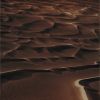
OPP-SOL198-1P145765040EFF3505P2554L2M1.jpgThe "Muddy Dunes" inside Endurance Crater - Sol 198 (Absolute Natural Colors; credits for the additional process. and color.: Dr Paolo C. Fienga - Lunexit Team)197 visitenessun commentoMareKromium
|
|
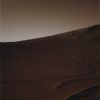
OPP-SOL212-1N147014572EFF35BGP1926L0M1.jpgThe Rim of Endurance Crater at Sunset - Sol 212 (Absolute Natural Colors; credits for the additional process. and color.: Dr Paolo C. Fienga - Lunexit Team)197 visitenessun commentoMareKromium
|
|

Dunes-PIA14880.gifDegrading North Polar Barchan-type Dune (a GIF-Movie by NASA/JPL-Caltech/Univ. of Ariz./JHUAPL)197 visitenessun commentoMareKromium
|
|
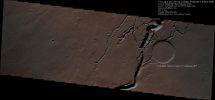
Channels-Iberus_Vallis-ECX-20080220a.jpgUnusually-looking Surface Feature near Iberus Vallis (Natural Colors; credits for the additional process. and color.: Dr Paolo C. Fienga - Lunexit Team) 197 visitenessun commentoMareKromium
|
|
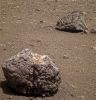
OPP-SOL2716-MF-LXTT.jpgPossible Ejecta-Boulders near Endeavour's Rim - Sol 2716 (RAW Natural Colors; credits for the additonal process. and color.: Dr Marco Faccin - Lunar Explorer Italia)197 visitenessun commentoMareKromium
|
|

OPP-SOL1099-1P225751618ESF790EP2139R1M1-4.jpgIce or Diamond? - Sol 1099 (EDM - Enhanced Natural Colors; credits for the add. process. and color.: Dr Paolo C. Fienga/LXTT/IPF)197 visitenessun commentoMareKromium
|
|
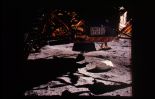
APOLLO 11 AS 11-40-5864.jpgAS 11-40-5864 - A detail of the Lunar Module (5)196 visite...E' quindi molto probabile che la luminosità diffusa percepibile nelle fotografie che ritraggono aree situate "all'ombra" sia causata proprio dall'estrema luminosità che caratterizza le zone della Luna che restano esposte alla diretta illuminazione del Sole.
Non è forse vero che una superficie altamente riflettente, allorchè intensamente illuminata, è, a sua volta, in grado di illuminare (diremmo "di rimbalzo") altre porzioni di superficie situate all'ombra? Non è un fenomeno raro, se ci pensate...
|
|
| 25353 immagini su 2113 pagina(e) |
 |
|
|
|
|
187 | |
|
|
|
|





