| Piú viste |
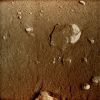
PHOE-SOL005-lg_1015.jpgSmall Rocks in a Greenish/Reddish Soil - Sol 5 (MULTISPECTRUM; credits: Lunexit)55 visitenessun commentoMareKromium
|
|
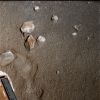
PHOE-SOL005-233915main_SS005EFF896647184_1170ER1M1-2-3.jpgSmall Rocks in a Greenish/Reddish Soil - Sol 5 (Superdefinition; credits: Dr G. Barca)55 visitenessun commentoMareKromium
|
|

PHOE-SOL006-lg_1300.jpgIn the Sky over Vastitas Borealis... - Sol 6 (MULTISPECTRUM; credits: Lunexit)55 visiteM.L.S.T. (Mars Local Solar Time): 12:59:34
Camera Elevation: 83,7873°
Azimuth: 208,49°
MareKromium
|
|

PHOE-SOL006-lg_1023-1024-1025.jpgVastitas Borealis - Sol 6 (Natural Colors + MULTISPECTRUM; credits: Dr Gianluigi Barca & Lunexit)55 visitenessun commentoMareKromium
|
|

PHOE-SOL007-lg_1362-1363-1364.jpgFrost? Salt? Or just over-saturation?!? - Sol 7 (Superdefinition; credits: Dr G. Barca)55 visitenessun commentoMareKromium
|
|
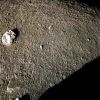
PHOE-SOL008-lg_2336-2337-2342.jpgThe soil of Vastitas Borealis - Sol 8 (Natural Colors + MULTISPECTRUM; credits: Dr Gianluigi Barca & Lunexit)55 visitenessun commentoMareKromium
|
|
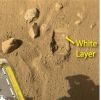
PHOE-SOL009-lg_3074.jpgToo Little and Too Late: ICE on Mars, according to NASA - Sol 9 (Approximate Colors; credits: NASA/JPL/Univ. of Arizona - Texas A&M)55 visiteE ancora una volta la NASA (la GRANDE NASA!) arriva in ritardo. Addirittura con quasi un giorno pieno di ritardo! Il "White Layer" che vedete qui indicato, infatti, è stato anticipato da Lunar Explorer Italia nella giornata di ieri e la NASA, con frame analogo a questo, ma con "bad processing" aveva già mostrato questo frame due giorni fa, MA SENZA IL WHITE LAYER! Se ricordate - ma potete verificarlo semplicemente - noi abbiamo usato questo frame NASA per costruire un mini-collage e mostrarVi la netta differenza esistente fra il Processing Lunexit (con e senza MULTISPECTRUM) ed il Processing NASA (tendenzialmente produttivo di quadri monocolori).
Che dire? Come "suggerisce" il titolo che abbiamo dato a questo quadro, una bella dedica alla NASA, alla University of Arizona ed alla Texas A&M: "troppo poco e troppo tardi"!...(specie considerando, giova ripeterlo, le "professionalità" ed i "mezzi" che gli Amici Americani si ritrovano...)MareKromium
|
|

PHOE-SOL009-lg_2750-2751-2752.jpgOne "scoop" of Vastitas... - Sol 9 (True Colors; credits: Dr Gianluigi Barca)55 visitenessun commentoMareKromium
|
|

PHOE-SOL013-lg_3450.jpgOxidation, Evaporation or Sublimation? - Sol 13 (Superdefinition; credits: Dr M. Faccin)55 visiteCurioso...La Macchia Bianca, che nei giorni scorsi ci ha tanto intrigato, ora sembra essere diventata una "chiazza nera", per altro assai ben definita.
Questo cambiamento sarà attribuibile ad un errore umano (un errore nostro, nella fattispecie) occorso durante l'additional processing, oppure è stato proprio il nostro additional processing ad aver messo, di fatto, in luce un comportamento "curioso" da parte di un elemento che, sintanto che era confinato nel sottosuolo di Marte, aveva determinate caratteristiche (exx: di colore e consistenza) e che poi, una volta portato alla luce (e messo a contatto con la "difficile" atmosfera del Pianeta), è "mutato"?
E se fosse stato effettivamente del ghiaccio, la "chiazza scura" che vediamo adesso che cosa dovrebbe rappresentare?
Forse il residuo di una evaporazione o di una sublimazione?
E se invece si trattasse di una ossidazione? "Che cosa" si sarebbe potuto ossidare?...
Domande, domande, domande...MareKromium
|
|
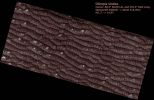
Psp_001736_2605_red.jpgThe Dunes of Olympia Undae (MULTISPECTRUM; credits: Lunexit)55 visiteThis HiRISE image shows dark dunes and light polygonal terrain in Olympia Undae, also known as the North Polar Erg.
Two sets of dunes are obvious. The major set trends ~North-South, indicating winds from the East or West. Between the crests of these dunes is a second set oriented mostly East-West.
Zooming in on the dunes, a rippled texture is apparent, probably due to redistribution of sand at the scale of meters and less. Near the crests of some dunes are channel-like features, with some branching downslope.
The origin of these channels is unknown, but they may result from the flow and displacement of sand that was fluidized by sublimating CO2 or water frost.
Bright patches of ground are found in some inter-dune areas, with many having a polygonal texture. Polygons on Earth form from contraction induced by stresses from dehydration, cooling, and other processes, so these features may have a similar origin.
The CRISM instrument on MRO and OMEGA on Mars Express indicates that many dunes in Olympia Undae are rich in the mineral gypsum. MareKromium
|
|
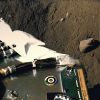
PHOE-SOL013-lg_3315-3316-3317-D.jpgLander and Surface - Sol 13 (Superdefinition + MULTISPECTRUM; credits: Dr G. Barca & Lunexit)55 visitenessun commentoMareKromium
|
|

ZZ-Mercury-Global_View_of_the_Surface-PIA10607.jpgMercurian Symphony (MULTISPECTRUM-2; credits: Lunexit)55 visiteCaption NASA:"When Mariner 10 flew by Mercury in 1974, morning sunlight was just striking Mozart Crater so that most of the feature was hidden in darkness near the Terminator. During MESSENGER's Mercury flyby on January 14, 2008, Mozart was in full sunlight, allowing the Crater to be seen in detail for the first time, as shown in this image snapped by the Narrow Angle Camera (NAC) of the Mercury Dual Imaging System (MDIS). Named in honor of the classical composer Wolfgang Amadeus Mozart, Mozart is the large crater near the center of the image. The Crater's diameter is about 225 Km (such as approx. 140 miles). The arc of dark hills visible on the Crater's floor probably represents remnants of a central peak ring, similar to that shown in the January 30 image release (PIA10378). Clues to the origin of the dark material on the peak ring and the curious dark streaks radiating outward from the Crater will be provided by 11-color image data collected by the Spacecraft's Wide Angle Camera (WAC).
A close inspection of the area around Mozart Crater shows many long chains of secondary craters, formed by impact of material thrown out during the formation of the main crater.
Mozart Crater is located just South of the Caloris Basin and can be identified in the false color image previously released (PIA10398).
Members of the MESSENGER Science Team are currently studying and characterizing the small craters on Mercury in order to provide new insight into the cratering process as it operates on the different planets in the Solar System.
Image Mission Elapsed Time (MET): 108830250
MareKromium
|
|
| 25353 immagini su 2113 pagina(e) |
 |
|
|
|
|
1867 | |
|
|
|
|





