| Piú viste |

SOL332-2N155845271EFF9946P0653R0M1-00.jpgExtremely recent fracture? - Sol 332 (CTX frame - credits: Ivana Tognoloni)55 visiteAncora da Ivana Tognoloni, sempre molto brava, un interessante dettaglio superficiale il quale sembra costituire l'evidenza visiva di un "crack" (e cioè una frattura) occorso assai di recente.
Una frattura, tra l'altro, molto curiosa nelle sue linee - osservate la spigolosità dell'ombra centrale soprattutto - ed alquanto bizzarra allorchè contestualizzata (la roccia "scheggiata", infatti, sembra "poggiare" su un altro sasso il quale, tutto sommato, ne condivide - a grandi linee - le caratteristiche fisiche esteriori e l'albedo).
Un tempo, ci chiediamo, le due rocce erano "una"?
E quanto tempo fa il macigno si è fratturato?
E perchè?
E, soprattutto, si trattava realmente di un "macigno", nel senso Terrestre del termine?...MareKromium
|
|

Asteroids-Asteroid_1994-CC-PIA12134.jpgTriple Asteroid 1994-CC55 visitenessun commentoMareKromium
|
|

Asteroids-Asteroid_1994-CC-PIA12134.gifTriple Asteroid 1994-CC in motion (GIF-Movie; credits: NASA/JPL/GSSR)55 visiteCaption NASA:"Radar imaging at NASA's Goldstone Solar System Radar on June 12 and 14, 2009, revealed that near-Earth Asteroid 1994-CC is a Triple System.
Asteroid 1994 CC encountered Earth within 2,52 MKM (such as 1,56 MMs) on June 10. Prior to the flyby, very little was known about this celestial body. 1994 CC is only the second Triple System known in the near-Earth population. A team led by Marina Brozovic and Lance Benner, both scientists at NASA's Jet Propulsion Laboratory in Pasadena, Calif., made the discovery.
1994-CC consists of a central object about 700 meters (2300 feet) in diameter that has two smaller moons revolving around it. Preliminary analysis suggests that the two small satellites are at least 50 meters (164 feet) in diameter.
Radar observations at Arecibo Observatory in Puerto Rico, led by the center's director Mike Nolan, also detected all 3 objects, and the combined observations from Goldstone and Arecibo will be utilized by JPL scientists and their colleagues to study 1994-CC's orbital and physical properties.
The next comparable Earth flyby for Asteroid 1994-CC will occur in the year 2074 when the space rock trio flies past Earth at a distance of about 2,5 MKM (such as approx. 1,6 million miles). Of the hundreds of near-Earth asteroids observed by radar, only about 1% are Triple Systems".MareKromium
|
|
The_Rings-N00139376_to_97.gifSurfing through the Rings... (GIF-Movie; credits: Dr M. Faccin)55 visitenessun commentoMareKromium
|
|

OPP-SOL1998-GB.jpgBlock Island in Natural Colors - Sol 1998 (credits: Dr G. Barca)55 visitenessun commentoMareKromium
|
|

Rhea-PIA11550.jpgRhea (Natural Colors; credits: Lunexit)55 visiteCaption NASA:"The battered features of the moon Rhea, seen at low phase, appear washed out by the Sun.
This view looks toward the Saturn-facing side of Rhea at a Sun-Rhea-Spacecraft, or Phase, Angle of 15°. To see Rhea at an even lower phase angle -- near opposition -- see PIA10542.
North on Rhea is up and rotated 7° to the left.
The image was taken in Visible Light with the Cassini spacecraft narrow-angle camera on May 26, 2009. The view was obtained from a distance of approx. 1,4 MKM (such as about 870.000 miles) from Rhea.
Image scale is roughly 9 Km (approx. 5,5 miles) per pixel".MareKromium
|
|

OPP-SOL2001-2003-MF-LXT-PANCAM1.jpgViews of Block Island (Natural - but enhanced - Colors; credits: Dr Marco Faccin & Lunexit)55 visiteQuattro splendide elaborazioni: tecnicamente perfette.MareKromium
|
|

TheRings-GIF-W00059891.gifSaturn's "Moons-Carousel" (GIF-Movie; credits: Dr G. Barca)55 visitenessun commentoMareKromium
|
|
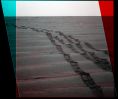
OPP-SOL2006-PANCAM-MF-3D.jpgParis-Dakar...via Mars! - Sol 2006 (by Dr M. Faccin)55 visite...Parigi - Dakar "via" Marte?... E perchè no?!? In fondo, è solo questione di "mezzi" e di "tempo"...MareKromium
|
|
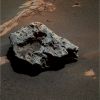
OPP-SOL2003.jpgBlock Island in Natural Colors - Sol 2003 (credits: Dr G. Barca)55 visitenessun commentoMareKromium
|
|
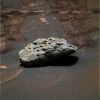
OPP-SOL2001.jpgBlock Island in Natural Colors - Sol 2001 (credits: Dr G. Barca)55 visitenessun commentoMareKromium
|
|

OPP-SOL2001-MF-LXT-3.jpgDeep inside "Block Island" - Sol 2001 (Superdefinition & Multilayer; credits: Dr M. Faccin)55 visitenessun commentoMareKromium
|
|
| 25353 immagini su 2113 pagina(e) |
 |
|
|
|
|
1865 | |
|
|
|
|





