| Piú viste |

SOL491-2P169942343EFFAAEEP2423L5M1.jpgVolcanic rocks in a NON-Volcanic environment? - Sol 491 (natural colors; elab. Lunexit)55 visitenessun commentoMareKromium
|
|
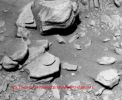
SOL1360-6.jpgThe "Evolution" of the Vent... (3) - Sol 136055 visitenessun commentoMareKromium
|
|
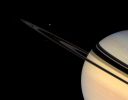
Saturn-PIA09776.jpgJust like the Solar System!55 visiteCaption NASA:"Saturn's icy satellites wheel about the colorful Giant Planet, while the Rings shine dimly in scattered sunlight. The Ringed Planet is, in many ways, a laboratory for investigating the history of our Solar System and how planets form around other stars. There are 4 moons visible in this view. Tethys (1071 Km, or 665 miles across), largest in the scene, is on the far side of the Ring-Plane. Mimas (397 Km, or 247 miles across), is the one on the near side of the Rings, below Tethys. Janus (181 Km, or 113 miles across), is left of the Rings' edge. Pandora (84 Km, or 52 miles across) is a speck below the Rings' edge, between Janus and Mimas. Mimas casts a shadow onto Saturn's bluish Northern Hemisphere.
This view looks toward the unilluminated side of the Rings from about 2° above the Ring-Plane. Images taken using red, green and blue spectral filters were combined to create this natural color view. The view was acquired with the Cassini spacecraft wide-angle camera on Oct. 30, 2007.
The view was taken at a distance of approx. 2,6 MKM (such as about 1,6 MMs) from Saturn.
Image scale is roughly 153 Km (about 95 miles) per pixel on the Planet".MareKromium
|
|
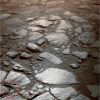
OPP-SOL1339-1P247059974EFF8788P2393R1M1-1~0.jpgUnusual Surface Feature inside Victoria Crater (context frame - MULTISPECTRUM) - Sol 133955 visiteNella Cerchiatura Rossa, individuata dal Dr Gianluigi Barca (che salutiamo con grande affetto!) una curiosa surface feature.
Nessuna Anomalìa, ovviamente: solo una "stranezza", che vale la pensa di guardare.MareKromium
|
|

PSP_005813_2150_RED_abrowse.jpgUnusual Depression near Elysium Mons (MULTISPECTRUM; elab. Lunexit)55 visiteThis unusual depression and the associated concentric rings are situated within an area thought to have been deposited as a mud flow. Due to the lack of a distinctive, raised rim or other impact-related features, this crater is thought to have formed by the loss of material below the surface and subsequent collapse, rather than by an impact from space.
The exact mechanism for the loss of material is not fully understood, although the missing material was likely water in some form. This feature is near a large volcano, so perhaps there were explosive magma-water interactions that violently removed the water and some magma, followed by surface collapse. Or, less violently, there could have been simple melting of subsurface ice and then collapse of the surface into the resulting void. The rays emanating from the depression suggest some amount of violence before the surface collapse that sprayed material far from the depression.
Some aspects of this and other, nearby features are similar to the collapse pits associated with Grímsvötn volcano in Iceland, which erupts beneath an ice-cap. However, there are no rays formed during the eruptions at Grímsvötn.
MareKromium
|
|
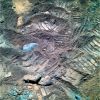
SOL1387-2P249497499EFFAWNSP2552L6M1-1.jpgRover Tracks and colored Pebbles - Sol 1387 (natural colors; elab. Dr Marco Faccin)55 visitenessun commentoMareKromium
|
|

SOL278-1.jpgJust like true Hierogliphs! - Sol 27855 visiteUna segnalazione davvero curiosa e stimolante, da parte del nostro Amico e Socio Lorenzo Leone: nel rettangolo rosso (in alto a Dx), una - davvero stranissima - serie di "incisioni" sulla roccia.
Si tratta, con ogni probabilità (anzi: diremmo certamente), di uno scherzo di luci ed ombre e di un effetto ottico derivante dalla non eccezionale qualità del frame.
Di questo tipo di rilievi potremmo parlare per un secolo senza, purtroppo, arrivare a nulla e allora, in sede di commento, citiamo le parole di Lorenzo:"...E' possibile che Marte abbia delle rocce così particolari e caratteristiche come evidenziato nel quadrato rosso? Forse si, ma è davvero bizzarra la natura geologica di Marte. Se si guarda, per quanto possibile, quei dettagli, sicuramente rocciosi, si noterà una certa simmetria: 4 sfere laterali e una linea retta centrale. Geroglifici? Fossili? Natura bizzarra? Chi lo sa. Io so solo che rimango sempre incuriosito e dubbioso...".
Anche noi.
Un carissimo saluto e COMPLIMENTI a Lorenzo Leone per il "colpo d'occhio"!MareKromium
|
|

SOL054-2P131160375EFF1129P2429L6M1-1.jpgHumphrey - Sol 54 (natural colors - elab. Dr Marco Faccin)55 visitenessun commentoMareKromium
|
|

OPP-SOL1363-2.jpgVictoria's Paving (MULTISPECTRUM; elab. Lunexit) - Sol 136355 visitenessun commentoMareKromium
|
|
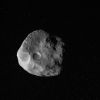
Epimetheus-N00098337.jpgEpimetheus (1)55 visiteCaption NASA:"N00098337.jpg was taken on December 03, 2007 and received on Earth December 04, 2007. The camera was pointing toward EPIMETHEUS that, at the time, was approx. 39.290 Km away, and the image was taken using the P120 and GRN filters.
This image has not been validated or calibrated".MareKromium
|
|

SOL813-GIFMovie.gifWaiting for "something" to happen... - Sol 813 (GIF-Movie; credits: Dr Marco Faccin)55 visiteDurante le peregrinazioni dei due Rover (ma, soprattutto, durante la marcia di Spirit) ci siamo imbattuti tante volte i rilievi curiosi i quali, se li avessimo trovati sulla Terra, non avremmo esitato un solo istante a definirli "tane". Già, se fossimo stati sulla Terra. Ma su Marte? Come fare a parlare di "tane" su Marte, senza risultare - quanto meno... - un pò "naif" e sprovveduti? Eppure, dato che a noi piace, di quando in quando, essere "naif", abbiamo deciso di lanciarVi una provocazione: e se il rilievo che vediamo in questo frame fosse REALMENTE una tana? E se l'ipotesi "tana" l'avessero avanzata anche i nostri Amici di Pasadena? Come spiegare, altrimenti, la ripresa effettuata da Spirit e che viene qui montata in un suggestivo GIF-Movie dal bravissimo Dr Faccin?
Ma lasciamo che sia Marco a parlare e poi Voi, se vorrete, scriveteci quello che pensate:"...l'"aspetto" è una tecnica di pesca subacquea, praticata dagli apneisti: ci si posiziona in prossimità di una tana tra gli scogli, si sta fermi, con l'arbalete puntato, a pelo d'acqua e con il boccaglio - ovviamente - fuori, così l'attesa può proseguire anche per parecchio tempo. Qua Pasadena ha fatto la stessa cosa:
l'"aspetto" alla tana. Ovviamente non è uscito un pesce, ma i tecnici - a mio parere - aspettavano.....qualcosa. Le riprese vanno dalle ore 11:55:24 alle 12:02:57 MLT.
E questi sono i fatti: il Rover era fermo e si nota il dondolio provocato dal vento o dall'oscillazione indotta dai suoi movimenti "interni" (anche se sono propenso per il vento - del resto la pancam offre un certo effetto "vela". E questo è tutto".
E, a nostro avviso, questo è già moltissimo. Forse da Pasadena non si aspettavano, come dice l'ottimo Dr Faccin, un "pesce" ma - chissà? - un getto di fumo, del vapore, un "segno" di vita o di movimento di un qualche tipo, insomma.
La nostra sensazione - e lo sapete da tempo - è che esista qualcosa di "vivo" (o, quantomeno, di "attivo" e di "mobile") al di sotto della superficie di Marte. E, sempre a nostro parere, una tale sensazione ce l'hanno anche a Pasadena...Sebbene non lo vogliano ammettere (e, probabilmente, non lo ammetteranno mai).
Complimenti al Dr Faccin, quindi: splendido Lavoro e splendida "provocazione"!...MareKromium
|
|

as16-107-17422.JPGAS 16-107-17422 - Beautiful Desolation (3)55 visitenessun commentoMareKromium
|
|
| 25353 immagini su 2113 pagina(e) |
 |
|
|
|
|
1857 | |
|
|
|
|





