| Piú viste |
SOL068-7-MERA_Bonneville_360_L256-A129R1.jpgBonneville Crater and a 360° panorama (7) - Sol 6854 visitenessun commento
|
|
SOL068-9-MERA_Bonneville_360_L256-A129R1.jpgBonneville Crater and a 360° panorama (9) - Sol 6854 visitenessun commento
|
|

Rhea-PIA07517.jpgRhea and the Rings54 visiteCaption NASA originale:"Saturn's brightly sunlit moon Rhea commands the foreground in this image from Cassini; the Gas Giant Planet's Rings are discernible in the background. The spacecraft was just above the Ringplane when it acquired this image, and thus captured the darkened appearance of the dense B-Ring when viewed with sunlight filtered through the Rings. From this perspective, bright areas in the Rings are regions of low density, containing very small particles that effectively scatter light toward Cassini.
North on Rhea is up and rotated about 25° to the left. This view shows principally the anti-Saturn hemisphere on Rhea. It is very clear that the right side of Rhea is highly overexposed.
The image was taken in visible light with the Cassini spacecraft narrow-angle camera on Feb. 18, 2005, at a distance of approx. 540.000 Km (such as approx 340.000 miles) from Rhea and at a Sun-Rhea-spacecraft, or phase, angle of 110°. The image scale is 3 Km (2 miles) per pixel".
|
|

SOL505-2M171194244EFFAAIIP2959M2M1.jpgWhat is that light? - Sol 50554 visiteChe cosa si vede in questo frame? Che cos'è quella macchia chiara e di consistenza - apparentemente - granulare che si vede in basso a Dx? Che cosa dovrebbe illustrare, spiegare o dimostrare questa immagine?
I Vostri suggerimenti saranno apprezzati...
|
|

Titan-Cryovolcanism-00.jpgCryovolcanism on Titan? (1)54 visiteDa "NASA - Picture of the Day" del 10 Giugno 2005:" Investigators suspect the newly discovered domed feature detailed in the next frame is an ice volcano, or cryovolcano, seen in infrared light (...). Since Titan's surface temperature is around -180° C, 'lava' welling up to form the volcanic mound would be icy indeed - possibly a slurry of methane, ammonia and water ice combined with other ices and hydrocarbons. The circular feature is roughly 30 Km in diameter. If its volcanic nature is confirmed, the discovery of cryovolcanism on Titan could explain the origin of methane in Titan's atmosphere".
A nostro parere quest'idea del fenomeno crio-vulcanico (e della 'lava di ghiaccio') su Titano è solo un'altra - orrenda - 'boutade' NASA la quale, pur di riuscire a NON staccare nemmeno un mattoncino dalla Cattedrale della Scienza Consolidata, si aggrappa - tentando di spiegare in maniera rassicurante le nuove ed incredibili fenomenologie che lo Spazio ci offre quasi ogni giorno - alle ipotesi più fantasiose.
|
|

Titan-Cryovolcanism-02.jpgCryovolcanism on Titan? (3)54 visiteInsomma: è più "credibile" che la nostra Scienza sia ancora fortemente limitata ed il nostro Sapere ancora - purtroppo - molto lontano dal potersi definire capace di interpretare con assoluta accuratezza una buona parte dei fenomeni che accadono nel nostro (piccolo) Sistema Solare e quindi nell'Universo oppure dobbiamo arrenderci all'idea che ormai 'abbiamo capito tutto' (o 'quasi tutto'...) e che ogni fenomeno è spiegabile facendo ricorso ad una macchina fotografica, ad uno spettrometro ad infrarossi ed a qualche altro aggeggio elettronico dalla sigla impossibile a pronunciarsi?
Scienza non è solo calcolo ma è anche (e forse soprattutto...) riflessione, umiltà, senso comune, capacità di meravigliarsi, capacità di dire - talvolta - "non sappiamo, non abbiamo idea di che cosa stiamo guardando".
Pensateci sopra...
|
|
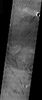
Aeolian_Features-Windstreaks-PIA03935-00.jpgWindstreaks (Natural Colors; credits for the additional process. and color.: Dr Paolo C. Fienga - Lunexit Team)54 visiteCaption NASA originale:"Windstreaks are features caused by the interaction of Wind and Topographic Landforms. The raised Rims and Bowls of Impact Craters cause a complex interaction such that the Wind Vortex in the Lee (--->sedimento) of the Crater can both scour away the Surface Dust and deposit it back in the center of the Lee. If you look closely, you will see evidence of this in a darker Rim enclosing a brighter interior. These Windstreaks are located in the region between Gordii Dorsum and Amazonis Mensa".
Image information: VIS instrument;
Latitude 23,2° North;
Longitude 237,1° East (such as 122,9 West);
Resolution: 36 meter/pixel.
|
|

Aeolian_Features-Windstreaks-PIA03932.jpgWindstreaks near Meroe Patera (Original NASA/2001 Mars Odyssey Orbiter b/w Frame)54 visiteCaption NASA originale:"These Windstreaks are located on the Lava Flows of Meroe Patera, Syrtis Major Planum Region".
Image information: VIS instrument
Latitude 5,7; Longitude 73,2 East (286,8 West)
36 meter/pixel resolution
|
|

OPP-SOL490-1N171685707EFF55TQP1919L0M1.jpgGoing to Erebus Crater - Panorama of Sol 490 (2)54 visitenessun commento
|
|

Chasmas-Melas_Chasma-01.jpgSample scarp edge in layered unit in Melas Chasma or... Frozen Waterfalls on Mars? (1)54 visiteMuovendoci sulla strada indicata dal Dr J.P. Skipper (Mars Anomaly Research), abbiamo visitato il seguente indirizzo: www.msss.com/moc_gallery/m07_m12/images/M11/M1100111.html
ed abbiamo prelevato l'immagine (o la 'striscia', se preferite) "MGS-MOC Narrow-Angle Image M11-00111" che vedete in questo primo frame. Come per la maggior parte delle immagini MGS-MOC, è difficile notare qualcosa "a prima vista" (a parte l'assoluta enigmaticità del paesaggio ripreso...), a meno che non si sappia esattamente dove andare a guardare. Noi, grazie al lavoro già svolto dal Dr Skipper, lo sapevamo ed allora, con un pizzico di pazienza e di buona volontà, siamo andati a recuperare i dettagli di qualcosa che 'sembra' essere un vero e proprio sistema di cascate gigantesche e...Completamente ghiacciate. L'immagine originale è enorme per le nostre capacità e quindi abbiamo dovuto 'spezzarla' in tre sezioni, una più spettacolare dell'altra.
Dal prossimo frame, inizieremo fornendoVi alcuni dati tecnici di assoluta importanza.
|
|

OPP-SOL488-1N171504971EFF55TIP1700L0M1.jpgOut of 'Purgatory', straight to 'Heaven'?!? (1) - Sol 48854 visiteLa duna che avrebbe tenuto Opportunity imprigionata per 5 settimane è stata battezzata - con una scelta finalmente felice dobbiamo dire - la Dune del Purgatorio.
Bene: dato che Opportunity ha 'espiato' i suoi peccati ed è uscita dal Purgatorio, la logica deduzione che dovremmo trarne è che essa, ora, si dirigerà senza più indugiare verso il Paradiso. Un Paradiso chiamato Erebus, prima, e Vistoria, poi.
Ce la farà?
Saremo sinceri - e speriamo di sbagliarci - e Vi diremo che la nostra sensazione è che Opportunity, difficilmente, conseguirà entrambi gli obbiettivi. La motivazione, al di là di qualche sospetto relativo ad un possibile 'intervento umano', è nel fatto che Opportunity si muove, a giudicare dalle tracce che lascia dietro di sè, 'trascinandosi' almeno 1 ruota, se non addirittura 2.
E' ovvio che il ruolo di 'Profeti di Sciagura' non ci piace, ma una delle nostre (e più importanti) linee-guida consiste nel dire sempre quello che pensiamo, anche a rischio di sbagliare e di fare brutte figure...
|
|

OPP-SOL488-1N171505070EFF55TIP1700L0M1.jpgOut of 'Purgatory', straight to 'Heaven'?!? (2) - Sol 48854 visitenessun commento
|
|
| 25353 immagini su 2113 pagina(e) |
 |
|
|
|
|
1822 | |
|
|
|
|





