| Piú viste |

as07-04-1558.jpgAS 07-04-1558 - Looking out...55 visitenessun commentoMareKromium
|
|
as15-98-13399.JPGAS 15-98-13399 - Solar Corona (Window Calibration)55 visitenessun commentoMareKromium
|
|

ZZ-Mercury-Caloris_Basin.jpgCaloris Basin: fascinating "Rayed Crater" or an extremely old "Shield Volcano"?55 visiteThe NAC of the MDIS on the MESSENGER Spacecraft obtained HR images of the floor of the Caloris Basin on January 14, 2008. Near the center of the basin, an area unseen by Mariner 10, this remarkable feature – nicknamed “The Spider” by the Science Team – was revealed. A set of troughs radiates outward in a geometry unlike anything seen by Mariner 10. The radial troughs are interpreted to be the result of extension (breaking apart) of the floor materials that filled the Caloris Basin after its formation. Other troughs near the center form a polygonal pattern. This type of polygonal pattern of troughs is also seen along the interior margin of the Caloris Basin. An impact crater about 40 Km (~25 miles) in diameter appears to be centered on “The Spider.” The straight-line segments of the crater walls may have been influenced by preexisting extensional troughs, but some of the troughs may have formed at the time that the crater was excavated.
Nota Lunexit: portando il massimo rispetto per quanto esposto e dedotto nella caption NASA, noi riteniamo - dopo aver ATTENTAMENTE ESAMINATO le differenti ed intricate surface features di "Spider Crater" - che il rilievo ripreso dalla Sonda NASA Messenger potrebbe NON ESSERE un impact crater con raggiatura intensa ed estesa, bensì quello che resta di un antichissimo Shield Volcano (probabilmente simile, per certi versi, al gigante Ascraeus Mons) oppure il remnant di una Caldera Vulcanica la quale è ormai quasi completamente collassata (es.: la Summit Caldera del Vulcano Marziano Hecates Tholus). In effetti, se si eccettua il Central Peak (a nostro avviso l'unica evidenza che ha "suggerito" l'ipotesi "craterica" come ipotesi base), le fattezze dello "Spider" sono, da un lato, molto lontane dalle fattezze proprie e tipiche dei crateri da impatto ed invece molto simili, dall'altro, alle fattezze proprie e tipiche dei vulcani (osservate le ripide e scoscese pareti Nord del rilievo le quali sono assolutamente analoghe alle pareti delle Summit Calderae di Olympus ed Ascraeus nonchè MOLTO SIMILI alla Culann-Tohill Patera di Io). Osservate le tracce di "Lava Flows" visibili sul versante Sud dello "Spider" ad ore 07:00 ed 08:00 e, quale intrigante ed ulteriore evidenza della possibile origine vulcanica del rilievo, la colorizzazione e la texture dei dintorni del medesimo (nettamente più scura del resto del paesaggio e, anche da e per questo aspetto, molto simile alle textures e colorizzazioni dei dintorni dei già menzionati Vulcani Marziani (e non solo).
Insomma: noi non stiamo dicendo che gli Scienziati di Pasadena hanno sbagliato...Vi stiamo solo suggerendo una "visione alternativa" (e, a nostro avviso, non "campata per aria"...) del medesimo rilievo. I Vostri commenti e le Vostre riflessioni saranno, come sempre, tenute in considerazione.MareKromium
|
|

Titan-PIA09833-01.jpgTitan, from 213.000 Km (2 - natural colors; credits: NASA)55 visiteCaption NASA:"Images taken using red, green and blue spectral filters were combined to create this natural color view. The images were taken with the Cassini spacecraft wide-angle camera on Jan. 5, 2008". MareKromium
|
|
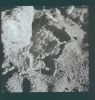
as15-86-11563.jpgAS 15-86-11563 - Station 2 Boulder55 visiteCaption NASA:"122:56:48 MT - After of the overturned boulder from the uphill side. Jim (Irwin) has joined Dave (Scott)".MareKromium
|
|
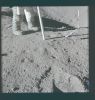
as15-86-11576.jpgAS 15-86-11576 - Pushing the "Core-Tube" down55 visiteCaption NASA:"123:09:11 MT - Jim is about to push the core tube into the ground".MareKromium
|
|
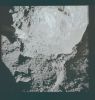
as15-86-11571.jpgAS 15-86-11571 - Station 2 Boulder55 visiteCaption NASA:"122:59:55 MT - While Jim started raking, Dave Scott went over to the boulder to get his tongs and take a close-up of the bottom of the boulder. Notice that he is using the tongs to make sure that he is at the proper distance for good focus".
MareKromium
|
|
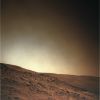
SOL1434-2N253666065EFFAX05F0006L0M1.jpgMartian Sky... (1) - Sol 1434 (MULTISPECTRUM; credits: Lunexit)55 visitenessun commentoMareKromium
|
|

Apollo_15_as_15-85-11405_hr.jpgAS 15-85-11405 - Mt Hadley and part of the "Swann Range"55 visiteCaption NASA:"122:14:35 MT - Rightward of 11404, with Mt. Hadley on the left and a portion of the Swann Range on the right. The Swann Range was named for Apollo 15 geologist, Gordon Swann".
Nota Lunexit: ringraziamo il Dr Gianluigi Barca per averci prontamente fornito la versione HR del frame che ha suscitato qualche curiosità, a causa della "luce" visibile circa ad ore 2, in alto a Dx. Come già si accennava in sede di commento alla versione compressa del medesimo frame, siamo davanti ad un image artifact che rientra nella Classe dei cosiddetti "Effetti Prismatici".MareKromium
|
|

as16-118-18878.jpgAS 16-118-18878 - The Earth during Trans-Lunar Coast (USA and Mexico)55 visitenessun commentoMareKromium
|
|
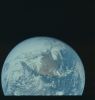
as16-118-18879.jpgAS 16-118-18879 - The Earth during Trans-Lunar Coast (USA and Mexico)55 visitenessun commentoMareKromium
|
|

as15-86-11584.jpgAS 15-86-11584 - Locator Panorama, from Seatbelt Basalt Site (2)55 visitenessun commentoMareKromium
|
|
| 25353 immagini su 2113 pagina(e) |
 |
|
|
|
|
1803 | |
|
|
|
|





