| Piú viste |

OPP-SOL1839-GB-LXT~1.jpgDusty Solar Panel and Rover Tracks - Sol 1839 (Natural Colors; credits: Dr G. Barca & Lunar Explorer Italia)56 visiteDa un semplice cambio di Filtro/Colore, ecco emergere il sottile strato di polvere che ricopre i Pannelli Solari del Rover Opportunity.
Nulla di serio, ovviamente, ma una risposta in più (anche se già la immaginavamo): il Deserto Equatoriale di Meridiani è molto meno polveroso del Bacino di Gusev.
Strano, ma vero!MareKromium
|
|
SOL122-2N137210678EFF4300P1846R0M1.jpgLow Sun - Sol 118 (Natural Colors; credits: Lunar Explorer Italia)56 visitenessun commentoMareKromium
|
|

The_Rings-PIA11489.jpgShadow on the Rings (Natural Colors; credits: Lunar Explorer Italia)56 visitenessun commentoMareKromium
|
|

OPP-SOL1825-ResolutionCrater1.jpgResolution Crater - Sol 1825 (Natural Colors; credits: Lunar Explorer Italia)56 visiteCaption NASA:"Opportunity has seen many sights during her nearly 2000 Soles on Mars, but recently came face-to-face (or wheel-to-rock) with the youngest crater ever seen by either Mars Exploration Rover!
Scientists say this small crater called "Resolution" formed sometime in the past 100.000 years. Most features studied by Opportunity are much older, including rocks over 3 Billion Years old! In contrast to these seniors, Resolution Crater is just a baby.
Unlike a baby's soft skin, a newborn crater starts out sharp, and only softens over time. As craters age, the "sandblasting" action of the Martian Wind erodes rocks ejected during crater formation and fills its bowl with sand. Signs of this crater's youth are fresh rocks on the crater rim and an empty bowl. The newer crater also drapes over older surrounding dunes. Finding youth pays off: scientists can compare Resolution to older craters to learn how fast wind changes the Martian Surface over time".
Nota Lunexit: rimarchevole davvero la somiglianza fra questo craterino ed il cratere Fram (probabilmente anche esso un secondario), incontrato da Opportunity lungo la strada che lo condusse dal Landing Site - Eagle Crater - al Cratere Endurance.MareKromium
|
|
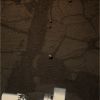
OPP-SOL1877-1P294813450EFFA0__P2449L7M2.jpgBright Pebbles on the Paving - Sol 1877 (Natural Colors; credits: Lunar Explorer Italia)56 visitenessun commentoMareKromium
|
|
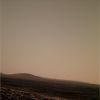
SOL1180-GB-LXT.jpgPeaceful Horizon - Sol 1180 (Natural Colors; credits: Dr G. Barca & Lunar Explorer Italia)56 visitenessun commentoMareKromium
|
|

OPP-SOL150-1N141511155EFF3200P1990R0M1.jpgThe Inner Rim of Endurance Crater - Sol 150 (Natural Colors; credits: Lunar Explorer Italia)56 visitenessun commentoMareKromium
|
|
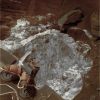
SOL1888-GB-LXT.jpgSalts - Sol 1888 (Natural Colors; credits: Dr G. Barca & Lunar Explorer Italia)56 visitenessun commentoMareKromium
|
|
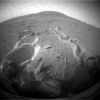
SOL1889-PIA12002.jpgSpirit's "Soft-Sand Grave" - Sol 188956 visiteCaption NASA:"NASA's Mars Exploration Rover Spirit slipped in soft ground during short backward drives on the 1886th and 1889th Martian Days, or Soles, of the Rover's Mission on Mars (April 23 and 26, 2009).
Spirit used its front HazCam after driving on Sol 1889 to get this wide-angle view, which shows the soil disturbed by the drives.
Spirit drove 1,11 meters (approx. 3,6 feet) on Sol 1889 and 1,68 meters (approx. 5,5 feet) on Sol 1886. The Rover drags its right front wheel, which no longer rotates. For scale, the distance between the Wheel Tracks is about 1 meter (40").
This view is looking northward, with Husband Hill on the horizon".MareKromium
|
|

OPP-SOL1886-1M295611857EFFA0__P2976M2M1.jpgMartian Granite? - Sol 1886 (Natural Colors; credits: Lunar Explorer Italia)56 visitenessun commentoMareKromium
|
|

Tethys-PIA11495.jpgOdysseus and Penelope56 visiteCaption NASA:"Two large craters named after characters in Homer's Odyssey take the stage in this scene on Saturn's moon Tethys.
The crater on the right is the Odysseus Crater (approx. 450 Km, or about 280 miles across). The one on the left is Penelope, named after the wife of Odysseus.
This view looks toward the anti-Saturn side of Tethys (approx. 1062 Km, or about 660 miles across). North on Tethys is up and rotated 44° to the right.
The image was taken in Visible Light with the Cassini Spacecraft narrow-angle camera on April 12, 2009. The view was acquired at a distance of approx. 931.000 Km (about 578.000 miles) from Tethys and at a Sun-Tethys-Spacecraft, or Phase, Angle of 33°.
Image scale is roughly 6 Km (a little less than 4 miles) per pixel".MareKromium
|
|
SOL1103-GB-LXT.jpgSalts inside the Rover Tracks - Sol 1103 (Natural Colors; credits: Dr G. Barca & Lunar Explorer Italia)56 visitenessun commentoMareKromium
|
|
| 25353 immagini su 2113 pagina(e) |
 |
|
|
|
|
1795 | |
|
|
|
|





