| Piú viste |

PHOE-SOL009-lg_2750-2751-2752.jpgOne "scoop" of Vastitas... - Sol 9 (True Colors; credits: Dr Gianluigi Barca)56 visitenessun commentoMareKromium
|
|
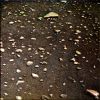
PHOE-SOL010-lg_3088.jpgThe soil of Vastitas Borealis - Sol 10 (Natural Colors + MULTISPECTRUM; credits: Dr M. Faccin & Lunexit)56 visitenessun commentoMareKromium
|
|
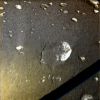
PHOE-SOL010-lg_3085.jpgA slight persistency of Green? - Sol 10 (Superdefinition + MULTISPECTRUM; credits: Dr Marco Faccin & Lunexit)56 visitenessun commentoMareKromium
|
|
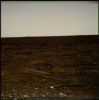
PHOE-SOL010-lg_3094-b.jpgBright Horizon... - Sol 10 (Natural Colors + MULTISPECTRUM; credits: Dr Marco Faccin & Lunexit)56 visitenessun commentoMareKromium
|
|

PHOE-SOL010-lg_82.jpgLights ON!56 visiteRicordate quando abbiamo detto che il colore del terriccio recuperato da Phoenix per le analisi era "falsissimo" oppure illuminato da una sorgente molto intensa e prossima? Ok. Ecco, nell'immagine, la "sorgente" in questione: un gruppo-luce costituito da leds blu, rossi e verdi. Sicuramente utili in alcuni casi ed altrettanto sicuramente fuorvianti in altre situazioni.
Comunque sia: "Lights ON" (!) e fine del mini-mistero relativo al colorito assurdo del suolo Marziano raccolto e fotografato da Phoenix.MareKromium
|
|

PHOE-SOL009-lg_2964.jpgIce or Salt? - Sol 9 (MULTISPECTRUM; credits: Lunexit)56 visitenessun commentoMareKromium
|
|
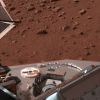
PHOE-SOL012-lg_3352-A.jpgThe Lander and the Surface - Sol 12 (Appproximate Colors; credits: NASA/JPL-Caltech)56 visiteCaption NASA:"This image shows a view from NASA's Phoenix Mars Lander's Stereo Surface Imager's left eye after delivery of soil to the Thermal and Evolved-Gas Analyzer (TEGA), taken on the 12th Martian Day after landing (Sol 12, June 6, 2008).
Soil is visible on both sides of the open doors of TEGA's #4 oven. Sensors inside the device indicate no soil passed through the screen and into the oven". MareKromium
|
|

PHOE-SOL013-lg_3450.jpgOxidation, Evaporation or Sublimation? - Sol 13 (Superdefinition; credits: Dr M. Faccin)56 visiteCurioso...La Macchia Bianca, che nei giorni scorsi ci ha tanto intrigato, ora sembra essere diventata una "chiazza nera", per altro assai ben definita.
Questo cambiamento sarà attribuibile ad un errore umano (un errore nostro, nella fattispecie) occorso durante l'additional processing, oppure è stato proprio il nostro additional processing ad aver messo, di fatto, in luce un comportamento "curioso" da parte di un elemento che, sintanto che era confinato nel sottosuolo di Marte, aveva determinate caratteristiche (exx: di colore e consistenza) e che poi, una volta portato alla luce (e messo a contatto con la "difficile" atmosfera del Pianeta), è "mutato"?
E se fosse stato effettivamente del ghiaccio, la "chiazza scura" che vediamo adesso che cosa dovrebbe rappresentare?
Forse il residuo di una evaporazione o di una sublimazione?
E se invece si trattasse di una ossidazione? "Che cosa" si sarebbe potuto ossidare?...
Domande, domande, domande...MareKromium
|
|

ZZ-Mercury-Craters-Xiao_Zhao_Crater-PIA10668.jpgXiao Zhao's Rays paint Mercury's Surface56 visiteRecently named after the 12th century Chinese artist, Xiao Zhao crater on the central left side of this image is small in comparison with many other craters on Mercury and even with many other craters in this scene. However, Xiao Zhao's long bright rays make it a readily visible feature. The fresh, bright rays, which were created by material ejected outward during the impact event that formed the crater, indicate that Xiao Zhao is a relatively young crater on Mercury's surface.
Date Acquired: January 14, 2008
Image Mission Elapsed Time (MET): 108828473
Instrument: Narrow Angle Camera (NAC) of the Mercury Dual Imaging System (MDIS)
Resolution: 500 meter/pixel (0.3 miles/pixel)
Scale: Xiao Zhao crater is 23 kilometers (14 miles) in diameter
Spacecraft Altitude: 19,760 kilometers (12,280 miles)
MareKromium
|
|

ZZ-Mercury-Craters-Eminescu_Crater-PIA10610.jpgEminescu Crater (MULTISPECTRUM-2; credits: Lunexit)56 visiteLast week, the MESSENGER team learned that the impact crater seen in the middle of this Narrow Angle Camera (NAC) image has been officially named Eminescu. The Crater was named in honor of Mihai Eminescu, an accomplished and influential poet who is still considered the national poet of Romania. The MESSENGER team proposed the name to the International Astronomical Union (IAU), the authority that officially names surface features on planetary bodies.
Eminescu Crater is 125 Km (about 78 miles) in diameter and can be seen just at the top of PIA10384.
The image shown here was acquired by the Mercury Dual Imaging System (MDIS) on January 14, 2008, and shows a portion of Mercury's surface unseen by spacecraft prior to MESSENGER's historic flyby.
Eminescu is a particularly interesting crater for several reasons. Eminescu formed more recently than most of the craters on Mercury, on the grounds that there are very few later craters superposed on it. Moreover, impressive chains of secondary craters, formed by material ejected by the impact explosion that formed the crater, radiate away from Eminescu.
The central peaks within the crater are arranged in a circular pattern; geologists call this a "Peak Ring".
The bright peaks inside Eminescu exhibit unusual color characteristics in the 11-color Wide Angle Camera (WAC) images, which the MESSENGER Science Team is currently studying.
They show up with a bluish tinge in the previously released false-color image of the entire planet (see PIA10398); Eminescu is just North of the Equator, near the day/night "Terminator" in that image.MareKromium
|
|

ZZ-Mercury-Craters-Basho_Crater-PIA10650.jpgRays from the Darkness: Basho Crater (MULTISPECTRUM-2; credits: Lunexit)56 visiteThough Basho Crater is only about 80 Km (ABOUT 50 miles) in diameter, its bright rays make it an easily identified feature on Mercury's surface. In addition to the long bright rays, photographs from Mariner 10 showed an intriguing dark halo of material around the Crater, which can be seen in the lower right portion of this Narrow Angle Camera (NAC) image snapped by MESSENGER's Mercury Dual Imaging System (MDIS) on January 14, 2008. The MESSENGER Science Team is using the full color data set obtained with the 11 filters of the Wide Angle Camera (WAC) to investigate the nature and composition of this dark material.
The Crater is named for the 17th-century Japanese poet Matsuo Basho, renowned for his many haiku. MESSENGER's images of Mercury's striking landscape have inspired at least one poet; read Stuart Atkinson's poem " MESSENGER's Memories."MareKromium
|
|

ZZ-Mercury-Global_View_of_the_Surface-PIA10607.jpgMercurian Symphony (MULTISPECTRUM-2; credits: Lunexit)56 visiteCaption NASA:"When Mariner 10 flew by Mercury in 1974, morning sunlight was just striking Mozart Crater so that most of the feature was hidden in darkness near the Terminator. During MESSENGER's Mercury flyby on January 14, 2008, Mozart was in full sunlight, allowing the Crater to be seen in detail for the first time, as shown in this image snapped by the Narrow Angle Camera (NAC) of the Mercury Dual Imaging System (MDIS). Named in honor of the classical composer Wolfgang Amadeus Mozart, Mozart is the large crater near the center of the image. The Crater's diameter is about 225 Km (such as approx. 140 miles). The arc of dark hills visible on the Crater's floor probably represents remnants of a central peak ring, similar to that shown in the January 30 image release (PIA10378). Clues to the origin of the dark material on the peak ring and the curious dark streaks radiating outward from the Crater will be provided by 11-color image data collected by the Spacecraft's Wide Angle Camera (WAC).
A close inspection of the area around Mozart Crater shows many long chains of secondary craters, formed by impact of material thrown out during the formation of the main crater.
Mozart Crater is located just South of the Caloris Basin and can be identified in the false color image previously released (PIA10398).
Members of the MESSENGER Science Team are currently studying and characterizing the small craters on Mercury in order to provide new insight into the cratering process as it operates on the different planets in the Solar System.
Image Mission Elapsed Time (MET): 108830250
MareKromium
|
|
| 25353 immagini su 2113 pagina(e) |
 |
|
|
|
|
1788 | |
|
|
|
|





