| Piú viste |
OPP-SOL1489-1N260387619EFF8976P1947L0M1.jpgHues... - Sol 1489 (MULTISPECTRUM; credits: Lunexit)56 visiteCambia l'ora del giorno e, quindi, la luminosità di fondo...Ma non cambiano le delicate sfumature che caratterizzano l'interno del Cratere Victoria.MareKromium
|
|
SOL1031.jpgMartian "Berries", "Sand" granules or just rocky "Native Lifeforms"? (5) - Sol 1031 (Superdefinition + MULTISPECTRUM; credits: Dr G. Barca & Lunexit)56 visitenessun commentoMareKromium
|
|
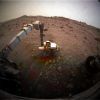
SOL1287-2F238926104EFFAUCMP1159L0M1.jpgRobotic Arm At Work! - Sol 1287 (True Colors; credits: Dr M. Faccin)56 visitenessun commentoMareKromium
|
|

PSP_006284_1145_RED_abrowse-01.jpgOn the edge of the Dunefield... (MULTISPECTRUM; credits: Lunexit)56 visitenessun commentoMareKromium
|
|
SOL354-MF-LXTT-3.jpgThere's a "Cristal" under the Dust? - Sol 354 (Superdefinition + MULTISPECTRUM; credits: Dr M. Faccin & Lunexit)56 visitenessun commentoMareKromium
|
|

Atlas-PIA09885.jpgAtlas and the "Roche Division"56 visiteCaption NASA:"Atlas, seen here, is one of the two moons that ply the Roche Division -- the region between Saturn's A and F-Rings. Prometheus also orbits within this Division.
This view looks toward flying-saucer-shaped Atlas (32 Km, or about 20 miles across at its widest point) and the unilluminated side of the Rings from about 37° above the Ring-Plane.
The image was taken in visible light with the Cassini spacecraft narrow-angle camera on March 9, 2008. The view was obtained at a distance of approx. 1,5 MKM (such as about 925.000 miles) from Atlas and at a Sun-Atlas-Spacecraft angle of 44°.
Image scale is roughly 9 Km (approx. 6 miles) per pixel".MareKromium
|
|

UnknownObject-N00107570.jpgUnknown Object in the Space of Saturn56 visiteUna sorta di "Space Flare" si accende per pochi istanti nello Spazio di Saturno ed il "Caso" ha voluto che Cassini fosse lì, con gli "occhi aperti", pronto a fotografare.
Il risultato è questo: un curioso "flash" nel buio, dalla forma indefinibile e sulla cui Natura non ci è possibile investigare.
Forse non era nulla di importante, o forse si: ma comunque fosse, noi non lo sapremo mai.
Notate, infine, la curiosa (e sostanziale!) specularità dei corpi puntiformi ripresi.MareKromium
|
|

SOL171.jpgGreenish "dust" or Martian Moss? - Sol 171 (Superdefinition; credits: Dr G. Barca)56 visitenessun commentoMareKromium
|
|

OPP-SOL1463-1M258060832EFF8900P2956M2M1.jpgSigns of "Past Life" inside Victoria? - Sol 1463 (MULTISPECTRUM; credits: Lunexit)56 visitenessun commentoMareKromium
|
|

OPP-SOL1456-1M257451938EFF88B2P2956M2M1.jpgBerries... - Sol 1456 (natural colors; credits: Lunexit)56 visitenessun commentoMareKromium
|
|
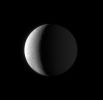
Enceladus-PIA09882.jpgEnceladus56 visiteCaption NASA:"The Cassini spacecraft acquired this view 15 hours before closest approach to Enceladus as the Spacecraft dove toward its thrilling March 2008 encounter with the ice-particle-spewing moon. The cratered terrain of the North is seen at top, and is even dimly visible on the moon's night side, which is lit by reflected sunlight coming from Saturn.
North on Enceladus (505 Km, or approx. 314 miles across) is up and rotated 22° to the left. The North Pole is tilted slightly toward Cassini.
The image was taken in visible green light with the Cassini spacecraft narrow-angle camera on March 12, 2008. The view was acquired at a distance of approx. 612.000 Km (about 380.000 miles) from Enceladus and at a Sun-Enceladus-Spacecraft, or Phase, angle of 114°.
Image scale is roughly 4 Km (about 2 miles) per pixel".MareKromium
|
|

Mimas-PIA09880.jpgMimas is on Sight!56 visiteCaption NASA:"The Cassini spacecraft looks toward the high north on heavily cratered Mimas. The unmistakable Herschel impact crater is seen at lower left.
Lit terrain seen here is on the anti-Saturn side of Mimas (397 Km, or about 247 miles across).
Nota Lunexit: osservate bene la linea che disegna il profilo visibile di Mimas (se over-saturate il frame il lavoro sarà perfetto) e quindi notate la forma vagamente ovoidale di questa piccola luna.
Ed è proprio nella forma non sferica, comunque, che si cela la differenza tra "corpo celeste planetario" (piccolo o grande non importa) e "planetoide".
The moon's North Pole is up and tilted slightly toward Cassini. The image was taken in visible light with the Cassini spacecraft narrow-angle camera on March 11, 2008. The view was acquired at a distance of approx. 795.000 Km (about 494.000 miles) from Mimas and at a Sun-Mimas-Spacecraft, or Phase, angle of 88°.
Image scale is roughly 5 Km (about 3 miles) per pixel".MareKromium
|
|
| 25353 immagini su 2113 pagina(e) |
 |
|
|
|
|
1778 | |
|
|
|
|





