| Piú viste |

SOL1205-2M233343759EFFATEEP2936M2M1.jpgClose views (4) - Sol 120556 visitenessun commentoMareKromium
|
|

Enceladus-PIA08954.jpgIcy Emanations...56 visiteCaption NASA:"Peeking over the crescent of Enceladus, the Cassini spacecraft views the towering plume of ice particles erupting from the moon's South Polar Region.
Multiple components of the overall plume are visible in this view of Enceladus.
The image was taken in visible light with the Cassini spacecraft narrow-angle camera on April 24, 2007 at a distance of approx. 188.000 Km (such as about 117.000 miles) from Enceladus and at a Sun-Enceladus-spacecraft, or phase, angle of 153°.
Image scale is roughly 1 Km (about 0,6 miles) per pixel".MareKromium
|
|
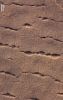
PSP_002202_2250_RED_browse-01.jpgPits, Cracks, and Polygons in Western Utopia Planitia (extra-detail mgnf) - elab. NASA56 visitenessun commentoMareKromium
|
|

Merope.jpgMerope56 visite"...Vulgus, ex veritate pauca, ex opinione multa aestimat..."
(Cicerone)
"...Il popolo crede poco alla Verità e molto al "sentito dire"..."MareKromium
|
|
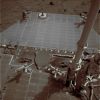
SOL1221-2N234769147EFFATI4P0165R0M1.jpgSpirit's "Solar Panels" - Sol 122156 visitenessun commentoMareKromium
|
|

Mimas-N00084762.jpgMimas: the "Egg-like Moon"56 visiteMimas ID:"Mimas is made primarily of water-ice. Its surface is heavily cratered, indicating that its impact features may date back to the time of the moon's creation.
One of the craters, named Herschel, is surprisingly large - nearly one-third the moon's entire diameter. Herschel is 10 Km (about 6 miles) deep, with a central mountain that rises 6 Km (about 3,7 miles) above the crater floor.
Traces of fracture marks can be seen on the opposite side of Mimas.
Mimas was discovered in 1789 by William Herschel; its mean distance from Saturn is approximately equal to 185.520 Km (such as about 115.277 miles); its mass is: 3.81 x 10¹⁹ Kg (such as 8.3 x 10¹⁹ lbs) and its dimensions are: 418 x 392 x 383 Km (260 x 244 x 238 miles)".
Period of Orbit around Saturn: 22.6 hoursMareKromium
|
|
M2-9-01.gifEvolution...56 visite"...Non è salutare vedere la casa dell'infanzia, ma può aiutare a misurare le proprie ferite; a confrontarsi con il "come" ed il "perchè", ammesso che uno abbia voglia di farlo..."
Thomas Harris - "Young Hannibal"MareKromium
|
|

The_Rings-IMG002648-0.jpgTransient Event(s) in the "F-Ring"? (context image)56 visiteCaption NASA:"The Cassini spacecraft spies an intriguing bright clump in Saturn's "F-Ring".
Also of interest is the dark gash that appears to cut through the Ring immediately below the clump. Scientists continue to monitor this ring for small, transient clumps of material, as well as the effects of the shepherd moon Prometheus.
This view looks toward the unilluminated side of the Rings from about 28° above the Ring-Plane.
The image was taken in visible light with the Cassini spacecraft narrow-angle camera on May 5, 2007 at a distance of approx. 2.1 MKM (about 1,3 MMs) from Saturn. Image scale is roughly 12 Km (about 8 miles) per pixel".
Nota: dopo aver effettuato una modesta analisi di questo frame in rapporto ad altri frames CASSINI i quali pure ci appaiono rappresentativi di quei fenomeni che la NASA chiama "clumps" (---> masse/grumi di materiale), la nostra sensazione è che la particolare (o meglio: eccezionale!) luminosità del "clump" ora in oggetto (anche iuna volta messa in correlazione con la striscia scura che vedete sulla sua Dx - striscia che costituisce un chiarissimo segnale del passaggio di qualcosa attraverso i filamenti di materiale che compongono l'Anello "F") potrebbe essere dovuta al verificarsi di una collisione occorsa all'interno dell'Anello "F" stesso, la quale è stata casualmente inquadrata da una delle fotocamere della Sonda.
Non pensiamo, quindi, nè ad un image-artifact da sovrasaturazione del frame, nè al possesso di particolari qualità e/o caratteristiche chimico/fisiche da parte del "clump" in oggetto. MareKromium
|
|

Eris_Dysnomia.jpgEris and Dysnomia56 visiteNASA's HST has teamed up with the W.M. Keck Observatory to precisely measure the mass of Eris, the largest member of a new class of Dwarf Planets in our Solar System. Eris is 1,27 times the mass of Pluto, formerly the largest member of the Kuiper Belt of icy objects beyond Neptune.
Hubble observations in 2006 showed that Eris is slightly physically larger than Pluto. But the mass could only be calculated by observing the orbital motion of the moon Dysnomia around Eris. Multiple images of Dysnomia's movement along its orbit were taken by Hubble and Keck.
Astronomer Mike Brown of the California Institute of Technology in Pasadena, Calif. and colleagues also report in this week's Science Magazine that Dysnomia is in a nearly circular 16-day orbit. This favors the idea that Dysnomia was born out of a collision between Eris and another Kuiper Belt object (KBO).
A gravitationally captured object would be expected to be in a more elliptical orbit.
The satellites of Pluto, as well as the Earth-Moon system are also believed to have been born out of a collision process where debris from the smashup goes into orbit and coalesces into a satellite.
By comparing the mass and diameter, Brown has calculated a density for Eris of 2.3 grams per cubic centimeter. This is very similar to the density of Pluto, the large Kuiper Belt object 2003 EL61, and Neptune's moon Triton which is likely a captured KBO. These higher densities imply that these bodies are not pure ice but must have a significant rocky composition.
The discovery of Eris in 2005 (originally nicknamed Xena, and officially cataloged 2003 UB313) prompted a debate over the planetary status of Pluto because astronomers realized they would have to call it the "10th" planet if Pluto retained its own planetary status, which was already under debate. This led the International Astronomical Union, in 2006, to make a new class of solar system object called dwarf planets. These are spherical bodies in hydrostatic equilibrium (objects that have sufficient gravity to overcome their own rigidity and form a spherical shape) like the planets, but unlike the major planets in the solar system, they have not gravitationally cleared out the neighborhood of particles and small debris along their orbits.
MareKromium
|
|

015-Ceres_and_Vesta.jpg4-Vesta and 1-Ceres from HST (natural colors)56 visiteThese Hubble Space Telescope images of Vesta and 1-Ceres show two of the most massive asteroids in the Asteroid Belt, a Region between Mars and Jupiter.
The images are helping astronomers plan for the Dawn spacecraft’s tour of these hefty asteroids. On July 7, 2007, NASA is scheduled to launch the spacecraft on a 4-year journey to the Asteroid Belt. Once there, Dawn will do some asteroid-hopping, going into orbit around Vesta in 2011 and Ceres in 2015. Dawn will be the first spacecraft to orbit two targets. At least 100.000 asteroids inhabit the Asteroid Belt, a reservoir of leftover material from the formation of our Solar-System planets some 4,6 Billion Years (BY) ago.MareKromium
|
|

vo1_00437-00.jpgSunrise over Mars (Extremely Enhanced Natural Colors; credits for the additional process. and color.: Dr Paolo C. Fienga - Lunexit Team)56 visiteDal bellissimo Sito di Keith Laney (http://keithlaney.net/) - che Vi suggeriamo di andare a visitare - un'immagine conosciuta, "datata" (siamo ai tempi del Viking Orbiter 2), ma pur sempre affascinante: nuvole stratiformi (o nebbie?!?) di ghiaccio d'acqua che assumono, grazie ai raggi del Sole che sta appena sorgendo, riflessi celesti, azzurrini e verdi.
Una splendida immagine: e non si può dire nulla di più.MareKromium
|
|

ZZ-ColorMars-10-KL-20040312ax.jpgMars from Orbit, as a "Human" would see it...by Keith Laney (4)56 visitenessun commentoMareKromium
|
|
| 25353 immagini su 2113 pagina(e) |
 |
|
|
|
|
1772 | |
|
|
|
|





