| Piú viste |
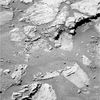
OPP-SOL658-1P186601932EFF64KCP2287L7M1.jpgDetails of the Paving (2) - Sol 65856 visitenessun commento
|
|

SOL675-2P186329926ESFAJQVP2746L1M1.jpgPhobos?!?56 visiteOriginal caption:"Left Pan-Cam Non-linearized Sub-frame EDR acquired on Sol 675 of Spirit's mission to Gusev Crater at approx. 23:08:53 MLT.
Camera commanded to use Filter 1 (739 nm).
|
|
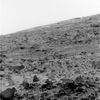
SOL677-2P186465878EFFAJQVP2266R7M1.jpgThe "Bizarre Nature" of Mars' rocks (2) - Sol 67756 visitenessun commento
|
|

024-Vesta.jpg4-Vesta56 visite4-Vesta (o anche solo Vesta) è uno dei tanti asteroidi conosciuti da tantissimo tempo e che sembra, di quando in quando, avvicinarsi (in senso cosmico...) in maniera "perigliosa" al nostro pianeta.
Ma lo sanno tutti - gli Scienziati per primi - che, un giorno o l'altro, da oggi a fra qualche milione di anni nel futuro, qualche "roccia vagante" finirà con l'incrociare la sua orbita con quella della Terra e, quindi, con il produrre - con ogni probabilità - una catastrofe di dimensioni globali la quale sarà causa di sostanziali cambiamenti dell'intero ecosistema.
E' inevitabile, si sa.
Così come si sa che, quando questo momento arriverà, gli ultimi a prenderne atto saranno proprio quelli che, questo Pianeta, lo abitano...
|
|

OPP-SOL661-1P186861250EFF64KCP2585R2M1.jpgWonderful Paving... (5) - Sol 66156 visiteRight Pan-Cam Non-linearized Full frame EDR acquired on Sol 661 of Opportunity's mission to Meridiani Planum at approximately 10:44:18 MLT. Camera commanded to use Filter 2 (754 nm).
|
|

OPP-SOL661-1P186869607EFF64KCP2588R1M1.jpgWonderful Paving... (7) - Sol 66156 visiteRight Pan-Cam Non-linearized Full frame EDR acquired on Sol 661 of Opportunity's mission to Meridiani Planum at approximately 12:59:52 MLT. Camera commanded to use Filter 1 (436 nm).
|
|
DwarfGalaxies-SST-PIA03605.jpgDwarf Galaxies56 visiteL'idea è che l'Italia è il Titanic: la metafora «profetizza l'inabissamento del nostro Paese a livello sociale ed economico e descrive il comportamento dei passeggeri», ossia noi italiani.
Le orchestrine dell'idiozia televisiva e calcistica, pagate dai padroni che sono già saliti sulle scialuppe per primi, stanno ancora suonando. Per distrarci e non farci sapere che i compartimenti del nostro transatlantico sono già allagati.
Già: perché non è che l'Italia «rischi di affondare»: sta già affondando da mesi.
La nostra piccola industria è devastata in tutti i settori in cui era «forte» (tessile, oreficeria, meccanica, calzaturifici, mobili) dalla competizione cinese. Perché i nostri micro-imprenditori (ex operai, diventati ricchi, ma rimasti ignoranti) hanno continuato a sviluppare questi settori stramaturi, non avendo i mezzi intellettuali per lanciarsi nelle attività che vinceranno in futuro: «biotecnologie, informatica applicata, energia, trasporti di terza generazione".
«Tutte le inefficienze degli anni passati adesso si iniziano a pagare. Il conto sarà salato, e lo si paga con posti di lavoro in meno».
È solo questione di mesi, e poi - tra il 2006 e il 2007 - i posti di lavoro cominceranno a scomparire a cascata, a migliaia.
Il nostro popolo che adora il «posto fisso» forse smetterà di guardare l'«Isola dei famosi»?
Si affollerà attorno alle scialuppe?
Non ci sono scialuppe.
Siamo un popolo con sei milioni di analfabeti.
Un popolo che non ha studiato, e che è avanzato negli ultimi 20 anni di storia senza mai pensare un minuto, cullandosi nell'illusione che il suo dozzinale benessere sarebbe stato eterno.
M. Blondet
|
|

Rhea-PIA07764.jpgRhea's "Ray Crater" (alias the "Great White Splat") and scarps from 511 Km56 visite(...) Cassini spacecraft snapped this image of the Eastern rim of Saturn's moon Rhea's bright, Ray Crater. The impact event appears to have made a prominent bright splotch on the Leading Hemisphere of Rhea. Because Cassini was traveling so fast relative to Rhea as the flyby occurred, the crater would have been out of the camera's field of view in any earlier or later exposure. The crater's total diameter is about 50 Km, but this rim view shows details of terrains both interior to the crater and outside its rim. The prominent bright scarp, left of the center, is the crater wall, and the crater interior is to the left of the scarp. The exterior of the crater (right of the scarp) is characterized by softly undulating topography and gentle swirl-like patterns that formed during the emplacement of the large crater's continuous blanket of ejecta material.
Numerous small craters conspicuously pepper the larger crater's floor and much of the area immediately outside of it. However, in some places, such as terrain in the top portion of the image and the bright crater wall, the terrain appears remarkably free of the small impacts. The localized "shot pattern" and non-uniform distribution of these small craters indicate that they are most likely secondary impacts -- craters formed from fallback material excavated from a nearby primary impact site. Because they exist both inside and outside the large crater in this image, the source impact of the secondary impacts must have happened more recently than the impact event that formed the large crater in this scene.
|
|

Rhea-PIA07765.jpgCraters, Slopes and Scarps on Rhea (HR)56 visiteCraters within craters cover the scarred face of Saturn's moon Rhea in this oblique, HR view of terrain on the moon's Western Hemisphere.
A large, degraded crater lies at the center, filled with rolling mounds and many smaller craters. A couple of linear depressions are visible in the terrain (especially at lower right), possibly marking tectonic faults. The crater is about 90 Km-wide (about 56-miles) and is located at 8,5° South Latitude and 154,9 West Longitude. The moon's icy regolith, or loose surface material, has likely been pummeled into a fine powder over the eons.
This is one of the highest-resolution images of Rhea's surface obtained during Cassini's close flyby on Nov. 26, 2005, during which the spacecraft swooped to within 500 Km of the large moon.
The clear filter image was acquired with the wide-angle camera at an altitude of approx. 620 Km above Rhea.
Image scale is about 85 mt (approx. 280 feet) per pixel.
|
|

Hyperion-PIA07768.jpg"Meri Crater"56 visiteSaturn's moon Hyperion's crater, Meri, blooms in this extreme color-enhanced view. Meri is overprinted by a couple of smaller craters and displays dark material on its floor that is characteristic of many impact sites on this moon. The walls of craters seen here are noticeably smoother on their sloping sides than around their craggy rims.
To create this false-color view, ultraviolet, green and infrared images were combined into a single black and white picture that isolates and maps regional color differences. This "color map" was then superimposed over a clear-filter image. The combination of color map and brightness image shows how the colors vary across the moon's surface in relation to geologic features.
The origin of the color differences is not yet understood, but may be caused by subtle differences in the surface composition or the sizes of grains making up the icy soil. The images used to create this false-color view were acquired on 09-26-2005, at a mean distance of 17.900 Km from Hyperion. Image scale is about 110 meters (360 feet) per pixel.
|
|

Janus-N00044715.jpgJanus and Epimetheus (3)56 visitenessun commento
|
|

Rhea-PIA07769.jpgRhea and Dione (false colors)56 visiteOriginal caption:"Saturn's cratered, icy moons, Rhea and Dione, come alive with vibrant color that reveals new information about their surface properties. To create these false-color views, ultraviolet, green and infrared images were combined into a single black and white picture that isolates and maps regional color differences. This "color map" was then superimposed over a clear-filter image of each moon. The combination of color map and brightness image shows how the colors vary across the moon's surface in relation to geologic features. The origin of the color differences is not yet understood, but may be caused by subtle differences in the surface composition or the sizes of grains making up the icy soil. (...) The images have not been scaled to show the moons' proper relative sizes".
|
|
| 25353 immagini su 2113 pagina(e) |
 |
|
|
|
|
1760 | |
|
|
|
|





