| Piú viste |
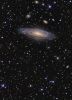
NGC-7331-2.jpgNGC 7331 - Spiral Galaxy56 visite"...The folly of mistaking a paradox for a discovery, a metaphor for a proof, a torrent of verbiage for a spring of capital truths, and oneself for an orator, is inborn in us..."
Paul Valéry (1871 - 1945) - "Introduction to the Method of Leonardo da Vinci (1895)
|
|
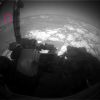
OPP-SOL893-1F207460725EFF74V1P1147R0M1.jpgMoving Star-Like Object (1) - Sol 89356 visitenessun commento
|
|
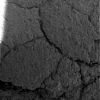
OPP-SOL893-1M207461081EFF74V1P2936M2M1.jpgShadowed Paving - Sol 89356 visitenessun commento
|
|
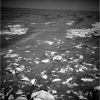
OPP-SOL896-1N207728473EFF74YKP0666R0M1~0.jpgBeagle's Surroundings (2)56 visitenessun commento
|
|
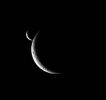
Rhea & Enceladus-PIA08237.jpgAfter the occultation...56 visiteCaption NASA originale:"Two slim crescents smile toward the Cassini spacecraft following an occultation event.
Taken only 5 minutes after Enceladus first approached the limb of Rhea, this view shows the bright little moon emerging from behind the larger moon's crescent.
The image was taken in visible light with the Cassini spacecraft narrow-angle camera on July 4, 2006 at a distance of approx. 1,4 MKM (about 800.000 miles) from Rhea and approx. 1,9 MKM (about 1,2 MMs) from Enceladus. The view was obtained at a Sun-moon-spacecraft, or phase, angle of about 142° relative to both moons.
Image scale is about 8 Km (5 miles) per pixel on Rhea and approx. 11 Km (about 7 miles) on Enceladus".
|
|
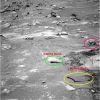
OPP-SOL904-1P208440642EFF74ZTP2293L7M1.jpgBeagle Crater's landforms (2) - Sol 90456 visitenessun commento
|
|

SOL925-2P208479101ESFAS00P2286R5M1-B.jpg"Sinking" Mars, again... (detail mgnf) - Sol 92556 visitenessun commento
|
|

APOLLO 15 AS 15-0018.jpgAS 15-0018 - On the rim of Gibbs Crater56 visiteImpact craters with asymmetric ray patterns and profiles can be caused by conditions other than the angle of trajectory. This 5-Km crater was formed when a meteoroid impacted on the North-East rim crest of Gibbs, a very much larger and older crater near the Moon's East limb. In this restricted view, Gibbs' rim is the dark area in the North half of the picture, and its wall is the light area in the south half. The rim crest extends from arrow to arrow. Discrete rays of both light and dark ejecta are well developed around the North half of the small crater where they were deposited on a relatively level surface. They are poorly developed around the South side of the small crater, probably having been partly destroyed by mixing as the ejected materials cascaded down the much steeper wall of the Crater Gibbs. Subsequent erosion has further destroyed the original pattern. The configuration of the small crater's rim has also been affected by topography.
It is sharply defined along the North side but is barely discernible along the south side where large volumes of material have slumped down the wall of the older crater.
|
|
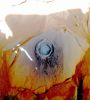
SOL231-spirit-sol231-hole.jpgHole in the ground... - Sol 23156 visitenessun commento
|
|

APOLLO 16 AS 16-4653.jpgAS 16-4653 - Secondary Craters' Clusters56 visiteThese 3 clusters of secondary craters (see arrows) are on the East flank of the larger crater Ptolemaeus near the center of the Moon's Near-Side. Each cluster has a ridged and hummocky appearance. The primary crater has not been identified in this case, but the configuration of the clusters tells us that it must be to the South of Ptolemaeus. Note that the South-facing side of each cluster is more sharply defined than the North-facing side.
This is a consequence of the oblique trajectory of impacting fragments that causes the ejecta of the secondary craters to be propelled away (down range) from the primary crater. Observations of manmade impact craters have shown that the individual fragments within a cluster of secondary debris strike the surface nearly simultaneously.
In the process, ejecta from one secondary collides and interferes with ejecta from adjacent craters, producing a ridged and hummocky surface.
|
|

Rhea-N00064808.jpgMoments of Rhea (2)56 visitenessun commento
|
|

Rhea-N00064832-B.jpgMoments of Rhea (6) - Rhea's "Peak" (detail mgnf)56 visiteRicordate il "picco" (o la "Grande Montagna") di Oberon (Sez. "Uranus and His Moons")? Rilievi simili, per corpi celesti simili...
|
|
| 25353 immagini su 2113 pagina(e) |
 |
|
|
|
|
1753 | |
|
|
|
|





