| Piú viste |

MWMW08_optical_axel.jpgAll Sky: the "Optical Sky"56 visiteMi muovo lentamente.
Ad ogni passo mi fermo e cerco di sentire un suono familiare, ma non percepisco nulla: solo un leggero crepitare di gocce di pioggia - cadono e si infrangono in mille schegge brillanti - sulla tesa del mio cappello.
Sono vestito bene, ma ho freddo, molto freddo e mi fa male il collo.
L’assoluta cecità causata dalla fitta nebbia mi impedisce di pensare con chiarezza: sono costretto a guardare le mia mani e le mie gambe sino ai piedi per convincermi che non sono i miei occhi ad aver cessato di funzionare.
Cerco di camminare - le mie braccia sono protese in avanti anche se, forse, non c’è nessun ostacolo sulla mia strada - ma mi accorgo che non vado da nessuna parte.
Parlo anche da solo - a voce alta - sperando che qualcuno possa sentirmi e soccorrermi.
Ma non c’è nessuno in ascolto: il mio messaggio, di minuto in minuto sempre più disarticolato, si perde nel biancore e nella pioggia incessante.
Ogniqualvolta le mie scarpe schiacciano un ciottolo - la strada è asfaltata, ma è anche ricoperta di detriti, come se nessuno la battesse più da tanto tempo - il mio cuore sembra voler battere più forte, ma poi mi calmo e rimango in attesa di un segnale.
Che non arriva.
Ma come accidenti sono finito qui?
Questa è l’unica vera domanda che riesco a pormi con sufficiente lucidità ed alla quale, ovviamente, non riesco a trovare alcuna risposta.
Ero uscito dall’ufficio un po’ più presto del solito (erano circa le quattro del pomeriggio) per andare a comprare qualche cosa da mangiare per cena.
Sono stato nel negozio di alimentari, in drogheria, in farmacia (dovevo comprare le pillole per dormire) e poi, già che era sulla strada, anche al bar per bere un buon bicchiere di latte caldo.
Ero stanco.
Ho pagato, sono uscito e mi sono diretto verso casa.
Certo, quando sono uscito dal bar non c’era questa nebbia: ricordo però che allora stava già piovendo.
Ne sono certo perché ho notato che la strada che dovevo attraversare sembrava essere stata verniciata con uno smalto nero.
Si, è un effetto tipico dell’asfalto liscio e bagnato.
Mi ricordo anche di una macchina gialla parcheggiata sul marciapiede alla mia sinistra e di un’altra blu che sopraggiungeva dalla destra.
Un gran silenzio sembrava avvolgesse tutto.
Non riesco proprio a capire questa nebbia da dove sia mai uscita.
Ho mal di testa.
La pioggia continua a battere sul mio cappello ed a rimbalzare via.
Comincio ad aver paura di essermi perso.
Si, ho decisamente paura di aver perso l’orientamento.
Non ricordo più neppure dove ho messo i pacchetti con dentro la mia spesa.
Devo averli appoggiati da qualche parte, qui vicino.
Ho paura.
P.C. Floegers - "Oltre la Nebbia" - scena I
|
|

MWMW10_gammaray_allsky.jpgAll Sky: the "Gamma-Ray Sky"56 visite “... il corpo dell’uomo investito giace quasi a ridosso del marciapiede.
Ad un esame esteriore - a parte un rivolo di sangue presumibilmente fuoriuscito dal naso - non si notano ferite di alcun tipo: il corpo appare intatto ma la posizione innaturale assunta dalla testa, ritorta sulla spalla sinistra, suggerisce una frattura del collo.
Due pacchetti contenenti cibo ed altri piccoli oggetti sono a terra.
L’uomo ha ancora il cappello.
Non posso fare a meno di annotare - pur non essendo una circostanza rilevante ai fini del rapporto - che sono stranamente incantato dal rumore delle gocce di pioggia che rimbalzano sulla tesa del cappello dell’uomo a terra.
Cadono e si infrangono generando splendide schegge brillanti.
Poco più avanti, a ridosso di una macchina gialla, giace il corpo di un secondo uomo.
Si tratta, ad una prima ricostruzione dell’accaduto, del guidatore dell’auto investitrice.
Egli, infatti, dopo aver vanamente tentato di frenare per evitare l’uomo con i pacchetti, ha perso il controllo della propria auto la quale, dopo essere scivolata sulla strada bagnata, è andata a schiantarsi contro un cassone dei rifiuti.
La particolare violenza dell’impatto ha fatto si che il guidatore venisse proiettato fuori dall’abitacolo, sfondando il parabrezza.
Il viso dell’uomo è irriconoscibile.
Attendiamo l’arrivo di un’ambulanza per la rimozione dei corpi, ma è possibile che le cose vadano ancora per le lunghe: una nebbia fittissima è calata da qualche minuto e sta piovendo a dirotto.
C’è un’atmosfera davvero strana qui intorno... ”.
Estratto del Rapporto n. 162/97 della V Pattuglia di Polizia Stradale - Neuville
P.C. Floegers - "Oltre la Nebbia" - scena III
|
|

Eris.jpgAnother "Dwarf Planet" with satellite: 136199-Eris and Dysnomia56 visiteDa "NASA - Picture of the Day" del 18 Settembre 2006:"Is Pluto the largest Dwarf Planet? No! Currently, the largest known dwarf planet is 136199-Eris, renamed last week from 2003 UB313. Eris is just slightly larger than Pluto, but orbits as far as twice Pluto's distance from the Sun. Eris is shown above in an image taken by a 10-meter Keck Telescope from Hawaii, USA.
Like Pluto, Eris has a moon, which has been officially named by the International Astronomical Union as (136199) Eris I (Dysnomia). Dysnomia is visible above just to the right of Eris. Dwarf Planets Pluto and Eris are Trans-Neptunian Objects that orbit in the Kuiper belt of objects past Neptune. Eris was discovered in 2003, and is likely composed of frozen water-ice and methane. Since Pluto's recent demotion by the IAU from planet to dwarf planet status, Pluto has recently also been given a new numeric designation: 134340-Pluto.
Currently, the only other officially designated Dwarf Planet is 1-Ceres".
|
|

Saturn-PIA08270.jpgNight-flight around Saturn...56 visiteCaption NASA originale:"Saturn's shadow cuts sharply across the Rings in this remarkable night side view.
The Planet's Northern Latitudes are in darkness in the upper portion of this scene, while the Southern reaches are bathed in Ringshine. On the left, Sunlight filters through the Rings, and on the right the Rings are blocking the reflected Ringshine in the shadow of Saturn. The overexposed, sunlit crescent at lower left marks the transition from Saturnian day to night.
Mimas hovers below center - a tiny bauble, ornamenting the Ringed Giant.
The image was taken in visible green light with the Cassini spacecraft wide-angle camera on August 19, 2006 at a distance of approx. 1,5 MKM (about 1 MMs) from Mimas and 1,7 MKM (about 1,1 MMs) from Saturn.
Image scale is roughly 92 Km (about 57 miles) per pixel on Mimas and approx. 103 Km (about 64 miles) on Saturn".
|
|
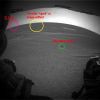
OPP-SOL948-1R212348438EFF76ACP1313L0M1.jpgOn the Land and in the Sky... (2) - Sol 94856 visitenessun commento
|
|

Janus-N00066628.jpgMoments of "Janus" (2)56 visitenessun commento
|
|
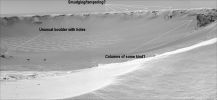
OPP-SOL952-site_B76_275_navcam_CYL_L-B953R1-2.jpgVictoria Crater, from Duck Bay (2)56 visitenessun commento
|
|
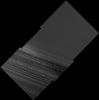
R-NorthPolarLayers-PIA08791_modest.jpgNorth Polar Layers (or "Bands")56 visiteThe HiRISE on NASA's MRO acquired this image during its first day of test imaging from the spacecraft's low-altitude mapping orbit, such as on Sept. 29, 2006.
This image of Mars' North Polar Layered Deposits was taken during the summer season (Solar Longitude of 113,6°), when CO2 frost had evaporated from the surface. The bright spots seen here are most likely patches of water frost, but the location of the frost patches does not appear to be controlled by topography. Layers are visible at the right side of the image, mostly due to difference in slope between them. The variations in slope are probably caused by differences in the physical properties of the layers. Thinner layers that have previously been observed in these deposits are visible, and may represent annual deposition of water ice and dust that is thought to form the polar layered deposits. These deposits are thought to record global climate variations on Mars, similar to ice ages on Earth. HiRISE images such as this should allow Mars' climate record to be inferred and compared with climate changes on Earth.
Image TRA_000825_2665 was taken by the High Resolution Imaging Science Experiment (HiRISE) camera onboard the Mars Reconnaissance Orbiter spacecraft on September 29, 2006. Shown here is the full image, centered at 86.5 degree latitude, 172.0 degrees east longitude. The image is oriented such that north is to the top. The range to the target site was 298.9 kilometers (186.8 miles). At this distance the image scale is 59.8 centimeters (23.5 inches) per pixel (with two-by-two binning} so objects about 1.79 meters (70 inches) across are resolved. In total the original image was 12.2 kilometers 7.58 mile; 10024 pixels) wide and 6.1 kilometers (3.79 miles; 5000 pixels) long. The image was taken at a local Mars time of 3:30 PM and the scene is illuminated from the southwest with a solar incidence angle of 63.5 degrees, thus the sun was about 26.5 degrees above the horizon.
|
|

R-PIA08788-2.jpgOlympia Undae (2)56 visiteThis image shows three representations of the 72 colors. The left panel is a nearly true-color composite in which the blue, green, and red planes are 0.44, 0.53, and 0.60 micrometer light -- nearly as the human eye would see. The contrast between the bright ice and dark dunes is so large that the dunes are barely seen. The middle panel is false color constructed from infrared wavelengths just beyond the range of the human eye. The blue, green, and red planes cover 0.80, 0.95, and 1.06 micrometer light. In this rendering of the data the differences between ice- and soil-rich regions are not as apparent because the colors of ice and dust are similar in this wavelength region. The right panel uses 1.15, 1.8, and 2.25 micrometer light in the blue, green and red planes and provides a dramatically different view of the scene. The areas of highest ice content appear in blue, and those with a mix of dust and ice -- most of the scene -- appear yellowish. The dunes are now visible against the ice because of their higher brightness at longer infrared wavelengths, and appear ruddy brown.
|
|
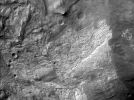
R-JusChasma-PIA08789.jpgJus Chasma56 visiteThe high resolution camera on NASA's Mars Reconnaissance Orbiter captured its first image of Mars in the mapping orbit, demonstrating the full resolution capability, on Sept. 29, 2006. The High Resolution Imaging Science Experiment (HiRISE) acquired this image at 8:16 AM (Pacific Time), and parts of the image became available to the HiRISE team at 1:30 PM. With the spacecraft at an altitude of 280 kilometers (174 miles), the image scale is 29.7 centimeters per pixel (about 12 inches per pixel).
This sub-image covers a small portion of the floor of Ius Chasma, one branch of the giant Valles Marineris system of canyons. The image illustrates a variety of processes that have shaped the Martian surface. There are bedrock exposures of layered materials, which could be sedimentary rocks deposited in water or from the air. Some of the bedrock has been faulted and folded, perhaps the result of large-scale forces in the crust or from a giant landslide. The darker unit of material at right includes many rocks. The image resolves rocks as small as small as 90 centimeters (3 feet) in diameter. At bottom right are a few dunes or ridges of windblown sand. If a person was located on this part of Mars, he or she would just barely be visible in this image.
Image TRA_000823_1720 was taken by the High Resolution Imaging Science Experiment (HiRISE) camera onboard the Mars Reconnaissance Orbiter spacecraft on September 29, 2006. Shown here is a small portion of the full image. The full image is centered at minus 7.8 degrees latitude, 279.5 degrees East longitude. The image is oriented such that north is to the top. The range to the target site was 297 kilometers (185.6 miles). At this distance the image scale is 29.7 centimeters per pixel (with one-by-one binning) so objects about 89 centimeters (35 inches) across are resolved. The image was taken at a local Mars time of 3:30 PM and the scene is illuminated from the west with a solar incidence angle of 59.7 degrees, thus the sun was about 30.3 degrees above the horizon. At an Ls of 113.6 degrees, the season on Mars is Northern Summer/Southern Winter.
|
|
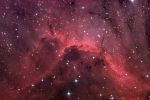
IC_5067.jpgIC 5067 - Emission Nebula56 visite"...Nil perpetuum: pauca diuturna sunt..."
(Livio)
"...Nulla dura in eterno e ben poche cose sono durevoli..."
|
|
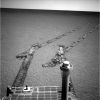
OPP-SOL953-1N212785100EFF76EVP0773R0M1.jpgThe way behind "Duck Bay" (1) - Sol 95356 visitenessun commento
|
|
| 25353 immagini su 2113 pagina(e) |
 |
|
|
|
|
1752 | |
|
|
|
|





