| Piú viste |

SOL002-3.JPGIs that a "Water Droplet"?!? - Sol 2 (3D - credits: Dr Marco Faccin)56 visitenessun commentoMareKromium
|
|
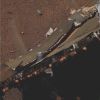
OPP-SOL340-2.jpgThe broken "Heat-Shield", from very close! - Sol 340 (true colors; credits: Dr G. Barca & Lunexit)56 visitenessun commentoMareKromium
|
|

OPP-SOL380-3.jpgAn "Hollow" near Opportunity - Sol 380 (2 - natural colors; credits: Dr G. Barca)56 visitenessun commentoMareKromium
|
|
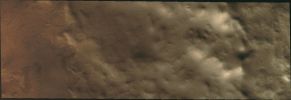
Craters-Unnamed_Crater-Southern_Latitudes-20080114a-PCF-LXTT.jpgWhen Summer "Falls"... (Absolute Natural Colors; credits for the additional process. and color.: Dr Paolo C. Fienga - Lunexit Team)56 visiteCaption NASA:"Autumn has begun in the Southern Hemisphere of Mars. As the Sun retreats northward frost will begin to accumulate. The frost-free Floor of this Unnamed Crater, with it's intricate texture, will soon be hidden. Due to Mars' orbit, the seasons are twice as long as on Earth - so it will be a full earthyear before this Crater Floor is exposed again".MareKromium
|
|
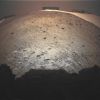
SOL1429-2R253224710EFFAX02P1302R0M1.jpgLooking around (2) - Sol 1429 (MULTISPECTRUM; credits: Lunexit)56 visitenessun commentoMareKromium
|
|
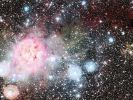
IC_5146.jpgIC 5146 - The "Cocoon Nebula"56 visite"...Ovium non curat numerum lupus..."
(Virgilio)
"...Il lupo non si cura del fatto che le pecore sono contate..." (trad. libera)MareKromium
|
|

SOL1418-2P252248015EFFAX00P2299R1M1.jpgExtremely fresh "Surface Markings" - Sol 1418 (MULTISPECTRUM; credits: Lunexit)56 visitenessun commentoMareKromium
|
|
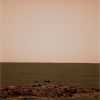
OPP-SOL421-1.jpgA light-pink sky over Meridiani Planum - Sol 421 (RAW Natural Colors; credits for the additional process. and color.: Dr G. Barca - Lunexit Team)56 visitenessun commentoMareKromium
|
|
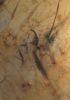
PSP_006477_1745_RED_abrowse-01.jpgDD Tracks in Southern Schiaparelli Basin (extra-detail mgnf - False Colors; credits: Lunexit)56 visiteThis observation shows a Region near the Martian Equator that is a perfect tablet for the scribblings of Dust-Devils. This Region is made up of dark bedrock that is thinly blanketed by bright dust.
Dark tracks form when Dust-Devils scour the surface, exposing the darker substrate. The tracks tend to cluster together, as Dust-Devils repeatedly form over terrain that has been previously scoured and is consequently darker and warmer than the surrounding surface.
Once lofted by a Dust-Devil, the fine dust can be transported great distances before it settles again onto the surface.MareKromium
|
|

ZZ-Mercury-Craters-Unnamed_Double-Ring_Crater-208672.jpgDouble-Ringed Crater (HR)56 visiteNASA’s MESSENGER Spacecraft’s closest approach to Mercury on January 14, 2008, acquired this image as part of a mosaic that covers much of the sunlit portion of a hemisphere not view by previous spacecraft. Images such as this can be read in terms of a sequence of geological events and provide insight into the relative timing of processes that have acted on Mercury's surface in the past.
The double-ringed crater pictured in the upper right of this image appears to be filled with smooth plains material, perhaps volcanic in nature.
This crater was subsequently disrupted by the formation of a prominent cliff, the surface expression of a major crustal fault system that runs alongside part of its southern rim. This may have led to the uplift seen across a portion of the crater’s floor. A smaller crater in the upper left of the image also has been cut by the cliff, showing that the fault beneath the cliff was active after both of these craters had formed.MareKromium
|
|

ZZ-Mercury-Craters-Crater_Field-208852.jpgFresh Primary Impact Crater and Secondary Craters (HR)56 visiteOn January 14, 2008, NASA’s MESSENGER spacecraft observed about half of the hemisphere not seen by Mariner 10. This image shows part of a large, fresh crater with secondary crater chains located near Mercury’s Equator on the side of the Planet newly imaged by MESSENGER.
Large, flat-floored craters show terraced rims from post-impact collapse of their newly formed walls. The hundreds of secondary impactors that are excavated from the Planet’s surface by an incoming object, create long, linear crater chains radial to the main crater.
These chains, in addition to the rest of the ejecta blanket, create the complicated, hilly terrain surrounding the primary crater in the image. By counting craters that have formed since the impact event, the age of the crater can be estimated.
This count can then be compared with a similar count for the crater floor to determine whether any material has partially filled the crater since its formation. With their large size and production of abundant secondary craters, these flat-floored craters both illuminate and confound the study of the geological history of Mercury. MareKromium
|
|

ZZ-Mercury-Limb-208698.jpgMercury's Horizon (HR)56 visiteAs NASA’s MESSENGER drew closer to Mercury for its historic first flyby, the Spacecraft acquired this image showing a variety of surface textures, including smooth plains at the center of the image, numerous impact craters and rough material that appears to have been ejected from the large crater to the lower right.
MESSENGER has acquired over 1200 images of Mercury. These types of images will assist scientists to study, as never before, details to help them learn about the history and evolution of the innermost Planet.MareKromium
|
|
| 25353 immagini su 2113 pagina(e) |
 |
|
|
|
|
1751 | |
|
|
|
|





