| Piú viste |

OPP-SOL1338-1P246971497EFF8788P2391L2M1.jpgVictoria's Paving (detail mgnf - possible natural colors; elab. Lunexit) - Sol 133856 visitenessun commentoMareKromium
|
|

Comets-Comet_Holmes-UY.jpgComet 17-P-Holmes, from Hungary56 visiteCaption NASA:"A beautiful blue ion tail has become visible in deep telescopic images of Comet Holmes. Pointing generally away from the Sun and also planet Earth, the comet's ion tail is seriously foreshortened by our extreme viewing angle.
Still, enthusiastic comet watchers have remarked that on the whole, the compact but tentacled appearance suggests a jellyfish or even a "cosmic calamaro".
This stunning view of the comet's greenish coma and blue tail was recorded on November 4, 2007, in clear skies near Budapest, Hungary.
The colors are caused by molecules in the tenuous gas, like C2 (green) and CO+ (blue), fluorescing in sunlight". MareKromium
|
|

OPP-SOL599-1N181360191EFF6247P1665L0M1.jpgMeridiani Planum (2) - natural colors; elab. Lunexit56 visitenessun commentoMareKromium
|
|

OPP-SOL086-1NN085ILF14CYP07P1983R000M1-B086R1_br2.jpgFram Crater (natural colors; elab. Lunexit)56 visitenessun commentoMareKromium
|
|

Dione-PIA09772.jpgThe "Face" of Dione (HR)56 visiteCaption NASA:"Canyons slink southward on Dione, while bright-walled craters gleam in the Sun. (...) This view is centered on 9° North Latitude and 51° West Longitude.
North on Dione is up.
The image was taken in polarized green light with the Cassini spacecraft narrow-angle camera on Sept. 30, 2007. The view was acquired at a distance of approx. 197.000 Km (such as about 122.000 miles) from Dione and at phase angle of 25°.
Image scale is roughly 1 Km (about 0,6 mile) per pixel".MareKromium
|
|

SOL564-2N176424151EDNAD92P1585L0M1.jpgIs Mars a "Dark" place? - Sol 564 (natural colors; elab. Lunexit)56 visitenessun commentoMareKromium
|
|

Comets-Comet_Holmes-UZ-1.gifBigger than the Sun!56 visiteCaption NASA:"The spherical coma of Comet Holmes has swollen to a diameter of over 1,4 MKM, making the tenuous, dusty cloud even bigger than the Sun. Scattering sunlight, all that dust and gas came from the comet's remarkably active nucleus, whose diameter before the late October outburst was estimated to be a mere 3,4 Km.
In this sharp image, recorded on November 14, 2007, with the Canada-France-Hawaii Telescope, stars are easily visible right through the outer coma, while the nucleus is buried inside the condensed, bright region. The bright region of the coma seems offset from the center, consistent with the idea that a large fragment drifted away from the nucleus and disintegrated, producing the comet's spectacular outburst. Of course, more recent images of Holmes also show the bright star Mirfak (Alpha Persei) shining through as the comet sweeps slowly through the constellation Perseus".MareKromium
|
|
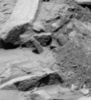
SOL1368-2P247810244ESFAWCCP2546L7M1-2.jpgMars' Anatomy... (2) - Sol 1368 (extra-detail mgnf; elab. Dr G. Barca)56 visite...Che dire? Diciamo che si tratta di uno "spuntone" roccioso di origine ignota, ma di forma...Bizzarramente ed anatomicamente familiare...
Uno "scherzo" della Natura (in tutti i sensi!), per sorridere, fra un Mistero e l'altro...MareKromium
|
|

SOL398-2N161704263EFFA500P1775R0M1.jpgUp-Sun - Sol 398 (natural colors; elab. Lunexit)56 visitenessun commentoMareKromium
|
|
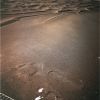
OPP-SOL245-1N149932593EFF3620P1800L0M1.jpgOpportunity's looking around too... (2) - MULTISPECTRUM; elab. Lunexit56 visitenessun commentoMareKromium
|
|

SOL1198-2P232715105EFFATB4P2539L6M1.jpgIn the trench... - Sol 1198 (natural colors; elab. Dr Marco Faccin)56 visitenessun commentoMareKromium
|
|
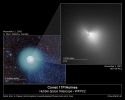
Comets-Comet_Holmes-UZ-1.jpgComet 17-P-Holmes, from Earth and from HST56 visiteNASA's HST has probed the bright core of Comet 17P/Holmes, which, to the delight of sky watchers, mysteriously brightened by nearly a millionfold in a 24-hour period beginning Oct. 23, 2007.
Astronomers used Hubble's powerful resolution to study Comet Holmes' core for clues about how the comet brightened. The orbiting observatory's Wide Field Planetary Camera 2 (WFPC2) monitored the comet for several days, snapping images on Oct. 29, Oct. 31, and Nov. 4. Hubble's crisp "eye" can see objects as small as 33 miles (54 Km) across, providing the sharpest view yet of the source of the spectacular brightening.
The Hubble image at right, taken Nov. 4, shows the heart of the comet. The central portion of the image has been specially processed to highlight variations in the dust distribution near the nucleus. About twice as much dust lies along the east-west direction (the horizontal direction) as along the north-south direction (the vertical direction), giving the comet a "bow tie" appearance.
The composite color image at left, taken Nov. 1 by an amateur astronomer, shows the complex structure of the entire coma, consisting of concentric shells of dust and a faint tail emanating from the comet's right side.
The nucleus-the small solid body that is the ultimate source of all the comet's activity- is still swaddled in bright dust, even 12 days after the spectacular outburst. "Most of what Hubble sees is sunlight scattered from microscopic particles," explained Hal Weaver of The Johns Hopkins University Applied Physics Laboratory in Laurel, Md., who led the Hubble investigation. "But we may finally be starting to detect the emergence of the nucleus itself in this final Hubble image."
Hubble first observed Comet 17P/Holmes on June 15, 1999, when there was virtually no dusty shroud around the nucleus. Although Hubble cannot resolve the nucleus, astronomers inferred its size by measuring its brightness. Astronomers deduced that the nucleus' diameter was approximately 2.1 miles (3.4 kilometers), about the length of New York City's Central Park. They hope to use the new Hubble images to determine the size of the comet's nucleus to see how much of it was blasted away during the outburst.
Hubble's two earlier snapshots of Comet Holmes also showed some interesting features. On Oct. 29, the telescope spied three "spurs" of dust emanating from the nucleus, while the Hubble images taken on Oct. 31 revealed an outburst of dust just west of the nucleus.
The Hubble images, however, do not show any large fragments near the nucleus of Comet Holmes, unlike the case of Comet 73P/Schwassmann-Wachmann 3 (SW3). In the spring of 2006 Hubble observations revealed a multitude of "mini-comets" ejected by SW3 after the comet increased dramatically in brightness.
Ground-based images of Comet Holmes show a large, spherically symmetrical cloud of dust that is offset from the nucleus, suggesting that a large fragment broke off and subsequently disintegrated into tiny dust particles after moving away from the main nucleus.
Unfortunately, the huge amount of dust near the comet's nucleus and the comet's relatively large distance from Earth (149 million miles, or 1.6 astronomical units, for Holmes versus 9 million, or 0.1 astronomical unit for SW3), make detecting fragments near Holmes nearly impossible right now, unless the fragments are nearly as large as the nucleus itself.
The Hubble Comet Holmes observing team comprises H. Weaver and C. Lisse (The Johns Hopkins University Applied Physics Laboratory); P. Lamy (Laboratoire d'Astrophysique de Marseille, France); I. Toth (Konkoly Observatory, Hungary); M. Mutchler (Space Telescope Science Institute); W. Reach (California Institute of Technology); and J. Vaubaillon (California Institute of Technology).
MareKromium
|
|
| 25353 immagini su 2113 pagina(e) |
 |
|
|
|
|
1745 | |
|
|
|
|





