| Piú viste |
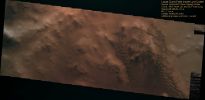
Craters-Lyot_Crater-Dunefield-20080625a-PCF-LXTT.jpgLarge Dunefield inside Lyot Crater (Absolute Natural Colors; credits for the additional process. and color.: Dr Paolo C. Fienga - Lunexit Team)56 visitenessun commentoMareKromium
|
|
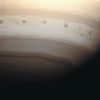
Saturn-PIA10411.jpgStorm Alley (MULTISPECTRUM-2; credits: Lunexit)56 visiteCaption NASA:"A line of dark vortices charge through Saturn's "Storm Alley" — such as a Region that has seen intensive storm activity since the Cassini Spacecraft began its observations of the Planet in early 2004.
The image was taken with the Cassini Spacecraft wide-angle camera on May 19, 2008 using a spectral filter sensitive to wavelengths of infrared light centered at 728 nanometers. The view was obtained at a distance of approx. 863.000 Km (about 536.000 miles) from Saturn.
Image scale is roughly 48 Km (about 30 miles) per pixel".MareKromium
|
|

PHOE-SOL004-lg_923.jpgMartian "Gel" or "Liquid Water"? - Sol 4 (Superdefinition; credits: Dr M. Faccin)56 visitenessun commentoMareKromium
|
|
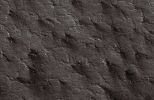
PSP_003520_1010_RED_abrowse-01.jpgSouth Polar Spiders (edt - MULTISPECTRUM-2; credits: Lunexit)56 visitenessun commentoMareKromium
|
|

PHOE-SOL031-lg7754-7770-7771-2.jpgAnemometer - Sol 31 (natural colors; credits: Dr G. Barca)56 visitenessun commentoMareKromium
|
|
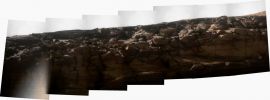
OPP-SOL1571-Panoramic-4.jpgThe "Inner Rim" of Victoria - Sol 1571 (Photomosaic + MULTISPECTRUM; credits: Dr G. Barca & Lunexit)56 visitenessun commentoMareKromium
|
|
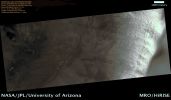
PSP_007153_2505_RED_abrowse.jpgDunes in Vastitas Borealis (MULTISPECTRUM; credits: Lunexit)56 visiteWindblown sand can be used to tell us the wind direction on Mars. Small-scale features, such as Ripples and Wind Tails, indicate the most recent wind directions.
Wind-Tails may be the remnants of a formerly widespread mantle of sediment that has been removed. Alternatively, they may have formed when aeolian sediment is deposited in the wind-shadow zone behind obstacles such as the 1,5 mt diameter boulders on the crater rim (Sx of the image). Their orientation points in the downwind direction and in this frane you can see two wind tails that extend from some boulders, thus indicating winds blowing from at least two different directions.
Ripples occur on the surface of all dunes imaged at HiRISE resolution on Mars and the alignment of Ripples often results from the influence of more than one wind direction.
In this frame, the Ripples are superimposed on a low dome dune.
On Earth, ripples on the surface of sand dunes may re-orientate in a matter of hours, but the time required to re-orientate Ripples on Mars is unknown.MareKromium
|
|
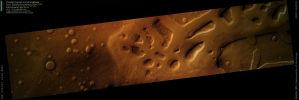
PSP_006567_2220_RED_abrowse-00.jpgFlooded Terrain in Terra Sabaea (MULTISPECTRUM; credits: Lunexit)56 visiteTwo distinctly different terrain types are visible in this image of the Northern Lowlands of Mars: an older, heavily cratered landscape has been inundated by much younger flows.
The valley floors are filled with flows that have relatively smooth surfaces and very few superposed impact craters.
In contrast, the mesas and hills making up the older terrain have blocky surfaces, perhaps fragmented by ancient impacts. MareKromium
|
|
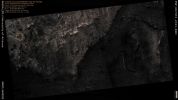
PSP_007055_2015_RED_abrowse-0.jpgVolcanic and Clay Materials near Nili Fossae (ctx frame - MULTISPECTRUM; credits: Lunexit)56 visiteThis image is located West of the Nili Fossae Trough, one of the proposed Landing Sites for the Mars Science Laboratory. Here, we combine information from two other MRO instruments, the Context Camera (CTX) and the Compact Reconnaissance Imaging Spectrometer for Mars (CRISM), to provide insight into the geology of the Region.
Nota Lunexit: sicuramente le informazioni NASA su questo frame sono interessanti e preziose, ma noi Vi invitiamo a prestare un PARTICOLARE ATTENZIONE alla struttura ed alla configurazione superficiale delle dune che caratterizzano tutta la zona ripresa.
Si tratta, in effetti, di dune che, in passato, a causa della loro conformazione ed albedo, hanno ingannato innumerevoli Ricercatori i quali le avevano scambiate per "tubazioni" affioranti.
L'edt n. 3 (elaborato in colori naturali) Vi permetterà di cogliere al meglio non solo la - riteniamo incredibile - conformazione di queste mega-dune, ma anche la loro del tutto peculiare colorazione.MareKromium
|
|
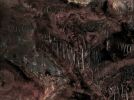
PSP_007055_2015_RED_abrowse-4.jpgVolcanic and Clay Materials near Nili Fossae (edm n. 3 - natural colors; credits: Lunexit)56 visiteChe ne dite di queste "dune"? "Curiose", vero? MareKromium
|
|

PHOE-SOL034-lg_8567-2.jpgIs there "Something" in the Trench?!? - Sol 34 (edm - Superdefinition; credits: Dr M. Faccin)56 visitenessun commentoMareKromium
|
|
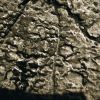
OPP-SOL556-1.jpgPuzzle-Rock - Sol 556 (Superdefinition + MULTISPECTRUM; credits: Dr G. Barca & Lunexit)56 visitenessun commentoMareKromium
|
|
| 25353 immagini su 2113 pagina(e) |
 |
|
|
|
|
1742 | |
|
|
|
|





