| Piú viste |
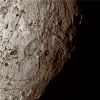
Japetus-N00092098.jpgJapetus' Terminator (possible natural colors; elab. Lunexit)56 visiteCaption NASA:"N00092098.jpg was taken on September 10, 2007 and received on Earth September 12, 2007. The camera was pointing toward Japetus that, at the time, was approx. 75.670 Km away, and the image was taken using the CL1 and CL2 filters. This image has not been validated or calibrated".MareKromium
|
|

Japetus-N00091975.jpgThe Mountains of Japetus (Transition Zone; possible natural colors - elab. Lunexit)56 visiteCaption NASA:"N00091975.jpg was taken on September 10, 2007 and received on Earth September 11, 2007. The camera was pointing toward Japetus that, at the time, was approximately 1651 Km away, and the image was taken using the CL1 and CL2 filters. This image has not been validated or calibrated".MareKromium
|
|
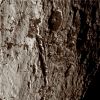
Japetus-N00092243.jpgA VERY deep scar on Japetus' Face (possible natural colors; elab. Lunexit)56 visiteCaption NASA:"N00092243.jpg was taken on September 10, 2007 and received on Earth September 12, 2007. The camera was pointing toward Japetus that, at the time, was approximately 23.404 Km away, and the image was taken using the CL1 and CL2 filters. This image has not been validated or calibrated".MareKromium
|
|

Japetus-N00092009.jpgThe "Voyager" Mountains (possible natural colors; elab. Lunexit)56 visiteCaption NASA:"N00092009.jpg was taken on September 10, 2007 and received on Earth September 11, 2007. The camera was pointing toward Japetus that, at the time, was approximately 7.037 Km away, and the image was taken using the CL1 and CL2 filters. This image has not been validated or calibrated".MareKromium
|
|
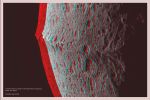
Japetus-3D.jpgJapetus in 3D56 visiteCaption NASA:"This bizarre, equatorial ridge extending across and beyond the dark, Leading Hemisphere of Japetus gives the two-toned Saturnian moon a distinct walnut shape. With red/blue glasses you can check out a remarkable stereo composition of this extraordinary feature -- based on close-up images from this week's Cassini Spacecraft flyby.
In fact, the ridge's combination of equatorial symmetry and scale, about 20 Km wide and reaching up to 20 Km above the surface, is not known to be duplicated anywhere else in our Solar System. The unique feature was discovered in Cassini images from 2004. It appears to be heavily cratered and therefore ancient, but the origin of the equatorial ridge on Iapetus remains a mystery".MareKromium
|
|
He_2-47.jpgHe 2-47 - Planetary Nebula56 visite"...Falsos in Amore, (sed) odia non fingere..."
(Tacito)
"...Si può esser falsi in Amore, ma l'odio non sa fingere..." (trad. libera)MareKromium
|
|

Japetus-Orbit-01.jpgPolar view of Japetus's orbit56 visitenessun commentoMareKromium
|
|

as04-01-641.JPGAS 04-01-0711 - Crescent Mother Earth56 visitenessun commentoMareKromium
|
|
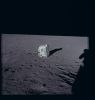
as12-46-6784.JPGAS 12-46-6784 - The ALSEP Package56 visiteCaption NASA:"116:34:14 MT - Down-Sun photograph of ALSEP package No. 1, which Pete removed from the SEQ Bay at 116:33:36".MareKromium
|
|
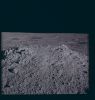
as12-46-6832.JPGAS 12-46-6832 - The "Large Lunar Mound"56 visiteCaption NASA:"118:09:17 MT - Pete has stepped to his right to take a second view across the top of the Large Mound. The SIDE/CCIG is in the distance on the right. The center of the image is blurred and discolored by a dust smudge that first appeared on 6813".MareKromium
|
|
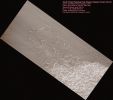
PSP_004765_0940_RED_browse.jpgSouth Pole Residual Cap - Swiss-Cheese Terrain Monitoring (Natural Colors; credits for the additional process. and color.: Dr Paolo C. Fienga - Lunexit Team)56 visiteLike Earth, Mars has concentrations of water ice at both Poles. Because Mars is so much colder however, CO2 ice is deposited at high latitudes in the Winter and is removed in the Spring, analogous to winter-time water ice/snow on Earth.
Around the South Pole there are areas of this CO2 ice that do not disappear every Spring, but rather survive Winter after Winter; this persistent CO2 ice is called the "South Pole Residual Cap". The retention of CO2 ice throughout the year by the Southern Polar Cap is one characteristic that distinguishes it significantly from Mars' North Polar Cap.
As can be seen in this HiRISE image of the South Pole Residual Cap, relatively high-standing smooth material is broken up by circular, oval, and blob-shaped depressions. This patterned terrain is called "Swiss Cheese" terrain.MareKromium
|
|
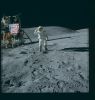
as16-113-18342.JPGAS 16-113-18342 - Salutations from the Moon!56 visiteCaption NASA:"120:26:17 MT - Charlie Duke's formal salute early in EVA-1. Stone Mountain is in the background".
MareKromium
|
|
| 25353 immagini su 2113 pagina(e) |
 |
|
|
|
|
1740 | |
|
|
|
|





