| Piú viste |

Dione-PIA07581.jpgThe "Old Face" of Dione56 visiteOriginal NASA caption"Dione's Southern Polar Region (as shown here) contains fractures whose softened appearance suggests that they have different ages than the bright braided fractures seen in the image to the North. This Region is also notably brighter than the near equatorial terrain at the top of the image. At center, several of the bright, radial streaks mark a feature named Cassandra, which may be a rayed crater or a tectonic feature.
This view of Dione (1118 Km across) captures high southern latitudes on the Moon's trailing hemisphere.
The image was taken in visible light with the Cassini spacecraft narrow-angle camera on Aug. 1, 2005, at a distance of approx. 269.000 Km(about 167.000 miles) from Dione and at a Sun-Dione-spacecraft, or phase, angle of 41°. Image scale is 2 Km (about 1,2 miles) per pixel".
|
|

Phoebe-PIA06075.jpgPhoebe's SkyLine56 visiteImages like this one, showing bright wispy streaks thought to be ice revealed by subsidence of crater walls, are leading to the view that Phoebe is an ice-rich body overlain with a thin layer of dark material. Obvious down slope motion of material occurring along the walls of the major craters in this image is the cause for the bright streaks, which are over-exposed here. Significant slumping has occurred along the crater wall at top left.
The slumping of material might have occurred by a small projectile punching into the steep slope of the wall of a pre-existing larger crater. Another possibility is that the material collapsed when triggered by another impact elsewhere on Phoebe. Note that the bright, exposed areas of ice are not very uniform along the wall. Small craters are exposing bright material on the hummocky floor of the larger crater.
Elsewhere on this image, there are local areas of outcropping along the larger crater wall where denser, more resistant material is located. Whether these outcrops are large blocks being exhumed by landslides or actual 'bedrock' is not currently understood.
The crater on the left, with most of the bright streamers, is about 45 kilometers (28 miles) in diameter, front to back as viewed. The larger depression in which the crater sits is on the order of 100 kilometers (62 miles) across. The slopes from the rim down to the hummocky floor are approximately 20 kilometers (12 miles) long; many of the bright streamers on the crater wall are on the order of 10 kilometers (6 miles) long. A future project for Cassini image scientists will be to work out the chronology of slumping events in this scene.
This image was obtained at a phase, or Sun-Phoebe-spacecraft, angle of 78 degrees, and from a distance of 11,918 kilometers (7,407 miles). The image scale is approximately 70 meters (230 feet) per pixel. No enhancement was performed on this image.
|
|

SOL594-phobos_deimos_585-A585R1.jpgDeimos and Phobos56 visite"It is incredibly cool to be running an observatory on another planet" said planetary scientist Jim Bell of Cornell University, Ithaca, N.Y., lead scientist for the panoramic cameras on Spirit and Opportunity. In this picture, both Martian Moons, Deimos on the left and Phobos on the right, are well visible in the night sky in front of the constellation Sagittarius. Part of Sagittarius resembles an upside-down teapot. Phobos is the brighter object on the right; Deimos is on the left.
Spirit acquired these enhanced-brightness images with the PanCam on the night of Sol 585 (Aug. 26, 2005).
|
|

SOL590-PIA06339_modest.jpgPhobos, Deimos and "The 7 Sisters" - Sol 59056 visiteOriginal caption:"(...) In this view, the Pleiades, a star cluster also known as the "Seven Sisters", is visible in the lower left corner. The bright star Aldebaran and some of the stars in the constellation of Taurus are visible on the right. Spirit acquired this image the evening of Sol 590 (Aug. 30, 2005). The image on the right provides an enhanced-contrast view with annotation.
Within the enhanced halo of light is an insert of an unsaturated view of Phobos taken a few images later in the same sequence (...)".
|
|

OPP-SOL578-1F179501838EFF59E3P1205R0M1.jpgPanorama from Meridiani Planum (1) - Sol 57856 visiteI Soles passano ma...Erebus Crater ancora non si vede.
In ogni caso, guardando le immagini orbitali MGS ci siamo fatti l'idea che Erebus appartenga alla famiglia dei cosiddetti "exhumed craters" ossìa degli antichi crateri i quali, dopo essere stato sepolti - nelle ere - da polveri e sabbie, grazie all'azione (primaria) dei venti hanno incominciato a riaffiorare.
Dunque non ci aspettiamo pareti alla Endurance, tanto per capirci, ma leggeri affioramenti rocciosi i quali sono in una visione dall'alto riescono a mostrarci quella rotondità tipica dei crateri da impatto.
|
|
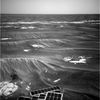
OPP-SOL578-1N179502226EFF59EKP0655L0M1.jpgThe surroundings of Erebus Crater (3) - Sol 57856 visitenessun commento
|
|
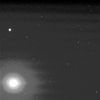
SOL602-2P179768095EFFAEGHP2733L1M1.jpgRising Phobos... (1) - Sol 60256 visiteIl rapido incedere di Phobos nel cielo di Marte, attraverso tre immagini del Sol 602.
|
|
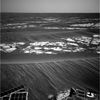
OPP-SOL582-1N179857733EFF60C5P0705L0M1.jpgErebus Area (1) - Sol 58256 visitenessun commento
|
|
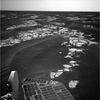
OPP-SOL582-1N179857820EFF60C5P0705R0M1.jpgErebus Area (3) - Sol 58256 visitenessun commento
|
|
OPP-SOL582-1N179857907EFF60C5P0705L0M1.jpgErebus Area (4) - Sol 58256 visitenessun commento
|
|
OPP-SOL582-1N179857988EFF60C5P0705R0M1.jpgErebus Area (5) - Sol 58256 visitenessun commento
|
|
OPP-SOL582-1P179859197EFF60C5P2367R2M1.jpgErebus Area (6) - Sol 58256 visitenessun commento
|
|
| 25353 immagini su 2113 pagina(e) |
 |
|
|
|
|
1724 | |
|
|
|
|





