| Piú viste |

OPP-SOL1235-PIA09935-DustStorm.gifPlanetary Dust Storm (GIF Movie)56 visiteNASA's Opportunity rover is literally seeing some of its darkest days. Both Mars Exploration Rovers have been riding out a regional dust storm for several weeks. Conditions became particularly dreary in the Meridiani Planum region where Opportunity sits, perched on the edge of "Victoria Crater."
This image is a time-lapse composite where each horizon-survey image has been compressed horizontally (but not vertically) to emphasize the sky. The relative brightness and darkness of the sky from sol to sol (over a 30-sol period beginning June 14, 2007) is depicted accurately in these images, which view roughly the same part of the plains southwest of the rover. The images are approximately true color composites, generated from calibrated radiance data files using the panoramic camera's 601-nanometer, 535-nanometer and 482-nanometer filters.
The rovers' atmospheric science team is concerned that smaller, regional dust storms could expand into a larger, globe-encircling storm. That could extend the time the sun stays obscured, challenging the capability of Opportunity's solar panels to produce enough electricity for the rover to function.
Fortunately, as of July 19, 2007, the Opportunity site is clearing slightly. When the storm ends, atmospheric scientists hope to review data from the rovers that will help them determine what sort of dust was being lifted and distributed.
The numbers across the top of the image report a measurement of atmospheric opacity, called by the Greek letter tau. The lower the number, the clearer the sky. Both Opportunity and Spirit have been recording higher tau measurements in July 2007 than they had seen any time previously in their three and a half years on Mars. The five sol numbers across the bottom correspond (left to right) to June 14, June 30, July 5, July 13 and July 15, 2007.
MareKromium
|
|

Enceladus-N00086994.jpgSpace Encounter: Enceladus and Tethys (3)56 visitenessun commentoMareKromium
|
|

Enceladus-N00086992.jpgSpace Encounter: Enceladus and Tethys (2)56 visitenessun commentoMareKromium
|
|
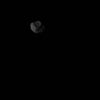
Hyperion-N00086894.jpgTumbling Hyperion, again!56 visiteCaption NASA:"N00086894.jpg was taken on July 23, 2007 and received on Earth July 23, 2007. The camera was pointing toward HYPERION that, at the time, was approximately 330.862 Km away.
The image was taken using the CL1 and IR3 filters and it has not been validated or calibrated".MareKromium
|
|

Dione-N00086957.jpgSpace Encounter: Dione and Prometheus (3)56 visitenessun commentoMareKromium
|
|
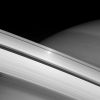
Saturn-PIA08992.jpgSurging Across the Rings56 visiteCaption NASA:"A surge in brightness appears on the Rings directly opposite the Sun from the Cassini Spacecraft. This "opposition surge" travels across the Rings as the Spacecraft watches. This view looks toward the sunlit side of the Rings from about 9° below the Ring-Plane.
The image was taken in visible light with the Cassini spacecraft wide-angle camera on June 12, 2007 using a spectral filter sensitive to wavelengths of infrared light centered at 853 nanometers.
The view was acquired at a distance of approx. 524.374 Km (such as about 325.830 miles) from Saturn.
Image scale is 31 Km (about 19 miles) per pixel".MareKromium
|
|
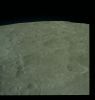
as17-153-23593.jpgAS 17-153-23593 - Lunar Horizon56 visiteImage Collection: 70mm Hasselblad
Mission: 17
Magazine: 153
Magazine Letter: MM
Revolution: 40
Latitude: 4,3° South
Longitude: 129,7° East
Lens Focal Length: 80 mm
Camera Altitude: 124 Km
Sun Elevation (on Local Horizon): 40°
Mission Activity: REV 40
Film Type: SO-368
Film Width: 70 mm
Film Color: colorMareKromium
|
|
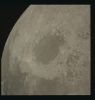
as17-152-23330.jpgAS 17-152-23330 - Lunar Maria: Crisium and Tranquillitatis (elab. in true colors by Lunexit)56 visitenessun commentoMareKromium
|
|

C-Phoenix-PolarDunes.jpgPossible Northern Scenarios (1) - Dark Dunes and Ice56 visitenessun commentoMareKromium
|
|

NGC-6960-3.jpgNGC 6960 - The "Veil Nebula"56 visite"...The one who had much, did not have too much,
And the one who had little, did not have too little..."
- 2, Corinthians, 8:15MareKromium
|
|
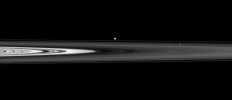
The_Rings-PIA08997.jpgOther "Brothers in the Night": Pan and Pandora56 visiteCaption NASA:"The Cassini spacecraft skims past Saturn's Ring-Plane at a low angle, spotting two ring moons on the far side.
Pan (26 Km, or about 16 miles across) sits within the Encke Gap right of center. Beyond the F-Ring hovers Pandora (84 Km, or approx. 52 miles across).
This view looks toward the unilluminated side of the Rings from less than 1° above the Ring-Plane.
The image was taken in visible light with the Cassini spacecraft narrow-angle camera on June 14, 2007 at a distance of approx. 1,6 MKM (about 1 MMs) from Saturn. Image scale is roughly 10 Km (about 6 miles) per pixel".MareKromium
|
|

Titan-PIA09007.jpg...Ring of Fire... (natural colors; elab. Lunexit)56 visiteCaption NASA:"This celestial circle of light is produced by the glow of Sunlight scattered through the periphery of Titan's atmosphere as the Sun is occulted by Titan. It is the sum of all the sunsets and sunrises taking place on Titan at once.
The intriguing structure of Titan's North Polar "hood" can be seen at upper left.
A thin, detached, high-altitude global haze layer encircles the moon.
North on Titan is up and rotated 23° to the left.
The image was taken in visible blue light with the Cassini spacecraft wide-angle camera on June 29, 2007. The view was obtained at a distance of approx. 210.000 Km (about 131.000 miles) from Titan and at a Sun-Titan-spacecraft, or phase, angle of 167°.
Image scale is roughly 12 Km (about 8 miles) per pixel".MareKromium
|
|
| 25353 immagini su 2113 pagina(e) |
 |
|
|
|
|
1718 | |
|
|
|
|





