| Piú viste |

Dione-N00086957.jpgSpace Encounter: Dione and Prometheus (3)56 visitenessun commentoMareKromium
|
|
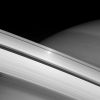
Saturn-PIA08992.jpgSurging Across the Rings56 visiteCaption NASA:"A surge in brightness appears on the Rings directly opposite the Sun from the Cassini Spacecraft. This "opposition surge" travels across the Rings as the Spacecraft watches. This view looks toward the sunlit side of the Rings from about 9° below the Ring-Plane.
The image was taken in visible light with the Cassini spacecraft wide-angle camera on June 12, 2007 using a spectral filter sensitive to wavelengths of infrared light centered at 853 nanometers.
The view was acquired at a distance of approx. 524.374 Km (such as about 325.830 miles) from Saturn.
Image scale is 31 Km (about 19 miles) per pixel".MareKromium
|
|
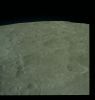
as17-153-23593.jpgAS 17-153-23593 - Lunar Horizon56 visiteImage Collection: 70mm Hasselblad
Mission: 17
Magazine: 153
Magazine Letter: MM
Revolution: 40
Latitude: 4,3° South
Longitude: 129,7° East
Lens Focal Length: 80 mm
Camera Altitude: 124 Km
Sun Elevation (on Local Horizon): 40°
Mission Activity: REV 40
Film Type: SO-368
Film Width: 70 mm
Film Color: colorMareKromium
|
|
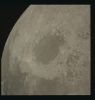
as17-152-23330.jpgAS 17-152-23330 - Lunar Maria: Crisium and Tranquillitatis (elab. in true colors by Lunexit)56 visitenessun commentoMareKromium
|
|

C-Phoenix-PolarDunes.jpgPossible Northern Scenarios (1) - Dark Dunes and Ice56 visitenessun commentoMareKromium
|
|

NGC-6960-3.jpgNGC 6960 - The "Veil Nebula"56 visite"...The one who had much, did not have too much,
And the one who had little, did not have too little..."
- 2, Corinthians, 8:15MareKromium
|
|
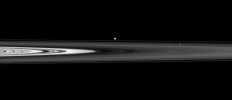
The_Rings-PIA08997.jpgOther "Brothers in the Night": Pan and Pandora56 visiteCaption NASA:"The Cassini spacecraft skims past Saturn's Ring-Plane at a low angle, spotting two ring moons on the far side.
Pan (26 Km, or about 16 miles across) sits within the Encke Gap right of center. Beyond the F-Ring hovers Pandora (84 Km, or approx. 52 miles across).
This view looks toward the unilluminated side of the Rings from less than 1° above the Ring-Plane.
The image was taken in visible light with the Cassini spacecraft narrow-angle camera on June 14, 2007 at a distance of approx. 1,6 MKM (about 1 MMs) from Saturn. Image scale is roughly 10 Km (about 6 miles) per pixel".MareKromium
|
|

Titan-PIA09007.jpg...Ring of Fire... (natural colors; elab. Lunexit)56 visiteCaption NASA:"This celestial circle of light is produced by the glow of Sunlight scattered through the periphery of Titan's atmosphere as the Sun is occulted by Titan. It is the sum of all the sunsets and sunrises taking place on Titan at once.
The intriguing structure of Titan's North Polar "hood" can be seen at upper left.
A thin, detached, high-altitude global haze layer encircles the moon.
North on Titan is up and rotated 23° to the left.
The image was taken in visible blue light with the Cassini spacecraft wide-angle camera on June 29, 2007. The view was obtained at a distance of approx. 210.000 Km (about 131.000 miles) from Titan and at a Sun-Titan-spacecraft, or phase, angle of 167°.
Image scale is roughly 12 Km (about 8 miles) per pixel".MareKromium
|
|

Venusian_Atmosphere-ORB410_411_tot_H1.jpgThe Venusian Atmosphere under the Messenger56 visiteCaption ESA:"The images in this panel were obtained by the VIRTIS imaging spectrometer on board Venus Express on 5 and 6 June 2007, before and after MESSENGER’s closest approach to the Planet. These panels from VIRTIS provide a night-side view of the same Region that Messenger flew over and imaged.
The images where obtained at 1,7 micrometres, revealing atmospheric details down to an altitude of 50 Km from the surface".MareKromium
|
|

ZZ-ColorMars-11-20040512a.jpgMars from Orbit, as a "Human" would see it...by Keith Laney (5)56 visitenessun commentoMareKromium
|
|
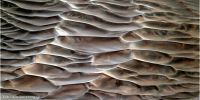
ZZ-ZZ-TheDunes-K12.jpgDunes (natural colors - elab. Keith Laney)56 visiteUna bellissima interpretazione delle dune di Endurance operata dal nostro buon Amico (ed ottimo Artista!) Keith Laney. Solo una precisazione: se i colori delle dune fangose di Endurance fossero davvero questi, allora potremmo TRANQUILLAMENTE parlare di una nuova (e strabiliante) evidenza oggettiva relativa alle modalità (peculiari, ma fisicamente comprensibili) attraverso le quali gli Idrocarburi affiorano su Marte.
Attenzione però: a nostro avviso questa elaborazione in "Natural Colors" è bella e suggestiva, MA NON REALISTICA.
La nostra conclusione è basata sull'applicazione del medesimo tipo di colorizzazione adottato bda Keith Laney sull'intera area di Endurance e non soltanto sulle dunette fangose che caratterizzano il fondo del cratere.
Ebbene, adottando una simile tecnica di colorizzazione, Endurance e tutta la regione a cui accede, dovrebbero presentarsi di color grigio/verde, con riflessi argento. Certo, un'ipotesi suggestiva ed un paesaggio - a quel punto - "Alieno ed Esotico" alla ennesima potenza ma...Io credo che la nostra interpretazione (frame che segue) sia, sebbene meno immaginosa e suggestiva, decisamente più verosimile.
E poi...Ai Posteri (l'ardua) Sentenza!MareKromium
|
|
![ZZ-ZZ-ThePaving-1P185709063ESF64BNP2574L456]-01.jpg](albums/userpics/10060/small_ZZ-ZZ-ThePaving-1P185709063ESF64BNP2574L456%5D-01.jpg "Nome del file=ZZ-ZZ-ThePaving-1P185709063ESF64BNP2574L456]-01.jpg
Dimensione del file=2313KiB
Dimensioni=2400x1200
Aggiunta il=Ago 20, 2007")
ZZ-ZZ-ThePaving-1P185709063ESF64BNP2574L456]-01.jpgThe "Martian Paving" (natural colors - elab. Lunexit)56 visitenessun commentoMareKromium
|
|
| 25353 immagini su 2113 pagina(e) |
 |
|
|
|
|
1713 | |
|
|
|
|





