| Piú viste |
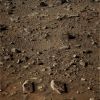
SOL1946-GB-LXT.jpgOrange and Brownish Rocks and Sand - Sol 1946 (Natural Colors; credits: Dr G. Barca)56 visitenessun commentoMareKromium
|
|

The_Rings-N00140429.jpgRings and "noise"56 visitenessun commentoMareKromium
|
|
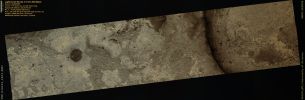
PSP_010222_1815_RED_abrowse.jpgLight-Toned Rock and Dunes in Meridiani Planum (Natural Colors; credits: Lunexit)56 visiteNote Lunexit: in questo frame, un esempio di come il processing in Natural Colors (cioè i colori che percepirebbe un essere umano il quale si trovasse in loco) possa condurre a risultati radicalmente differenti rispetto al processing in (possible) True Colors (frame precedente).
ATTENZIONE: entrambi i processing sono veritieri (nel senso di eseguiti "A Regola d'Arte" e senza alterazioni intenzionali dei dati), eppure i colori che si vedono sono PROFONDAMENTE diversi!
E' - anche - per questo motivo che la diatriba sui "Colori Veri" di un Mondo (un qualsiasi Mondo) è intrinsecamente complessa, contraddittoria e, per certi versi, anche fuorviante - oltre che, a nostro avviso, tendenzialmente infinita...).
Pensateci sopra...MareKromium
|
|
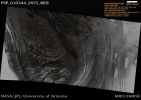
PSP_010344_2655_RED_abrowse.jpgScarp-fed Dark Dunes and NPLD (Natural Colors; credits: Lunexit)56 visiteMultiple levels within the North Polar Layered Deposits (NPLD) are visible in this HiRISE image.
The NPLD are a stack of dusty water-ice layers that are thought to record information about past Martian climates in the same way that Ice-Caps on the Earth record variations in our climate. These Martian layers are visible in the walls of troughs and scarps eroded into the stack.
One such scarp-face is visible on the far left of the full image and decreases in height from left to right.
Scientists continue to debate the length of time required to accumulate this stack of layers with estimates ranging from a few million years to about a billion years. Although we don’t yet know which layer corresponds to which time in Mars’ History, we can still use these layers to try to understand how the climate has changed over this period.
The topmost layers, which are the most recent (far left of the image), are brighter and appear gray-ish in this Natural Color view. They are interpreted to be a mixture of water ice and dust. The lower layering is more complex and appears to be a mixture of bright whiteiish layers (that we think are ice) and dark blue-ish layers (which we think are mostly sand).
A large pit in the center of the image penetrates deeply into this stack of layers and shows these alternating sandy and icy layers extending to depths of hundreds of meters (about 1000 feet).
Erosion of the dark sandy layers releases sandy material which collects into dunes such as the linear example that stretches across the middle of this image.MareKromium
|
|

SOL391-2P161076449EFFA300P2367R1M1_p1-3.jpgXenomorph? (EDM n. 2; credits: Ivana Tognoloni)56 visiteGuardate con attenzione questo secondo EDM: la forma del dettaglio è così evidentemente (e diremmo sfacciatamente) antropomorfica, da farci pensare che si possa trattare REALMENTE di qualcosa di SIMILE ad una Creatura di tipo simil-Terrestre (se non altro nelle forme), ancorchè la sua Biologia possa essere radicalmente differente.
I "comportamenti" di queste "Creature", poi, sono (o almeno sembrano) essere caratterizzati da una costante: queste Entità sbucano dal suolo, o dall'interno di rocce (pseudo-rocce), e osservano il Rover - cercando di non esporsi.
Saranno forse attratte dal rumore che il Rover emette, sebbene questo sia debole e distante (ricordate che i suoni, sulla Superficie di Marte, si trasmettono molto diversamente - più "lenti" e "deboli" - rispetto a quanto accade sulla Terra)?
O sono attratte, semplicemente, dal movimento del Rover?
Oppure stiamo solo continuando a prendere abbagli su abbagli, vedendo cose che non esistono e/o travisando il contenuto di rilievi reali?
Pensate, ancora una volta, al Rasoio di Okkam, alla Grandezza dell'Universo ed alla limitatezza della nostra (attuale) Scienza e Conoscenza, e poi provate a darVi una risposta da soli...
E Grandissimi Complimenti ad Ivana Tognoloni!MareKromium
|
|
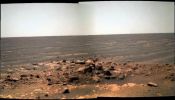
OPP-SOL1950-MF.jpgPossible Secondary Crater near Victoria Crater (Resolution Crater) - Sol 1950 (Photo-composite Panorama - Natural Colors; credits: Matteo Fagone)56 visitenessun commentoMareKromium
|
|
OPP-SOL1985-GB-LXT1.jpgExploring "Block Island" - Sol 1985 (Natural Colors; credits: Dr G. Barca & Lunexit)56 visitenessun commentoMareKromium
|
|
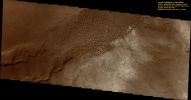
Dunes-NiliPatera-20090824a.jpgLarge Dunefield in Nili Patera (possible Natural Colors; credits: Lunexit)56 visitenessun commentoMareKromium
|
|
OPP-SOL1957-1_copia2.jpgMeridiani Skyline - Sol 1957 (Natural Colors; credits: Dr G. Barca)56 visitenessun commentoMareKromium
|
|

SOL2002-3845328546_f152b6cf38.jpgSunset - Sol 2002 (Natural Colors; credits: "hortonheardawho")56 visitenessun commentoMareKromium
|
|

Landslides-Capri_Chasma-20090831a.jpgMultiple Landslide Deposits in Capri Chasma (Natural - but enhanced - Colors; credits: Lunexit)56 visitenessun commentoMareKromium
|
|
OPP-SOL1950-GB-LXT-3.jpgAfternoon in Meridiani Planum (3) - Sol 1950 (Natural Colors; credits: Dr G. Barca & Lunexit)56 visitenessun commentoMareKromium
|
|
| 25353 immagini su 2113 pagina(e) |
 |
|
|
|
|
1689 | |
|
|
|
|





