| Piú viste |

Z-099-Lunar Impact-SMART-1.jpgThe Impact Sequence56 visiteCaption ESA originale:"Analysis of images obtained at the CFHT by Christian Veillet have revealed a plume of debris thrown up when SMART-1 impacted the Lunar Surface.
The observations were made with the WIRCam wide-field infrared camera with 10s exposure time through an H2 narrow-band filter at 2122 nanometers with a 32 nanometers bandwidth.
Each image is approximately 2'x 2', equating to 200x200 Km".
|
|
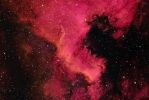
NGC-7000-02.jpgNGC 7000 - North America Nebula56 visite"...Veritas absolutio semper est simplex..."
(Ammiano Marcellino)
"...La Perfetta Verità è sempre semplice..."
|
|
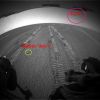
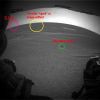
OPP-SOL948-1R212348131EFF7672P1301R0M1.jpgOn the Land and in the Sky... (1) - Sol 94856 visiteAncora due interessantissimi frames selezionati dal bravissimo Dr Gianluigi Barca i quali ci mostrano, oltre a queste (realmente) misteriose "Presenze di Luce" che chiamiamo S.L.O. (Star-Like Objects), anche dei bizzarri rilievi superficiali.
Ma attenzione: quando diciamo bizzarri, intendiamo solo dire - almeno in questi casi - oggetti "dalla forma curiosa", senza implicare (speculando alla cieca) una loro totale o parziale artificialità.
Rilievi "strani", come il "dado" di questo frame o il "cuoricino nero" che vedrete nel prossimo...
|
|
OPP-SOL948-1R212348438EFF76ACP1313L0M1.jpgOn the Land and in the Sky... (2) - Sol 94856 visitenessun commento
|
|

OPP-SOL947-1P212253277ESF7600P2585R2M1.jpgMartian Paving near Victoria (2) - Sol 94756 visitenessun commento
|
|

Japetus-PIA08273.jpgDuotone Moon56 visiteCaption NASA originale:"The many impact scars borne by Japetus are made far more conspicuous in the Region of Transition from its dark Hemisphere to its bright one.
In this terrain, the dark material that coats Cassini Regio accentuates slopes and crater floors, creating a land of stark contrasts.
The image was taken in visible light with the Cassini spacecraft narrow-angle camera on Sept. 6, 2006 at a distance of approx. 2,2 MKM (about 1,4 MMs) from Japetus and at a Sun-Japetus-spacecraft, or phase, angle of 26°. Image scale is roughly 13 Km (about 8 miles) per pixel".
|
|

Janus-N00066626.jpgMoments of "Janus" (1)56 visitenessun commento
|
|

Janus-N00066645.jpgMoments of "Janus" (3)56 visitenessun commento
|
|
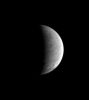
Enceladus-PIA08276.jpgEnceladus56 visiteCaption NASA originale:"Cassini spies the wrinkled, fractured and remarkably crater-poor terrain of Enceladus. Scientists are working to understand what causes the moon's surprising geologic activity (see also PIA07759).
North on Enceladus is up and rotated 20° to the left.
The image was taken in visible light with the Cassini spacecraft narrow-angle camera on Sept. 8, 2006 at a distance of approx. 560.000 Km (about 348.000 miles) from Enceladus and at a Sun-Enceladus-spacecraft, or phase, angle of 103°. Image scale is roughly 3 Km (a little less than 2 miles) per pixel".
|
|
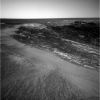
OPP-SOL952-1N212701027EFF76EVP0657L0M1.jpgThe features of Victoria Crater, from Duck Bay (2) - Sol 95256 visitenessun commento
|
|
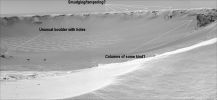
OPP-SOL952-site_B76_275_navcam_CYL_L-B953R1-2.jpgVictoria Crater, from Duck Bay (2)56 visitenessun commento
|
|
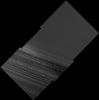
R-NorthPolarLayers-PIA08791_modest.jpgNorth Polar Layers (or "Bands")56 visiteThe HiRISE on NASA's MRO acquired this image during its first day of test imaging from the spacecraft's low-altitude mapping orbit, such as on Sept. 29, 2006.
This image of Mars' North Polar Layered Deposits was taken during the summer season (Solar Longitude of 113,6°), when CO2 frost had evaporated from the surface. The bright spots seen here are most likely patches of water frost, but the location of the frost patches does not appear to be controlled by topography. Layers are visible at the right side of the image, mostly due to difference in slope between them. The variations in slope are probably caused by differences in the physical properties of the layers. Thinner layers that have previously been observed in these deposits are visible, and may represent annual deposition of water ice and dust that is thought to form the polar layered deposits. These deposits are thought to record global climate variations on Mars, similar to ice ages on Earth. HiRISE images such as this should allow Mars' climate record to be inferred and compared with climate changes on Earth.
Image TRA_000825_2665 was taken by the High Resolution Imaging Science Experiment (HiRISE) camera onboard the Mars Reconnaissance Orbiter spacecraft on September 29, 2006. Shown here is the full image, centered at 86.5 degree latitude, 172.0 degrees east longitude. The image is oriented such that north is to the top. The range to the target site was 298.9 kilometers (186.8 miles). At this distance the image scale is 59.8 centimeters (23.5 inches) per pixel (with two-by-two binning} so objects about 1.79 meters (70 inches) across are resolved. In total the original image was 12.2 kilometers 7.58 mile; 10024 pixels) wide and 6.1 kilometers (3.79 miles; 5000 pixels) long. The image was taken at a local Mars time of 3:30 PM and the scene is illuminated from the southwest with a solar incidence angle of 63.5 degrees, thus the sun was about 26.5 degrees above the horizon.
|
|
| 25353 immagini su 2113 pagina(e) |
 |
|
|
|
|
1679 | |
|
|
|
|





