| Piú viste |

SchiaparelliCrater-processed.jpgA thick layer of dust over Schiaparelli Crater56 visitenessun commentoMareKromium
|
|

as07-03-1522.jpgAS 07-03-1522 - Training around the Earth56 visitenessun commentoMareKromium
|
|

as07-04-1591.jpgAS 07-04-1591 - Islands56 visitenessun commento
|
|

as07-04-1578.jpgAS 07-04-1578 - Dancers...56 visitenessun commento
|
|

Enceladus-PIA06581_modest.jpgEnceladus (natural colors)56 visitePrimo esperimento di elaborazione/colorizzazione Lunar Explorer Italia su Enceladus (la "Luna di Neve").
A diversa colorazione corrisponde diversa albedo; la dominante scelta è celeste, con sub-toni grigi, azzurri e bianchi.MareKromium
|
|
Ma4-21E.jpgMars from Mariner 4 - Loosing signal56 visitenessun commentoMareKromium
|
|

Gullies-Hale_Crater-R07-02277_R13-01791_S16-01780_fig.jpgGullies in Hale Crater (False Colors; credits for the additional process. and color.: Dr Paolo C. Fienga - Lunar Explorer Italia)56 visiteThe MGS-MOC captured 2 examples of gullies on crater walls in which a change occurred between 1999 and 2005.
In each case, one in Terra Sirenum, the other in the Centauri Montes, new light-toned material was deposited during the MGS Mission. These new light-toned deposits may be indicators that water flowed at these two gully sites during the past few years. Naturally, a question arises: are there other gullies at which similar light-toned deposits have formed?
To answer the question, the MOC Team at MSSS reviewed every MOC image ever taken of a Martian Gully. Most of the gullies occur at middle latitudes in both the Northern and Southern Hemispheres. This re-examination turned up several good examples of other light-toned materials deposited in gullies. However, in none of these cases is there a “before” image, with no light-toned material, followed by an “after” image in which new light-toned material had appeared. Thus, one cannot know how long ago these other light-toned deposits formed.
However, these are excellent candidates for future monitoring with orbiter cameras that have sufficient spatial resolution to look for new light-toned deposits, should they form during the coming years.
|
|
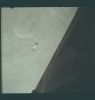
as17-147-22457.jpgAS 17-147-22457 - CSM America and the Moon (elab. NASA)56 visiteRev. 12, CSM from LM, Crater Abul Wafa, north wall.MareKromium
|
|
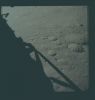
as17-147-22477.jpgAS 17-147-22477 - Challanger's long Shadow56 visitePre-EVA-1 LM window pan. Below the horizon, surface closest to the LM.
MareKromium
|
|

as17-147-22471.jpgAS 17-147-22471 - Family Mountain and North Massif56 visitePre-EVA-1 LM window pan. (Old) Family Mountain, North Massif.
MareKromium
|
|

as17-147-22496.jpgAS 17-147-22496 - Lonely Crater and North Massif56 visiteEVA-1 at the LM. 4 o'clock pan. North Massif, small fresh crater.
MareKromium
|
|

as17-147-22516.jpgAS 17-147-22516 - The Lunar Module56 visiteEVA-1 at the LM. 4 o'clock pan. minus-Z strut, engine bell.
|
|
| 25353 immagini su 2113 pagina(e) |
 |
|
|
|
|
1675 | |
|
|
|
|





