| Piú viste |
I-Zwicky18-HST.jpgI Zwicky 1856 visite"...Quod Natura negat, nemo feliciter audet..."
(Binder)
"...Nessuno, anche osando (superandosi), può arrivare a conseguire ciò che la Natura non vuole che sia conseguito..." (trad. libera)MareKromium
|
|
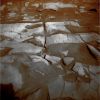
OPP-SOL1329-1N246174167EFF8788P0175L0M1.jpgPaving and Razorblades inside Victoria (2 - possible natural colors; light-blue color filter on; elab. Lunexit)56 visitenessun commentoMareKromium
|
|
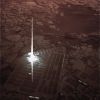
OPP-SOL1329-1N246175987EFF8788P0775L0M1.jpgThe "Light-Drop" effect - Sol 1329 (red-orange filter ON - possible natural colors; elab. Lunexit)56 visitenessun commentoMareKromium
|
|
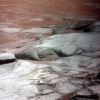
OPP-SOL1329-1P246170558ESF8754P2585L6M1.jpgThe "Inner Paving" and the "Red Sands" of Victoria - Sol 1329 (possible natural colors - elab. Dr Marco Faccin)56 visitenessun commentoMareKromium
|
|

As_14-66-9339.jpgAS 14-66-9339 - The Blue Flare, once more...56 visiteBandiera Americana, Impronte varie, Giavellotto, pallina da golf e...Una "presenza" blu e bianca (in alto, sulla Sx dell'Osservatore, poco al di sopra dell'orizzonte) che, nonostante tutto, continua a ricordarci che non sempre si può spiegare - e liquidare - tutto quello che si vede in termini di Razionalità Pura.
"Ma è solo un image-artifact!", ci hanno detto e scritto in tanti.
Va bene, ognuno può pensarla come vuole; ma noi restiamo molto "open" verso ipotesi più esotiche e, nel frattempo, Vi confermiamo che neppure all'Istituto di Scienze Lunari e Planetarie sono tanto sicuri che si tratti di un banale difetto dell'immagine...MareKromium
|
|

PSP_005346_1755_RED_abrowse-01.jpgLow-Order Inverted Streams near Juventae Chasma (extra-detail mgnf)56 visiteThis subimage (approx. 1120 meters across) shows a juncture of 2 of the "Inverted Channels".
It is likely that the water flowed from the left to the right of the scene, because channels usually join rather than divert unless there is an obvious obstacle in the way.
No such obstacle is seen here, but one might have been present when the stream originally flowed.
However, there is no way of knowing this.MareKromium
|
|

PSP_005680_1525_RED_abrowse-00.jpgPossible ancient Salt Deposits in Terra Cimmeria (Extremely Saturated and ENhanced Natural Colors - credits for the additional process. and color.: Dr Paolo C. Fienga - Lunexit Team)56 visiteThe ancient cratered highlands of the Southern Hemisphere of Mars has an intriguing and complex history as it has been riddled with impact craters and modified by volcanic processes and by the wind.
Additionally, it is one of the most heavily dissected terrains on Mars exhibiting the densest population of Valley Networks: old dried up channels and valleys that may have been formed by surface runoff, the seepage of ground water, or both.
Recently, the Thermal Emission Imaging System (THEMIS) aboard Mars Odyssey, in conjunction with spectral data from the Thermal Emission Spectrometer (TES) aboard the Mars Global Surveyor (MGS) have revealed the presence of a unique surface deposit that may be rich in chloride salts formed from the presence of liquid water. Three separate missions (MGS, MO and MRO) have come to reveal the composition and nature of these unique deposits, which, although they occur as relatively small deposits (less than 25 square Km) are widely distributed in Noachian (most ancient) terrains with fewer occurrences in the Hesperian (middle geologic time) terrains.
The deposit appears to be relatively thin and occurs in low-lying areas. It is also heavily pockmarked and discontinuous, possibly from removal of the material by erosion. Both of these aspects suggest that the deposit is indeed very old.
The presence of such salts is intriguing, and strongly suggests that conditions were favorable for water near or at the surface in the geologic past.
Polygonal cracks can be observed in this image and other images of these deposits elsewhere on Mars (see PSP_003160_1410) and are similar to desiccation cracks (formed from the rapid evaporation and drying of a wet surface) and indicate that these may were more likely deposited at the surface.
However, the volume and duration the water required for these deposits is still being investigated. MareKromium
|
|

Comets-Comet_Holmes.jpgComet 17-P-Holmes56 visiteCaption NASA, da "NASA - Picture of the Day" del 26 Ottobre 2007:"Comet 17 P-Holmes stunned comet watchers across planet Earth earlier this week.
On October 24th, 2007, it increased in brightness over half a million times in a matter of hours. The outburst transformed it from an obscure and faint comet quietly orbiting the Sun with a period of about 7 years to a naked-eye comet rivaling the brighter stars in the constellation of Perseus. Recorded on that date, this view from Teheran, Iran, highlights the comet's (enhanced and circled) dramatic new visibility in urban skies.
The inset (left) is a telescopic image from a backyard in Buffalo, New York showing the comet's greatly expanded coma, but apparent lack of a tail. Holmes' outburst could be due to a sudden exposure of fresh cometary ice or even the breakup of the comet nucleus. The comet may well remain bright in the coming days".MareKromium
|
|

LLN-Itokawa-ST_2506733028_v.pngApproaching Itokawa (4 - natural colors; elab. Lunexit)56 visitenessun commentoMareKromium
|
|

LLN-Itokawa-ST_2506464135_v.pngApproaching Itokawa (1 - natural colors; elab. Lunexit)56 visitenessun commentoMareKromium
|
|

LLO-Itokawa-ST_2539423137_v.jpgThe unbelievable surface of 25143-Itokawa (HR3 - possible natural colors; elab. Lunexit)56 visitenessun commentoMareKromium
|
|

LLO-Itokawa-ST_25590030-68_v.jpgThe unbelievable surface of 25143-Itokawa (HR2 - possible natural colors; elab. Lunexit)56 visitenessun commentoMareKromium
|
|
| 25353 immagini su 2113 pagina(e) |
 |
|
|
|
|
1665 | |
|
|
|
|





