| Piú viste |

OPP-SOL080-MF-MicroscopicImager.jpgSpherules - Sol 80 (Superdefinition; credits: Dr M. Faccin)56 visiteCi sono volute ore di Lavoro per arrivare a questo tipo di immagine, caratterizzata da una qualità visiva, in termini di definizione e colorazione, largamente superiore a quella che la NASA mette a disposizione del Pubblico.
Vi preghiamo di tenerne conto, mentre la guardate e studiate.
Per quanto attiene il Dr Marco Faccin, non possiamo fare altro che ringraziarlo per quello che ha fatto, che fa e che farà per Lunar Explorer Italia e per tutti i suoi Lettori.MareKromium
|
|
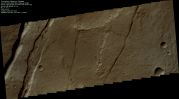
Troughs-Sirenum_Fossae-20091207a.jpgTroughs in Sirenum Fossae (Enhanced Natural Colors; credits: Lunexit)56 visitenessun commentoMareKromium
|
|
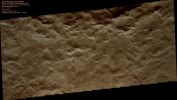
Terra_Sabaea-20091130a.jpgDark Slope Streaks in Terra Sabaea (Natural Colors; credits: Lunexit)56 visitenessun commentoMareKromium
|
|

OPP-SOL1077-1N223798111EFF78X6P1950R0M1.jpgOn the Edge of Victoria Crater - Sol 1077 (Natural Colors; credits: Lunexit)56 visitenessun commentoMareKromium
|
|

OPP-SOL2070-FrontHazCam_1F311957033EFFA9R5P1110R0M1.jpgMarquette Island - Sol 207056 visiteNASA's Mars Exploration Rover Opportunity used the wire brush of its Rock Abrasion Tool (RAT) during the Rover's 2070th Martian Day, or Sol (such as Nov., 19th, 2009), to scour dust from a circular target area on a rock called "Marquette Island". The brushed target area, called "Peck Bay", is visible as a dark circle about 5 centimeters (a little less than 2 inches) in diameter just below the tool turret at the end of the Rover's Robotic Arm (RA) in this image. This image was taken later on the same Sol (2070) by the Rover's Front Hazard-Avoidance Camera (HazCam).
Opportunity is performing an extensive analysis of this rock, which initial investigation suggests may be a stony meteorite.MareKromium
|
|

OPP-SOL2063-GB.jpgErratic Boulder and debris - Sol 2063 (possible True Colors - credits: Dr G. Barca & Lunexit)56 visitenessun commentoMareKromium
|
|
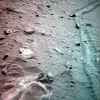
SOL2109-3D-MF.jpgLooking Back - Sol 2109 (High-Def-3D; credits: Dr M. Faccin)56 visitenessun commentoMareKromium
|
|

OPP-SOL003-1P128454003EFF0200P2214L2M1.jpgEagle's Crater Rim and Greenish Sky - Sol 3 (Enhanced Natural Colors; credits: Lunexit)56 visitenessun commentoMareKromium
|
|
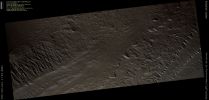
PSP_001422_1750_RED_abrowse.jpgLayers in Gale Crater Central Mound (Natural Colors; credits: Lunexit)56 visiteThis image shows a portion of the Central Mound in the Gale Crater (Central Mound that is of interest to scientists because of the light-toned Layered Deposits that can be found inside it).
The Layered Deposits could have formed in a water environment if, for instance, a lake - once - filled the Crater. Alternatively, particles suspended in the Atmosphere, such as Dust or Volcanic Ashes, could have built up the Layers over time.
By using HiRISE images to see details in the Layers, such as how their thicknesses vary horizontally and vertically, scientists can narrow down the potential origins.
The paucity of Impact Craters on the Layered Deposits indicates that either the Deposits are very young, or more likely that they are being eroded up to the point where such (alleged) Impact Craters were erased.
Wind Erosion modified the Layers after they formed, creating both sharp corners and rounded depressions along the Surface.
A few meter-size Boulders are visible at the base of some steep Cliffs, but the really poor amount of visible Boulders elsewhere suggests that most of the erosion occurred (and it is still occurring) because of eolic processes (such as wind action) rather than downslope movement of material.MareKromium
|
|

PSP_003176_1745_RED_browse-01~0.jpgLayered Region in Gale Crater (EDM - Natural Colors; credits: Lunexit)56 visiteThis EDM shows several Light-Toned Layers.
The origin of the sediments composing the Layers is unknown and could have included deposition in an ancient flood or lake or the deposition of windblown particles such as Dust or Volcanic Ash.
The relatively uniform character of the Layers and the manner of erosion suggests that the sediments are fine-grained. MareKromium
|
|
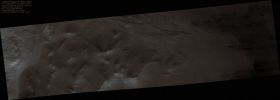
PSP_003176_1745_RED_browse-00~0.jpgLayered Region in Gale Crater (CTX Frame - Natural Colors; credits: Lunexit)56 visiteThis observation shows a portion of the Gale Crater Floor. Gale Crater is approx. 150 Km in diameter and it located in the Elysium Planitia, near the so-called "Dichotomy Boundary" - such as the Martian Region separating the Southern Highlands from the Northern Lowlands.
The paucity of Impact Craters indicates that the Layered Deposits are either very young or that erosion has removed evidence of past cratering.
Wind erosion, in particular, might have modified the Layers by creating relatively sharp edges and rounded depressions. In general, the fact that Layers are found on isolated mounds indicates that some process has eroded an originally more extensive Layered Deposit.
Large Dunes are also visible in the lower portion of the EDM. MareKromium
|
|

OPP-SOL1863-EB.jpgFrom above and from the Surface: Opportunity's View and Position during Sol 1863 (an Image-Mosaic by Elisabetta Bonora)56 visitenessun commentoMareKromium
|
|
| 25353 immagini su 2113 pagina(e) |
 |
|
|
|
|
1659 | |
|
|
|
|





