| Piú viste |
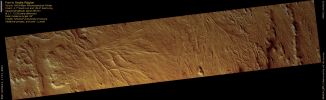
Psp_009623_1755_red.jpgFan in Aeolis Planum Region (natural colors; credits: Lunexit)56 visiteThis image shows a "Fan" of long raised ridges in the Aeolis Region of Mars.
These ridges are thought to be Inverted Stream Channels, where formerly low-lying streambeds have been hardened and then turned into ridges when the surrounding material was eroded.
This can occur if the stream deposited minerals, filling in pore spaces and hardening the streambed.
The assortment of ridges here is extremely complex, with strands cutting across each other. However, the actual stream system here could have been simpler, with ridges preserving different time periods in the history of the system. This possibility is supported by several sites where one ridge runs smoothly across another without disruption. One way for this to occur would be to have one streambed hardened and buried, with the stream subsequently changing course and cutting across its buried old route.
Although not all of the channels were active at once, this site clearly preserves a complex history, probably requiring thousands of years to foMareKromium
|
|
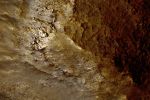
PSP_009708_2205_RED_abrowse-01.jpgHills in Acidalia Planitia (EDM - Enhanced Natural Colors; credits for the additional process. and color.: Dr Paolo C. Fienga - Lunexit Team)56 visiteThis edm frame (375x250 meters, or 410x273 yards) of the HiRISE depicts in detail the rocky layers existing in one of these hills.
CRISM, another of the instruments onboard Mars Reconnaissance Orbiter, has acquired data over this same region showing that the rocky outcrops contain clays. Clays of similar composition form in terrestrial environments favorable for life, where volcanic rocks are in close contact with water.MareKromium
|
|
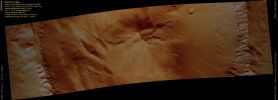
Psp_009677_2135_red.jpgBacolor Crater (natural colors; credits: Lunexit)56 visiteBacolor Crater is a pristine crater in the Northern Hemisphere. The linear striations visible at both sides (Sx and Dx) of the image are from the blast of the formation impact. This crater has a Central Peak, other mounds and terraces on its floor.
All of these features appeared during the final stages of crater formation.
The Northern Wall of the crater has landslides which have sculpted the Crater Rim. The Southern Wall has Gullies, thought to form by fluvial processes.
The Gullies here are more incised (cut into the slope) than the landslides are.MareKromium
|
|

ZZ-Mercury-Rupes-CN0131773865_web.pngAstrolabe Rupes (natural colors; credits: Lunexit)56 visiteDate Acquired: October 6, 2008
Image Mission Elapsed Time (MET): 131774936
Instrument: Narrow Angle Camera (NAC) of the Mercury Dual Imaging System (MDIS)
Resolution: 660 meters/pixel (0,41 miles/pixel)
Scale: Ghiberti crater is approx. 123 Km in diameter (about 76 miles)
Spacecraft Altitude: about 26.000 Km (approx. 16.000 miles)
Of Interest: This NAC image, taken about 85 minutes after MESSENGER’s closest approach during the mission’s second Mercury flyby, shows a view of Astrolabe Rupes, named for the ship of the French explorer Jules Dumont d’Urville. Rupes is the Latin word for cliff. Mercury’s day/night transition (the Terminator) is located on the left side of the image, and the Sun is striking the cliff face of Astrolabe Rupes in the upper right of the image. Also visible in the image are additional unnamed rupes, whose cliff faces are casting dark shadows. One of these rupes intersects the crater Ghiberti, named for the Italian Renaissance sculptor. Rupes on Mercury are thought to have formed as the interior of Mercury cooled and the planet consequently contracted slightly. Determining the number and extent of rupes on Mercury can thus be used to understand the thermal history of the Planet.MareKromium
|
|

ZZ-Mercury-Limb-CN0131766564M.pngA Small Crater Makes a Bright Impact (natural colors; credits: Lunexit)56 visiteDate Acquired: October 6, 2008
Image Mission Elapsed Time (MET): 131766564
Instrument: Narrow Angle Camera (NAC) of the Mercury Dual Imaging System (MDIS)
Resolution: 410 meters/pixel (0,25 miles/pixel) in the lower right corner of the image
Scale: The bright crater is about 30 Km in diameter (approx. 19 miles)
Spacecraft Altitude: about 16.000 Km (about 9900 miles)
Of Interest: In both the optical navigation images and the full-planet Wide Angle Camera (WAC) approach frame, a bright feature is clearly visible in the northern portion of the crescent-shaped Mercury. This NAC image resolves details of this bright feature, showing that it surrounds a small crater about 30 Km (approx. 19 miles) in diameter, seen nearly edge-on. Presumably, the bright material was ejected from this small crater, which apparently formed relatively recently in Mercury’s past, because Mercury’s surface materials tend to darken with time. The brilliant ejecta are so bright compared with the neighboring surface that Earth-based telescopic observations also detected this feature, despite its being associated with such a small crater.MareKromium
|
|

ZZ-Mercury-Limb-CW0131772818A_web.jpgMercury, during MESSENGER's 2nd Fly-By (natural, but enhanced colors; credits: Lunexit)56 visiteDate Acquired: October 6, 2008
Image Mission Elapsed Time (MET): 131772818
Instrument: Wide Angle Camera (WAC) of the Mercury Dual Imaging System (MDIS)
WAC Filter: 1 (700 nanometers)
Resolution: 2,6 Km/pixel (about 1,6 miles/pixel)
Scale: The left side of the image is about 2700 Km tall (approx. 1700 miles)
Spacecraft Altitude: about 15.000 Km (approx. 9300 miles)
Of Interest: One week ago, no spacecraft had ever seen the majority of the surface visible in this image. Today, one week after MESSENGER’s successful second Mercury flyby, about 95% of Mercury’s surface has been viewed by spacecraft, resulting in nearly global spacecraft imaging coverage of Mercury’s surface for the first time. This WAC image is just one of 99 in a set of 3 columns by 3 rows by 11 color filters that is being combined into a color mosaic of the departing planet. Kuiper crater, with its bright ejecta rays, is visible on the left edge of the image and was seen by Mariner 10, but most of the terrain east of Kuiper was not. A newly imaged crater with an unusual halo of dark material is visible at about the same latitude but toward Mercury’s limb. The long, bright rays that can be seen extending across the surface emanate from a crater just north of this image.MareKromium
|
|

ZZ-Mercury-Limb-CN0131766454M.pngSigns of Aging... (natural colors; credits: Lunexit)56 visiteDate Acquired: October 6, 2008
Image Mission Elapsed Time (MET): 131766454
Instrument: Narrow Angle Camera (NAC) of the Mercury Dual Imaging System (MDIS)
Resolution: 420 meters/pixel (0,26 miles/pixel) on the right side of the image
Scale: The small crater superimposed on the long cliff is about 30 Km (approx. 19 miles) in diameter
Spacecraft Altitude: about 16.500 kilometers (approx. 10.300 miles)
Of Interest: This dramatic NAC image was acquired about 56 minutes prior to MESSENGER’s closest approach during the mission’s recent Mercury flyby, as the spacecraft approached the Planet's illuminated crescent. Prominent toward the horizon in this view of newly imaged terrain is a long cliff face. A small impact crater (about 30 Km, or approx. 19 miles, in diameter) overlies this lengthy scarp. The scarp extends for over 400 Km (about 250 miles) and likely represents a sign of aging unique to Mercury among the planets in the Solar System.
As time passes, the interior of a planet cools. However, the relative size of Mercury's central metallic core is larger than that of the other planets and hence has significantly affected the planet’s geologic evolution. The numerous long scarps on Mercury are believed to be the surface expression of faults formed in the rocks of Mercury's crust as the interior of the planet cooled and contracted. This contraction compressed the surface and thrust some sections of crust over others, creating long curving cliffs like the one shown here.MareKromium
|
|

ZZ-Mercury-Craters-Crater_Field.jpgChangings...56 visiteDate Acquired: October 6, 2008
Image Mission Elapsed Time (MET): 131774145
Instrument: Narrow Angle Camera (NAC) of the Mercury Dual Imaging System (MDIS)
Resolution: 550 meters/pixel (0,34 miles/pixel)
Scale: Asvaghosa crater is approx. 90 Km in diameter (about 56 miles)
Spacecraft Altitude: about 21.000 Km (approx. 13.000 miles)
Of Interest: This pair of images illustrates the dramatic effect that illumination and viewing geometry (i.e., the angle at which Sunlight strikes the surface, and the angle from which the spacecraft views the surface) has on the appearance of terrain on Mercury. The image on the right is a frame captured by MESSENGER’s NAC as the spacecraft was departing the planet after its second Mercury flyby. On the left is a portion of a mosaic made from Mariner 10 clear-filter images, obtained by that mission in 1974. The yellow arrows point to the 90-Km- (56-mile-) diameter crater Asvaghosa (named for the first century AD Indian philosopher and poet), and the purple arrows indicate a smaller crater to the southwest. A bright ray, prominently visible in the high-Sun MESSENGER frame, crosses both craters. The stripe of high-reflectance material may have originated at Kuiper crater (to the southwest) or may come from a newly imaged crater to the northeast that has an extensive ray system. This ray and others seen in the NAC image were mostly invisible to Mariner 10, because low-Sun illumination emphasizes topography instead of differences in reflectance. As another example, the curving scarp (cliff) named Santa Maria Rupes (white arrows in the left image) is visible in the Mariner 10 image by the shadow it casts, but this rupes disappears in the MESSENGER image when the Sun is high overhead. Images collected under both high- and low-Sun conditions are needed for geologists to develop a complete understanding of the features on a planetary surface.MareKromium
|
|
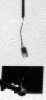
PHOE-SOL136-PIA11235.gifShakin', TellTale, Shakin'... (GIF-Movie; credits: NASA)56 visiteThis series of images show Phoenix's TellTale instrument waving in the Martian Wind. Documenting the TellTale's movement helps mission scientists and engineers determine what the wind is like on Mars.
On the day these images were taken, one of the images seemed to be "out-of-phase" with other images, possibly indicating a Dust Devil occurrence. Preliminary analysis of the images taken right before and after the passing of this possible Dust Devil indicates winds from the West at 7 meters-per-second. The image taken during the possible Dust Devil shows 11 meters-per-second wind from the South.
These images were taken by the lander's Surface Stereo Imager (SSI) on the 136th Martian Day, or Sol, of the mission (such as Oct. 12, 2008). Phoenix's TellTale is part of the Canadian Space Agency's meteorological package on the Lander.MareKromium
|
|

M-051.JPGM-51: The Whirlpool Galaxy (in Canes Venatici)56 visiteMareKromium
|
|

M-033-GB.JPGM-33: The "Triangulum Galaxy" (also "The Pinwheel") Spiral Galaxy in Triangulum56 visiteMareKromium
|
|

M-031-GB1.JPGM-31: The "Andromeda Galaxy" (Spiral Galaxy in Andromeda)56 visiteMareKromium
|
|
| 25353 immagini su 2113 pagina(e) |
 |
|
|
|
|
1657 | |
|
|
|
|





