| Piú viste |
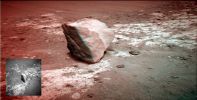
OPP-SOL2058-3D-MF.jpgErratic Boulder - Sol 2058 (3D - credits: Dr M. Faccin)56 visitenessun commentoMareKromium
|
|
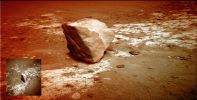
OPP-SOL2058-3D-MF-LXT.jpgErratic Boulder - Sol 2058 (3D and Natural - but slightly enhanced - Colors - credits: Dr M. Faccin & Lunexit)56 visitenessun commentoMareKromium
|
|

OPP-SOL2059-MF-LXT2.jpgErratic Boulder - Sol 2059 (Natural Colors - credits: Dr M. Faccin & Lunexit)56 visitenessun commentoMareKromium
|
|
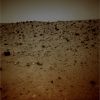
SOL2080-2N311017925EFFB204P0695L0M1.jpgRocky Skyline - Sol 2080 (Natural Colors; credits: Lunexit)56 visitenessun commentoMareKromium
|
|

Enceladus-PIA11678.jpgEnceladus: North Polar Map56 visiteThe Northern and Southern Hemispheres of Enceladus are seen in these Polar Stereographic Maps, mosaicked from the best-available Cassini and Voyager clear-filter images. This image shows the North Polar Regions.
Each map is centered on one of the Poles and surface coverage extends to the Equator. Grid lines show Latitude and Longitude in 30-degree increments. The scale in the full-size versions of these maps is 110 meters (360 feet) per pixel.
These two maps show that the character of Terrains near the North Pole differs strongly from those near the South Pole. Terrain near the North Pole is among the most heavily cratered and oldest on the Surface of Enceladus.
The Northern Hemisphere map shows that a broad band of cratered terrain extends from the Equator on the Saturn-facing side (centered on 0-degrees Longitude), over the Pole and to the Equator on the anti-Saturn side (centered on 180-degrees Longitude). Terrains near the Equator and Mid-Latitudes on the Leading (90° West) and Trailing (270° West) sides of Enceladus are much less heavily cratered and are characterized by intense zones of fracturing and faulting.
As seen in the Southern Hemisphere map, the band of cratered terrain at 0 and 180° Longitude extends southward from the Equator. However, poleward of about 55° South Latitude, the cratered terrain is interrupted and replaced by a conspicuously fractured circumpolar terrain that is nearly devoid of impact craters.
In contrast to the very old North Polar Terrains, the South Circumpolar Terrains are among the youngest on the Surface of Enceladus.
Within the South Circumpolar Region is a group of prominent parallel "Stripes" made up of fractures that are delineated by relatively dark albedo markings flanking the sides of each fracture.
An interesting property of the parallel fracture system is that each appears to turn back at its westernmost segment as if it has been "bent" or "folded" into a hook-like curve. Similar patterns of folded or kinked fractures can be found throughout the region -- a unique feature of the South Polar Terrains.MareKromium
|
|

Japetus-PIA11620.jpgJapetus, from far away... (Natural Colors; credits: Lunexit)56 visiteCaption NASA:"A crescent Japetus shows, at the top right of this image, some of the dark terrain characterizing this unusual Saturnian moon.
Scientists continue to investigate the nature of the moon's surface.
Lit Terrain seen here is on the Saturn-facing side of Japetus (about 1471 KM, or approx. 914 miles across). North on Japetus is up and rotated 5° to the left.
Scale in the original image was 7 Km (about 4,5 miles) per pixel. The image has been magnified by a factor of two and contrast-enhanced to aid visibility.The image was taken in Visible Green Light with the Cassini Spacecraft narrow-angle camera on Sept. 11, 2009.
The view was acquired at a distance of approx. 1,2 MKM (about 746.000 miles) from Japetus and at Phase Angle of 125°".MareKromium
|
|
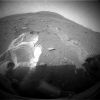
SOL1899-JC4_A1899_front_hazcam.jpgSoft Ground and Husband Hill - Sol 189956 visiteWheel slippage during attempts to extricate NASA's Mars Rover Spirit from a patch of soft ground during the preceding two weeks had partially buried the wheels by the 1899th Sol of the Spirit's Mission on Mars (May 6, 2009).
Spirit took this image with its Front HazCam on Sol 1899. With Spirit in the position shown here, the rover team temporarily suspended driving attempts while studying the ground around Spirit and planning simulation tests of driving options with a test rover at NASA's Jet Propulsion Laboratory in Pasadena, Calif.
Driving attempts between the time Spirit took a similar image (see PIA12002) 10 Soles earlier and when this image was taken moved the Rover a total of about 36 cm (14").
While driving backwards, the Rover drags its right front wheel, which no longer rotates. For scale, the distance between the wheel tracks is about 1 meter (40"). This view is looking Northward, with Husband Hill on the horizon. MareKromium
|
|
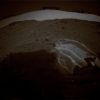
SOL1899-JC5_A1899-2R294958155EFFB1DNP1354R0M3.jpgLooking to the South, from Troy - Sol 1899 (Tri-color Version; credits: Lunexit)56 visiteNASA's Mars Exploration Rover Spirit used its Rear Hazard Avoidance Camera to take this view toward the South during the 1899th Sol of Spirit's Mission on Mars (May 6, 2009).
The foreground shows that Spirit's left-rear wheel (on the right from this viewpoint) churned up bright-toned material when the Rover was becoming embedded at this position, but that the right-rear wheel did not.MareKromium
|
|
Dione_Tethys-N00144184-N00144203-N00144746-N00144765.gifNight Passengers (GIF-Movie; credits: Dr G. Barca)56 visitenessun commentoMareKromium
|
|

Enceladus-N00145388-N00145409.gifFountains of Light (GIF-Movie; credits: Dr G. Barca)56 visitenessun commentoMareKromium
|
|
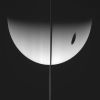
Saturn-W00061084.jpgWhat a Shadow!56 visiteUn'ombra davvero imponente (che evidenzia - molto bene! - anche le "penumbral areas") è disegnata sul disco illuminato di Saturno.
Le Original Captions NASA non ci sono di aiuto, anzi: confondono le idee (come leggerete)!
Dunque rivolgiamo il quesito a Voi: di quale Luna Saturniana è l'ombra che vediamo in questo frame?
Buon Lavoro!
W00061084.jpg was taken on November 07, 2009 and received on Earth November 08, 2009. The camera was pointing toward SATURN that, at the time, was approx. 2.059.699 Km away; the image was taken using the CB2 and CL2 filters. This image has not been validated or calibrated. A validated/calibrated image will be archived with the NASA Planetary Data System in 2010.MareKromium
|
|
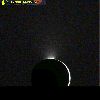
Enceladus-N00145354-N00145358.gifFountains of Light (GIF-Movie; credits: Dr G. Barca)56 visiteNota Lunexit: l'improvviso bagliore che esalta le Fontane di Encelado dovrebbe essere stato provocato, a nostro parere, da un particolare momentum di CASSINI, durante il suo passaggio attraverso un Angolo di Fase davvero ottimale (ricordiamo che è "Angolo di Fase" quell'angolo ottenuto ponendo in semplice correlazione geometrica il Sole, lOggetto Ripreso (o Target) e l'Osservatore (o Subject).MareKromium
|
|
| 25353 immagini su 2113 pagina(e) |
 |
|
|
|
|
1655 | |
|
|
|
|





