| Piú viste |
OPP-SOL1318-1N245205615EDN8700P1550L0M1-2.jpgSunset... - Sol 131856 visitenessun commentoMareKromium
|
|
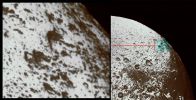
Japetus-SquaredTerrain.jpgSquares on Japetus?56 visiteUno splendido, inquietante ed...illusorio profilo individuato dal sempre bravissimo Marco Faccin. Strutture squadrate su Giapeto? Evidenze di "artificialità"?...
Ovviamente no: questo frame (e relativo detail mgnf) rappresentano solo un modo per vedere - e per far vedere! - come, volendo, si possono trovare "strutture regolari" su altri Corpi Celesti.
Illusioni determinate dalla distanza, dall'angolo di ripresa, dalla qualità del frame e dalla voglia di vedere "segni tangibili di intelligenza (passata o presente) altrove": trovare queste strutture (che appartengono alla Classe delle Strutture "Effimere") è un gioco; evidenziarle è una curiosità; spiegarle per quello che sono (senza costruirci sopra delle eso-archeo-baggianate) è, secondo noi, un dovere.
Un grazie di cuore (ed un grande BRAVO!) al Dr Faccin per aver individuato un dettaglio (comunque) intrigante e per lo spunto di riflessione che, con esso, ci ha voluto dare.MareKromium
|
|
OPP-SOL1321-1N245476033EDN8736P1550L0M1.jpgSunset... - Sol 132156 visitenessun commentoMareKromium
|
|

APOLLO_10_AS_10-35-5222.jpgAS 10-35-5222 - Earthrise with "something flying away"... (2)56 visitenessun commentoMareKromium
|
|

Titan-PIA08391.jpgHiding behind the Rings56 visiteCassini delivers this stunning vista showing small, battered Epimetheus and smog-enshrouded Titan, with Saturn's A and F-Rings stretching across the scene.
The color information in the colorized view is completely artificial: it is derived from red, green and blue images taken at nearly the same time and phase angle as the clear filter image. This color information was overlaid onto the previously released clear filter view in order to approximate the scene as it might appear to human eyes.
The prominent dark region visible in the A-Ring is the Encke Gap (about 325 Km, or 200 miles wide), in which the moon Pan and several narrow ringlets reside. Moon-driven features which score the A-Ring can easily be seen to the left and right of the Encke Gap.
A couple of bright clumps can be seen in the F-Ring.
Epimetheus is 116 Km (72 miles) across and giant Titan is 5.150 kilometers (3.200 miles) across.
The view was acquired with the Cassini spacecraft narrow-angle camera on April 28, 2006, at a distance of approx. 667.000 Km (about 415.000 miles) from Epimetheus and 1,8 MKM (about 1,1 MMs) from Titan. The image captures the illuminated side of the Rings. The image scale is roughly 4 Km (about 2 miles) per pixel on Epimetheus and about 11 Km (approx. 7 miles) per pixel on Titan.MareKromium
|
|
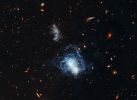
I-Zwicky18-HST.jpgI Zwicky 1856 visite"...Quod Natura negat, nemo feliciter audet..."
(Binder)
"...Nessuno, anche osando (superandosi), può arrivare a conseguire ciò che la Natura non vuole che sia conseguito..." (trad. libera)MareKromium
|
|
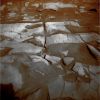
OPP-SOL1329-1N246174167EFF8788P0175L0M1.jpgPaving and Razorblades inside Victoria (2 - possible natural colors; light-blue color filter on; elab. Lunexit)56 visitenessun commentoMareKromium
|
|
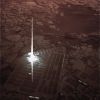
OPP-SOL1329-1N246175987EFF8788P0775L0M1.jpgThe "Light-Drop" effect - Sol 1329 (red-orange filter ON - possible natural colors; elab. Lunexit)56 visitenessun commentoMareKromium
|
|
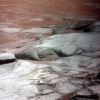
OPP-SOL1329-1P246170558ESF8754P2585L6M1.jpgThe "Inner Paving" and the "Red Sands" of Victoria - Sol 1329 (possible natural colors - elab. Dr Marco Faccin)56 visitenessun commentoMareKromium
|
|

As_14-66-9339.jpgAS 14-66-9339 - The Blue Flare, once more...56 visiteBandiera Americana, Impronte varie, Giavellotto, pallina da golf e...Una "presenza" blu e bianca (in alto, sulla Sx dell'Osservatore, poco al di sopra dell'orizzonte) che, nonostante tutto, continua a ricordarci che non sempre si può spiegare - e liquidare - tutto quello che si vede in termini di Razionalità Pura.
"Ma è solo un image-artifact!", ci hanno detto e scritto in tanti.
Va bene, ognuno può pensarla come vuole; ma noi restiamo molto "open" verso ipotesi più esotiche e, nel frattempo, Vi confermiamo che neppure all'Istituto di Scienze Lunari e Planetarie sono tanto sicuri che si tratti di un banale difetto dell'immagine...MareKromium
|
|

PSP_005346_1755_RED_abrowse-01.jpgLow-Order Inverted Streams near Juventae Chasma (extra-detail mgnf)56 visiteThis subimage (approx. 1120 meters across) shows a juncture of 2 of the "Inverted Channels".
It is likely that the water flowed from the left to the right of the scene, because channels usually join rather than divert unless there is an obvious obstacle in the way.
No such obstacle is seen here, but one might have been present when the stream originally flowed.
However, there is no way of knowing this.MareKromium
|
|

PSP_005346_1755_RED_abrowse-00.jpgLow-Order Inverted Streams near Juventae Chasma (context frame - elab. Lunexit)56 visiteThis image shows plains North-West of Juventae Chasma, one of the Martian canyons that are part of the equatorial Valles Marineris System. The two most noticeable features in this scene are craters on mesas (plateaux) and raised, winding ridges. The raised ridges are "Inverted Channels". It is likely that liquid water, either pure or salt water, flowed through these channels. The channels are raised because streams transport sediment as they flow, deposit the heavier sediment on the stream floor, and, eventually fill in once their water supply dwindles. Over time, wind erosion modifies a landscape, and this has played an important role on these plains. It eroded the land around the channels leaving the remnant channels exposed and standing high. The channels did not erode as much since they were more resistant, possibly because the deposited sediment had cemented together.
The craters on mesas are also evidence of active wind erosion: when craters form, they eject material out onto the surrounding landscape.
It appears that several of the craters’ ejecta visible here cemented, making the ejecta more resistant to erosion and leaving them standing high as craters on plateaux.MareKromium
|
|
| 25353 immagini su 2113 pagina(e) |
 |
|
|
|
|
1654 | |
|
|
|
|





