| Piú viste |
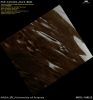
PSP_010369_2625_RED_abrowse.jpgDunes and Brown-Orange Streaks in Abalos Mensa (ctx frame - Natural Colors; credits: Lunexit)56 visitenessun commentoMareKromium
|
|
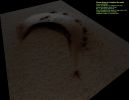
PSP_007080_2565.jpgBarchan Dune in Vastitas Borealis (Perspective View and Natural Colors; credits: Dr G. Barca)56 visitenessun commentoMareKromium
|
|
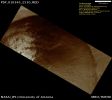
PSP_010345_2510_RED_abrowse.jpgUnnamed Crater in Vastitas Borealis (Natural Colors; credits: Lunar Explorer Italia)56 visitenessun commentoMareKromium
|
|
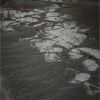
OPP-SOL1938-GB-LXT.jpgThe Beautiful Martian Paving - Sol 1938 (Natural Colors; credits: Dr G. Barca)56 visitenessun commentoMareKromium
|
|
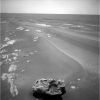
OPP-SOL1959-PIA12161.jpgBlock Island - Sol 195956 visiteCaption NASA:"This is a picture of “Block Island”, an odd-shaped, dark rock, which may be a meteorite. This rock was imaged with the Navigation Camera on NASA’s Mars Exploration Rover Opportunity on Sol 1959 (July 28, 2009)".MareKromium
|
|

PSP_009470_1965_RED_abrowse.jpgBeautiful Gullies (Natural Colors; credits: Lunexit)56 visitenessun commentoMareKromium
|
|
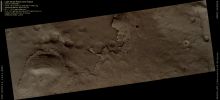
PSP_009523_2165_RED_abrowse.jpgLight-Toned Rock and Scarps (Natural Colors; credits: Lunexit)56 visitenessun commentoMareKromium
|
|

Titan-Lakes-South_Polar_Unnamed_Lake-PIA12162.jpgLake-like Feature near the South Pole of Titan56 visiteCaption NASA:"This mosaic of image swaths from Cassini's Titan Radar Mapper, taken with the Synthetic-Aperture Radar (SAR), features a large Dark Region several hundred kilometers across that differs in several significant ways from potential lakes observed on Titan.
It is not as dark to the radar as many lakes (including lakes seen here), and the nature of the margin is unusual. It has many characteristics in common with lakes, including its channels and interior, yet its differences distinguish it from other similar features. Some similarities are seen with the dark feature in Titan pass T7 (see PIA03563).
At top (North), the feature has characteristics of a shoreline, with round bay-like margins and channels that drain into it; at left (West) and right (East) it is rimmed by bright, feathery, branching channel-like structures, some of which extend for tens of kilometers. Within the Dark Feature some details can be seen, some of which seem to be extensions of the channels draining into the Dark Feature.
The mosaic is near the South Pole, centered near 82° South and 205° West. It includes data from Titan passes T39, T55, T57, T58, and T59, collected between December 2007 and July 2009. The individual swaths vary in resolution and illumination angle, so the edges are visible and surface features look somewhat different across swath boundaries, but the regional view can still be understood. As more SAR image swaths of Titan are collected by Cassini, mosaics of those images reveal features that cannot be appreciated within the individual observations".MareKromium
|
|
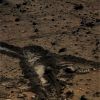
SOL1137-GB.jpgDeep Rover Tracks - Sol 1137 (possible True Colors; credits: Dr G. Barca)56 visitenessun commentoMareKromium
|
|

Craters-KaiserCrater-20090807a-01.jpgWarm Dunes inside Kaiser Crater (Daytime IR)56 visiteCoord.: 47,7° South Lat. and 19,2° East Long.MareKromium
|
|

Craters-KaiserCrater-20090810a-00.jpgDunefield in Kaiser Crater (Natural Colors; credits: Lunar Explorer Italia)56 visiteNote: In the visible wavelengths the dunes are dark, in IR they are bright (meaning that they are warm).
MareKromium
|
|
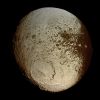
Japetus-big.jpgJapetus (Natural Colors; credits: Lunexit)56 visiteDa "NASA - Picture of the Day", del giorno 9 Agosto 2009:"What has happened to Saturn's moon Japetus? Vast sections of this strange world are dark as coal, while others are as bright as ice. The composition of the dark material is unknown, but InfraRed Spectra indicate that it possibly contains some dark form of carbon.
Japetus also has an unusual equatorial ridge that makes it appear like a walnut. To help better understand this seemingly painted moon, NASA directed the robotic Cassini Spacecraft orbiting Saturn to swoop within 2000 Km in 2007.
Pictured above, from about 75.000 Km out, Cassini's trajectory allowed unprecedented imaging of the hemisphere of Japetus that is always trailing.
A huge impact crater seen in the South spans a tremendous 450 Km and appears superposed on an older crater of similar size. The dark material is seen increasingly coating the easternmost part of Japetus, darkening craters and highlands alike.
Close inspection indicates that the dark coating typically faces the moon's Equator and is less than a meter thick. A leading hypothesis is that the dark material is mostly dirt leftover when relatively warm but dirty ice sublimates. An initial coating of dark material may have been effectively painted on by the accretion of meteor-liberated debris from other moons.
This and other images from Cassini's Japetus flyby are being studied for even greater clues".MareKromium
|
|
| 25353 immagini su 2113 pagina(e) |
 |
|
|
|
|
1647 | |
|
|
|
|





