| Piú viste |
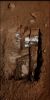
PHOE-SOL039-lg10082-10089-10090.jpgThe "Icy" Trench... - Sol 39 (natural colors; credits: Dr G. Barca)56 visitenessun commentoMareKromium
|
|
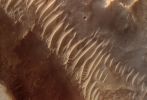
PSP_008523_2060_RED_abrowse-01.jpgSubchannels in Kasei Valles (EDM - MULTISPECTRUM; credits for the additional process. and color.: Dr Paolo C. Fienga - Lunexit Team)56 visiteCaption NASA:"This Region is very dusty, and therefore Dust Streaks can be seen covering the flat Mesas. Within the Channels, large Dunes of Dust have formed from Winds blowing through the Channels themselves. On the steep Slopes of the Dunes, smaller set of Ripples can be seen".MareKromium
|
|
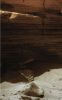
OPP-SOL1577-1P268180873ESF90B0P2535R2M1.jpgThe Inner Rim of Victoria - Sol 1577 (MULTISPECTRUM; credits: Lunexit)56 visitenessun commentoMareKromium
|
|

OPP-SOL1045-2.jpgSmall Rock on a "Berries' Carpet" - Sol 1045 (Superdefinition + MULTISPECTRUM; credits: Dr G. Barca & Lunexit)56 visitenessun commentoMareKromium
|
|

OPP-SOL1148-2.jpgJust like Planets, just like Stars... - Sol 1148 (False Colors and Superdefinition; credits for the additional process. and color.: Dr Gianluigi Barca - Lunexit Team)56 visitenessun commentoMareKromium
|
|
Cydonia_Region-02.jpgCydonia Mensae Region (MULTISPECTRUM processing, from an idea of Keith Laney)56 visitenessun commentoMareKromium
|
|
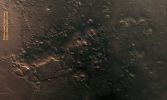
Cydonia_Region-01.jpgCydonia Mensae Region (MULTISPECTRUM processing, from an idea of Keith Laney)56 visitenessun commentoMareKromium
|
|

SOL658-1.jpgSomething's wrong with that boulder... - Sol 658 (natural colors + MULTISPECTRUM; credits: Dr G. Barca & Lunexit)56 visiteUn macigno davvero indecifrabile, quello che appare in primo piano in questo frame... Osservate bene: una sorta di "lingua" di roccia (tanto sottile ed arcuata, quanto impossibile, se quella che stiamo osservando è realmente una pietra...) si alza dalla sua base (in basso a Sx dell'Osservatore) per raggiungere circa la metà dell'altezza del boulder. E non è certo finita qui!
Se infatti osservate alla Vostra Dx, in basso, Vi accorgerete che il macigno NON poggia completamente al suolo, e sembra (SEMBRA!) giacere in equilibrio instabile.
Ma il clou, a nostro avviso, è la frattura latitudinale che lo attraversa e divide, andando da ore 08:00 ad ore 12:00. Una leggera differenza di colorazione, ma NON di texture, distingue la porzione fratturata Dx del boulder (Sx dell'Osservatore - più scura), da quella Sx (Dx dell'Osservatore - più chiara).
Molto "curioso" (diciamo così...) è, infine, il frammento di roccia che si trova a Dx della porzione più grande del macigno (Sx dell'Osservatore) il quale - forse - formava una sorta di appendice, ora semi-distaccata, del macigno stesso.
Sensazione: l'esistenza di incoerenze nella riflessione della luce da parte delle diverse componenti del boulder in esame, unita alla difficile spiegazione (in termini prospettici) dei detriti che si trovano immediatamente "dietro" al macigno - tutto questo senza stare a rimenzionare nè la "crepa" latitudinale (nettissima e profonda) che, letteralmente, lo dovrebbe "spaccare in due", nè l'equilibrio improprio su cui giace tutto il complesso -, ci portano a ritenere che questa immagine POTREBBE essere un falso (o, al limite, il risultato di un additional processing altamente invasivo il quale era volto a censurare la porzione di frame che, oggi, è costituita dalla parte del boulder a Sx dell'Osservatore).
I Vostri commenti saranno apprezzati.MareKromium
|
|
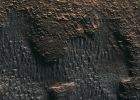
PSP_008427_1380_RED_abrowse-01.jpgAutumn in Hellas Basin (edm n. 1 - MULTISPECTRUM-2; credits: Lunexit)56 visiteFrost is condensing, and shows up as silver/gray patches in this MULTISPECTRUM image: this is seasonal CO2 frost.
Closer to the Pole, CO2 condenses from the atmosphere and forms a Seasonal Polar Cap. At this latitude we do not expect a thick layer to form but rather the frost collects in cold protected areas on poleward-facing slopes.MareKromium
|
|
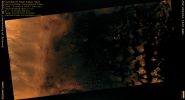
PSP_006952_1870_RED_abrowse~0.jpgDark Dunefield in West Arabia Terra (MULTISPECTRUM and Yellow/Orange Filters ON; credits: Lunexit)56 visiteThis image shows dunes in an unnamed crater in the west Arabia Terra Region.
The rim of the crater lies to the South of the image (Sx)and a dark, toned field of Barchan Sand Dunes rests on the crater floor in the Northern portion of the observation.
Barchan Dunes are commonly found on Earth, and are generally crescent-shaped with a steep slip face bordered by horns oriented in the downwind direction. Barchan Dunes form by unidirectional winds and are good indicators of the dominant wind direction. In this case, the strongest winds blew approximately North to South.
These dunes are most likely composed of basaltic sand that has collected on the bottom of the crater.
Superimposed on their surface are smaller secondary dunes which are commonly seen on terrestrial dunes of this size. Many smaller and brighter bed forms — most likely small dunes or granule ripples — also cover the substrate between the larger dark dunes. The dark dunes overlie the small bright bed forms indicating that the darker dunes formed more recently.
MareKromium
|
|

PSP_007493_2650_RED_abrowse~0.jpgNorth Polar Layered Deposits covered by Seasonal Frost (MULTISPECTRUM; credits: Lunexit)56 visiteThis image shows an exposure of the North Polar Layered Deposits (NPLD). The layering visible here might have been formed by recent climate variations on Mars, similar to ice ages on Earth.
While the Polar Layered Deposits are mostly water ice, exposures such as this are typically covered by a layer of reddish dust, protecting the underlying ice from evaporation during the Summer. This dusty layer hides the internal composition of the Polar Layered Deposits from view, but variations in the slopes of the surfaces of the layers are still visible.
The slope of each layer is probably affected by the internal composition, so the topography of exposures like this is of interest to scientists. When this image was taken (Northern Spring), the surface was mostly covered by seasonal CO2 frost.
This white frost layer helps to highlight the surface slopes because the visible brightness variations are mainly caused by topographic variations. Therefore, this image will be useful for photoclinometric, or "shape from shading" analyses that can yield topographic maps limited only by the resolution of the image.
MareKromium
|
|

PSP_008778_1685_RED_abrowse.jpgMistery Mounds (MULTISPECTRUM; credits: Lunexit)56 visiteThis image was targeted because a previous MGS-MOC image (R1100035) showed an distinctive field of Mounds on the floor of an ancient, large, filled-in Unnamed Crater.
The origin of the Mounds was unclear, so we hoped that a HiRISE image with higher resolution and color would solve the mystery. The HiRISE image shows much more detail on the Mounds and other rough textures, indicating that this is an eroded bedrock surface, perhaps exposed by removal of an overlying layer of fine-grained materials by the wind.
But how did the rocks form, and why did they erode onto Mounds? It could have been lava or impact ejecta or fluvial sediments, perhaps altered and indurated by groundwater.
The Mounds could be due to how it was deposited — like hummocky Impact Ejecta — or how it was indurated. In other words, we haven't solved the mystery!...
Yet we may get new clues from future images of similar terrains in places where the origin is more interpretable, or from other datasets such as the mineral content determined by CRISM.MareKromium
|
|
| 25353 immagini su 2113 pagina(e) |
 |
|
|
|
|
1645 | |
|
|
|
|





