| Piú viste |

The_Rings-091227-W00062195-96-98-EB-LXTT.jpgRings on Parade! (possible Natural Colors; credits: Elisabetta Bonora - Lunexit Team)56 visiteMareKromium
|
|
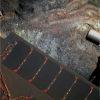
SOL2127-GB.jpgSolar Panel and Colourful Soil - Sol 2127 (possible True Colors; credits: Dr G. Barca - Lunexit Team)56 visitenessun commentoMareKromium
|
|

OPP-SOL2117-MF-LXTT2.jpgErratic Boulder with the Mark - Sol 2117 (Natural Colors - credits: Dr M. Faccin - Lunexit Team)56 visitenessun commentoMareKromium
|
|

SOL2114-GB-LXTT-01.jpgMartian Sobriety... - Sol 2114 (Part I - possible True Colors; credits: Dr G. Barca - Lunexit Team)56 visitenessun commentoMareKromium
|
|

PSP_001916_2220_RED_abrowse.jpgKnobs and Mounds on the Northern Plains (Natural Colors; credits: Dr Paolo C. Fienga - Lunexit Team)56 visiteLight-toned Mounds occur across the image.
The northern part of the image is dominated by small Knobs or Patches, while there are features hundreds of meters across to the South. The larger features frequently have one or more craters and an irregular shape; it has been proposed that these features are Mud Volcanoes, which erupt mud instead of lava.
On Earth, Mud Volcanoes usually form in conditions of tectonic pressurization or rapid burial of sediments.
At high resolution, the Knobs show some fine lineations which may be wind-blown material, but are otherwise very smooth. In between the Mounds, the Surface is rough and rich in Boulders. The few Boulders on the Mounds were likely ejected from nearby Impact Craters.
Information like this from HiRISE images provides useful constraints on the formation and material of these Knobs and Cones.MareKromium
|
|

SOL2114-GB-LXTT-03.jpgMartian Sobriety... - Sol 2114 (Part III - possible True Colors; credits: Dr G. Barca - Lunexit Team)56 visitenessun commentoMareKromium
|
|

SOL2114-GB-LXTT-02.jpgMartian Sobriety... - Sol 2114 (Part II - possible True Colors; credits: Dr G. Barca - Lunexit Team)56 visiteVeduta della collinetta battezzata "Von Braun".MareKromium
|
|

Channels-Unnamed_Outflow_Channel-PIA00483.jpgOutflow Channel in South Nawka Vallis (possible Natural Colors; credits: Dr Paolo C. Fienga - Lunexit Team)56 visiteThis SAR image from the Southern portion of Navka (24,4-25,3° South Latitude and 338,5-340,5° East Longitude) is a mosaic of twelve Magellan orbits that covers approx. 180 Km (about 108 miles) in width and approx. 78 Km (about 47 miles) in length.
In the center of this image are two bright Deposits running North to South.
These Deposits outline an Outflow Channel that flowed from an about 60-Km diameter Crater that is to the South of the Channel itself. Inside the Outflow Channel and outlined by some so-called 'Bathtub Ring' Deposits are small Cones, most likely of volcanic origin.
At the end of the Outflow Channel, where one would expect the smallest particles to be deposited, are specular features which may represent Sand Dunes.
Seasat and space shuttle radar images of sand dunes on Earth also show specular reflections from smooth dune faces that are near-normal to the radar beam.
Other evidence for aeolian activity are the dark and bright Windstreaks running East to West and that formed behind the Cones. Notice how the wind changes direction from a South/East-North/West flow at the right of the image to an East-West flow at the eastern edge of the Outflow Channel.MareKromium
|
|

Comets-Halley-nucleus.jpgThe Nucleus of Halley56 visiteWhat does a Comet Nucleus look like?
Formed from the primordial stuff of the Solar System, Comet Nuclei were thought to resemble to very dirty icebergs. But ground-based telescopes revealed only the surrounding cloud of gas and dust of Active Comets nearing the Sun, clearly resolving only the Comet's Coma, and the characteristic cometary tails.
In 1986, however, the European Spacecraft "Giotto" became one of the first group of spacecrafts which encountered and photographed the Nucleus of a Comet, when it passed and imaged Halley's Nucleus as it approached the Sun.
Data from Giotto's camera were used to generate this enhanced image of the potato shaped Nucleus that measures roughly 15 Km across. Some Surface Features on the dark Nucleus are on the right, while gas and dust flowing into Halley's Coma are on the left.
Every 76 years Comet Halley returns to the Inner Solar System and each time the Nucleus sheds about a 6-meter deep layer of its ice and rock into space. This debris shed from Halley's Nucleus eventually disperses into an orbiting trail responsible for the Orionids Meteor Shower, which occurs in October of every year, and the Eta Aquariids Meteor Shower, that occurs in May.MareKromium
|
|

SOL2114-PANORAMIC-GB-LXTT.jpgVon Braun - Sol 2114 (Image-Mosaic - Natural Colors; credits: Dr G. Barca - Lunexit Team)56 visitenessun commentoMareKromium
|
|

Enceladus-PIA12517.jpgA "Pearl of Ice", in the Night of Saturn (possible Natural Colors; credits: Dr Paolo C. Fienga - Lunexit Team)56 visiteCaption NASA:"The Cassini Spacecraft looks toward the South Pole of Enceladus, with a glimpse of Saturns Rings in the distance, during the Spacecraft's close Fly-By of Nov. 2, 2009.
(see PIA08386 to learn more about the active South Pole of Enceladus)
This view looks toward the anti-Saturn side of Enceladus. The Rings have been brightened relative to Enceladus to increase visibility.
The image was taken in Visible Light with the Cassini Spacecraft wide-angle camera on Nov. 2, 2009. The view was acquired at a distance of approx. 10.400 Km (aout 6500 miles) from Enceladus and at a Sun-Enceladus-Spacecraft, or Phase, Angle of 6°.
Image scale is roughly 630 meters (2100 feet) per pixel".MareKromium
|
|

Pandora-091227-W00062229-31.jpgPandora perhaps? (an Image-Mosaic in False Colors, by Elisabetta Bonora - Lunexit Team)56 visitenessun commentoMareKromium
|
|
| 25353 immagini su 2113 pagina(e) |
 |
|
|
|
|
1641 | |
|
|
|
|





