| Piú viste |

as15-99-13416.JPGAS 15-99-13416 - The Earth in UV56 visitenessun commentoMareKromium
|
|

as15-86-11569.jpgAS 15-86-11569 - Locator56 visiteCaption NASA:"Dave Scott turned to his left to take this "locator" to the Station 2 boulder. We can see him taking this picture in Jim's second down-Sun (AS 15-85-11442).
MareKromium
|
|

SOL1418-2P252245549EFFAX00P2298R1M1.jpgJust Mars... - Sol 1418 (MULTISPECTRUM; credits: Lunexit)56 visitenessun commentoMareKromium
|
|
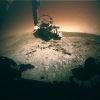
SOL1450-2F255097036EFFAX16P1154L0M1.jpgThis is Mars - Sol 1450 (MULTISPECTRUM; credits: Lunexit)56 visitenessun commentoMareKromium
|
|

NGC-1132.jpgElliptical Galaxy NGC 113256 visite"...A che cosa o a chi può servire una Verità che non sia Patrimonio di tutti?!?..."
Paolo C. Fienga - "Pensieri su Scienza & Dintorni"
MareKromium
|
|
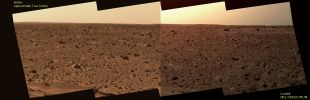
SOL054-A_P2432_L256atc-3.jpgEarly Horizon - Sol 54 (composite - credits: NASA & Lunexit)56 visitenessun commentoMareKromium
|
|
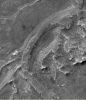
PSP_006770_1760_RED_abrowse-01.jpgInverted Channels, North of Juventae Chasma (extra-detail mgnf)56 visiteThe raised ridges in this image have been explained as former stream channels that are now preserved in inverted relief.
On Earth, inverted relief occurs when former depressions become elevated because materials that fill the depressions are more resistant to erosion than the surrounding terrain.
For example: a depression may become filled with lava that is more resistant to erosion than the surrounding surface; gravel or boulders transported in a high energy flow protect underlying material from erosion, or sediments deposited by a flowing stream become cemented.MareKromium
|
|
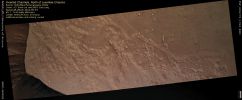
PSP_006770_1760_RED_abrowse-00.jpgInverted Channels, North of Juventae Chasma (context frame - MULTISPECTRUM; credits: Lunexit)56 visiteThis image shows raised ridges on a plain to the North of Juventae Chasma. Juventae Chasma, a canyon that is part of the Valles Marineris Canyon System, stretches for about 180 Km (approx. 110 miles) from East to West and about 250 Km (approx. 155 mi) from North to South.
Several examples of raised features have been identified on the plains near this canyon.
In this location, it is most likely that water - either pure or salt water - once flowed through these channels and deposited sediments that eventually filled the channels and became cemented by some chemical precipitating from the flowing water.
Over time, wind eroded the surrounding surface leaving the remnant channels exposed as raised ridges.MareKromium
|
|

as16-118-18880.jpgAS 16-118-18880 - The Earth during Trans-Lunar Coast (USA and Mexico)56 visitenessun commentoMareKromium
|
|
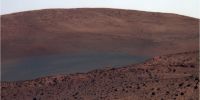
SOL1448-A_P2436_1_False_L257_pos_2.jpgView from Spirit's Overwintering Position (False Color; credits: NASA/JPL-Caltech/Cornell University)56 visiteCaption NASA:"NASA's Mars Exploration Rover Spirit has this view northward from the position at the north edge of the "Home Plate" plateau where the Rover will spend its third Martian Winter.
Husband Hill is on the horizon. The dark area in the middle distance is "El Dorado" sand dune field.
Spirit used its Panoramic Camera (PanCam) to capture this image during the Rover's 1448th Martian day, of Sol (Jan. 29, 2008).
This view combines separate images taken through the PanCam filters centered on wavelengths of 753, 535 and 432 nanometers.
It is presented in a false-color stretch to bring out subtle color differences in the scene".MareKromium
|
|

as07-03-1512.jpgAS 07-03-1512 - The Darkness outside...56 visitenessun commentoMareKromium
|
|
OPP-SOL1443-1N256291340EFF88AFP1977L0M1.jpgLooking "Down"... - Sol 1443 (2 - MULTISPECTRUM; credits: Lunexit)56 visitenessun commentoMareKromium
|
|
| 25353 immagini su 2113 pagina(e) |
 |
|
|
|
|
1632 | |
|
|
|
|





