| Piú viste |
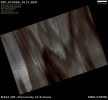
PSP_010086_2615_RED.jpgInfilled Crater on the North Polar Layered Deposits (natural colors; credits: Lunexit)56 visiteThe Polar Deposits of Mars are among the most geologically active on the Planet today. This image illustrates several processes affecting the Polar Landscape both today and in the recent past.
Frost streaks cross this image from lower left to lower right and are a testament to the power of the wind to redistribute material in this Region. In the center of the image lies an impact crater about 130 meters across (425 feet). Craters on the Polar Deposits are rare because the very active surface processes remove them quickly. This particular crater is likely to have been formed less than 100.000 years ago, which is very recent in geologic terms.
Streaks of material emanating from the crater rim have been created as the ice and dust being transported across the surface by the wind encounters that obstacle.
Although its initial depth was probably about 25 m (80 ft), the crater has been infilled with ice and dust and is now quite shallow. However, in one portion of the crater (upper area), the fill material has been removed, creating a pit adjacent to the crater wall. This pit contains a fresh deposit of ice and may be in the beginning stages of being infilled again. These cycles of infilling and erosion will eventually erase the crater from the landscape.
Scientists can examine many of these craters at different stages in their lifespan, from the very fresh to the almost erased. Using these data we can make estimates of how active this part of the Martian Surface is today.
Of course we need to find these rare craters first! Craters this size are usually about 200 Km (approx. 125 miles) apart in this Region, with the intervening landscape being relatively featureless.MareKromium
|
|

PSP_010052_1560_RED.jpgFeatures of Eberswalde Crater (natural colors; credits: Lunexit)56 visiteEberswalde Crater is an approx. 65-Km diameter, closed Basin Crater. It contains a delta, which indicates that flowing water was present for an extended period of time in the past.
Parts of the Crater have inverted channels that have higher relief because a more resistant material was deposited in the channel and therefore it was less susceptible to erosion than the surrounding area. The image also shows resistant knobs and mounds as well as a scoured surface.
The CRISM instrument on-board MRO has detected Phyllosilicates (Clays) in some of the bright layers here. On Earth, clays form in the presence of water, so this is more evidence that there was a persistent flow of water in Eberswalde.MareKromium
|
|

OPP-SOL528-1.jpgBerryland! - Sol 528 (possible True Colors; credits: Dr G. Barca & Lunexit)56 visitenessun commentoMareKromium
|
|
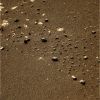
OPP-SOL550-1.JPGBerries and Pebbles - Sol 550 (possible True Colors; credits: Dr G. Barca & Lunexit)56 visitenessun commentoMareKromium
|
|
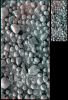
OPP-SOL0910-MF.jpgBerries... - Sol 910 (Hi-Def3-D - b/w; credits and Copyright: Dr M. Faccin and Lunar Explorer Italia)56 visiteFantastica!MareKromium
|
|
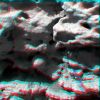
OPP-SOL0039-3dmicro.jpgMartian "Egg" - Sol 39 (Hi-Def3-D - credits and Copyright: Dr G. Barca and Lunar Explorer Italia)56 visiteUn splendida elaborazione: incommentabile e SOLO da ammirare...MareKromium
|
|

The_Rings-ERing-W00051101.jpgThe tenuous E-Ring of Saturn (RAW frame)56 visiteCaption NASA:"W00051101.jpg was taken on November 12, 2008 and received on Earth November 13, 2008. The camera was pointing toward SATURN's E-RING that, at the time, was approx. 1.234.847 Km away.
The image was taken using the CL1 and BL1 filters".
Nota Lunexit: in questo frame potete osservare una serie impressionante di image-artifacts (noise, per lo più, come spesso si vede nei frames CASSINI).MareKromium
|
|

PSP_006968_1735_RED_abrowse~0.jpgMound of Layers in East Candor Chasma (MULTISPECTRUM; credits: Lunexit)56 visiteThis image shows the Northern portion of East Candor Chasma, part of the Valles Marineris Canyon System. In the center of the image is a light-toned mound that has dozens of layers exposed along its edge. As the upper layers weather and break apart into smaller grains, these grains subsequently fall down the edge, burying layers beneath and producing triangular-shaped debris aprons.
The color image of the mound doesn’t show any significant color variations between the different layers.
However, another instrument on MRO called CRISM (Compact Reconnaissance Imaging Spectrometer for Mars) has observed compositional differences between the layers and these results have been helpful in deciphering the origin of these layers.
This deposit is one of several examples exhibiting sulfate-rich layers with alternating hydration states. Cliff-forming Kieserite-rich layers alternate with slope-forming polyhydrated sulfate layers. (Kieserite is a mineral containing Magnesium).
The apparent lack of slumping, channels, cross-bedding or bed truncation supports quiescent water or deposition from the air as the most likely origin for the layers.MareKromium
|
|

PSP_006969_1725_RED_abrowse-00.jpgThe Floor of Noctis Labyrinthus (context frame - MULTISPECTRUM; credits: Lunexit)56 visiteThis image shows part of Noctis Labyrinthus, the “Labyrinth of the Night.” This is a system of connecting troughs which form a maze-like network at the western end of Valles Marineris, the giant canyon system of Mars.
The individual troughs are usually kilometers across; this image shows part of the floor of one of the troughs, with some intriguing fine-scale features.
Near the center of the image, the floor is broken up into many small knobs and hills, probably eroded remnants of a larger geologic unit.MareKromium
|
|

Titan-W00049900.jpgLost in the Space of Saturn... (natural colors; credits: Lunexit)56 visiteTitano: il disco, appena percettibile, splende di un leggero color giallo. Siamo a circa 1,8 MKM dalla "Luna Nebbiosa".MareKromium
|
|

Helene-N00123958.jpgHelene56 visiteHelene is one of the named Minor Moons of Saturn. Also known as Saturn XII (or S12), Helene is an irregularly shaped (---> nonspherical) body measuring about 22 miles (such approx. 36 Km), by about 20 miles (approx. 32 Km), by about 18 miles (approx. 30 Km).
Helene orbits Saturn at a mean distance of about 234.500 miles (approx. 377.400 Km) and has an Orbital Period of 2,7369 Earth Days — the Rotational Period is unknown but is assumed to be the same as the Orbital Period (meaning that Helene shall always show the same side to Saturn - just like the Moon does to Earth).
Helene was discovered by French astronomers P. Laques and J. Lecacheaux in 1980 during ground-based observations of Saturn.
Another moon, Dione, is co-orbital with Helene: that is, Helene orbits Saturn at the same distance as Dione but precedes Dione by about 60°.
Before the present name was adopted, the moon was referred to as "Dione-B" or also "Electra".MareKromium
|
|
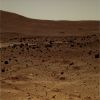
SOL814-1_copia2.jpgPeaceful Horizon... - Sol 814 (possible True Colors; credits: Dr G. Barca)56 visitenessun commentoMareKromium
|
|
| 25353 immagini su 2113 pagina(e) |
 |
|
|
|
|
1622 | |
|
|
|
|





