| Piú viste |

APOLLO 17 AS 17 134-20438 HR.jpgAS 17-134-20438 - Red Cable? (HR)207 visiteCaption NASA originale:"123:06:24 MT - SEP site. This frame from Gene's SEP partial pan shows Jack (Schmitt) reaching down to open the Solar Panels on the SEP Transmitter. Because of the stiffness of the suit, Jack can only reach this low by putting his right leg back and leaning to the side".
Con questo frame segnalatoci dal Dr Barca, finalmente risolviamo (molto probabilmente) una piccola querelle sulla natura dell'oggetto rosso che è stato cerchiato. Come ovvio, non possiamo essere totalmente certi che la nostra idea corrisponda a verità, ma il dettaglio in questione potrebbe essere sia uno spezzone del cavo di alimentazione del SEP Transmitter, sia una porzione del medesimo rimasta semi-interrata.
In appoggio a questa teoria esplicativa, ci sono il colore e l'apparenza del dettaglio superficiale; in contrasto, invece, c'è la posizione del dettaglio in oggetto la quale è totalmente incoerente con la direzione principale di scorrimento del cavo (portate il frame sino al full-size e poi verificate Voi stessi). Che dire di più? La ricerca effettuata dal Dr Barca è eccellente, ma la certezza assoluta sull'effettiva natura di tantissimi dettagli della superficie della Luna (come questo), visto il silenzio della NASA, è (al momento) irraggiungibile.
|
|
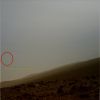
SOL424-2P164022235EFFA8B3P2666L2M1-1.jpgAlien Probe? - Sol 424 (context frame; credits: Dr G. Barca)207 visiteUn frame di qualità eccellente - individuato e selezionato dal Dr Barca - ci mostra un qualcosa di curioso eppure di familiare: nella Cerchiatura Rossa, infatti, potete notare uno splendido punto luminoso.
Uno Star-Like Object, come diciamo noi.
Si tratta di un (ennesimo) vizio digitale del frame? O è un dead-pixel? O si tratta di un oggetto reale?
Andiamo ad osservare bene l'extra-detail mgnf...MareKromium
|
|

Miranda-PIA00042-PCF-LXTT.jpgMiranda (Absolute Natural Colors; credits for the additional process. and color.: Dr Paolo C. Fienga - Lunexit Team)207 visitenessun commentoMareKromium
|
|
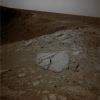
OPP-SOL2520-1N351905528EFFB1F5P1600L0M1.jpgFeatures of Santa Maria Crater - Sol 2520 (Natural Colors; credits for the additional process. and color.: Dr Paolo C. Fienga - Lunexit Team)207 visitenessun commentoMareKromium
|
|
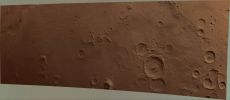
Hellas_Planitia-H0572_0000_ND2_H-PCF-LXTT.jpgFrame H0572_0000_ND2: Hellas Planitia Region207 visiteCaption ESA:"The HRSC on board ESA's Mars Express Spacecraft obtained this image on July, 1st, 2004 during orbit 572 with a ground resolution of approx. 45,1 mt per pixel.
The scene shows a portion of Hellas Planitia, a Region which is about 234 Km wide in the North, 345 Km in the South, about 898 Km in length, and centred at approx. 89° East Long. and 29° South Lat.
This image represents an area on the Northern Eastern Rim of Hellas Planitia, also known as the Hellas Impact Basin in Mars's Southern Hemispere. The Basin is thought to have formed around 3900 Million Years ago in a single massive impact".MareKromium
|
|
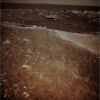
OPP-SOL2586-1N357762543EFFB6QZP1978R0M2.jpgFreedom 7 - Sol 2586 (Part II - Natural Colors; credits for the additional process. and color.: Dr Paolo C. Fienga - Lunexit Team) 207 visitenessun commentoMareKromium
|
|

Dunefield-Proctor_Crater-PIA14145-PCF-LXTT.jpgDunefield in Proctor Crater (Enhanced Natural Colors; credits: Dr Paolo C. Fienga - Lunexit Team)207 visitenessun commentoMareKromium
|
|

ESP_022276_1670_RED_abrowse-PCF-LXTT.jpgFeatures of Capri Chasma (Absolute Natural Colors; credits for the additional process. and color.: Dr Paolo C. Fienga - Lunexit Team)207 visitenessun commentoMareKromium
|
|

SOL605-2N180078562EFFAEM9P0625L0M1-PCF-LXTT.jpgBeautiful Panorama: sand-dunes, boulders and far distant horizon (1) - Sol 605 (Natural Colors; credits for the additional process. and color.: Dr Paolo C. Fienga - Lunexit Team)207 visitenessun commentoMareKromium
|
|

PSP_008842_1705_red-PCF-LXTT.jpgSmall Shield-Volcano and Caldera (Enhanced Natural Colors; credits for the additional process. and color.: Dr Paolo C. Fienga - Lunar Explorer Italia)207 visiteThis image is centered on the vent area of a small shield volcano located within the Summit Caldera of Arsia Mons, the southernmost of the large three Tharsis Montes Volcanoes.
Since the first details of the volcano were revealed by the Viking orbiters 30 years ago, the presence of a string of several small Shield Volcanoes across the Floor of the Caldera has been known. The resolution of the Viking images was insufficient to show more than the mere presence of small Shield Volcanoes and the fact that they appeared to line up along a linear trend across the Floor. And, it was suspected that the small Shield Volcanoes were the source of the lava flows that appeared to cover the floor of the Caldera, but details have been elusive.
This HiRISE image of the central small Shield Volcano on the Caldera Floor shows that there are numerous lava flows radiating from a small summit crater. To the North and South, the lavas have accumulated in lobes, some of which radiate smaller channels and lobes. About midway from the crater, to both left and right of the image, the surface appears very smooth and there are few details visible. Until detailed geologic mapping is done, it is difficult to conclude whether these smooth areas represent distal ponding of lavas that erupted from the summit crater of the small Shield Volcano, lava flows that have invaded from outside the image area at a time later than the formation of the small Shield Volcano, or later deposits of dust and ash that have simply covered the surface.
Whatever the relationships, it is clear that the Floor of the Largest Caldera on Mars is far from a bland surface of old lava flows. Numerous flows and multiple vents have all interacted to create a complex series of surfaces that record the geologic development of the Caldera Floor. MareKromium
|
|
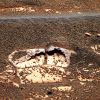
OPP-SOL2654-GB-LXTT-2.jpgAnother "Door" to the Martian Underworld? - Sol 2654 (Enhanced Natural Colors; credits for the additional process. and color: Dr Gianluigi Barca - Lunexit Team)207 visitenessun commentoMareKromium
|
|

ESP_020470_1755_RED_abrowse.jpgLayered Mound in Juventae Chasma (Natural Colors; credits for the additional process. and color.: Dr Paolo C. Fienga - Lunexit Team)207 visitenessun commentoMareKromium
|
|
| 25353 immagini su 2113 pagina(e) |
 |
|
|
|
|
162 | |
|
|
|
|





