| Piú viste |
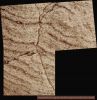
OPP-SOL633-MF2-LXTT.jpgMicroscopic Vision - Sol 633 (an Image-Mosaic in Natural Colors by Dr Marco Faccin - Lunexit Team)56 visitenessun commentoMareKromium
|
|
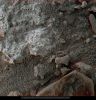
SOL533-MF-LXTT.jpgCristalline Sands? - Sol 533 (Superdefinition and Natural Colors; credits: Dr Marco Faccin)56 visitenessun commentoMareKromium
|
|
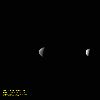
Dione_and_Tethys-EB-LXTT.gifCosmic Clockwork (GIF-Movie; credits: Elisabetta Bonora - Lunexit Team)56 visitenessun commentoMareKromium
|
|
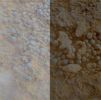
OPP-SOL2150-PIA12970.jpgCoating on a Rock standing beside Concepción Crater - Sol 2150 (Sx credits: NASA/JPL/Caltech-Cornell Univ. - Dx credits: Dr Paolo C. Fienga - Lunexit Team)56 visiteCaption NASA:"This image from the Microscopic Imager (MI) on NASA's Mars Exploration Rover Opportunity shows details of the coating on a rock called "Chocolate Hills", which the Rover found and examined at the edge of a young crater named Concepción.
The Rover took this image during the 2150th Martian Day, or Sol, of its Mission on Mars (Feb. 9. 2010). This target patch on Chocolate Hills is called "Aloya". The view covers an area about 3 cm (1,2") across. The color comes from imaging the same area with the PanCam and it is in false color, so to highlight differences in materials.
The Coating includes a Layer in which peppercorn-size Spherules, nicknamed "blueberries", are packed densely". MareKromium
|
|
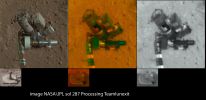
SOL287-MF-LXTT~0.jpgMicroscopically Imaging... - Sol 287 (an Image-Mosaic in Natural and False Colors by Dr Marco Faccin - Lunexit Team)56 visitenessun commentoMareKromium
|
|

SOL714-MF-LXTT2.jpgThe Surroundings of the Martian Seal - Sol 714 (an Image-Mosaic by Dr Marco Faccin - Lunexit Team)56 visitenessun commentoMareKromium
|
|

Dione-EB-LXTT2.jpgThe Surface of Dione (an Image-Mosaic by Elisabetta Bonora - Lunexit Team)56 visitenessun commentoMareKromium
|
|

Spirit-Gusev_Surface-MF-LXTT.jpgRockland! (Natural Colors; credits: Dr Marco Faccin - Lunexit Team) 56 visitenessun commentoMareKromium
|
|

Dione-Mosaic-EB-LXTT.jpgDione (an Image-Mosaic in Natural and Natural but enhanced Colors by Elisabetta Bonora - Lunexit Team)56 visitenessun commentoMareKromium
|
|

Comets-Garrad-PIA12985.jpgComet Garradd56 visiteThis image from the WISE mission was taken on January 2nd, 2010, during the check-out phase, before the start of the WISE survey. It is a mosaic of 3 individual WISE frames spanning an area on the sky about 7 times the size of the full Moon in portions of the constellations Bootes and Canes Venatici.
In the lower right portion of the image there is a streak of orange light. This is most likely a human-made satellite, orbiting Earth at a higher altitude than the WISE telescope, which is at 523 km above the surface. WISE sees many of these as it scans the sky.
Just above the satellite in the image is Comet C/2008 Q3 (Garradd). Comets are balls of dust and ice left over from the formation of the Solar System. As a comet approaches the Sun it is heated and releases gas and dust from its surface that is blown back by the solar wind into a long, spectacular tail. This comet was discovered in August 2008 by Gordon Garradd of the Siding Spring Observatory in Australia. This comet probably comes from the Oort Cloud, a vast collection of remnants from the formation of the Solar System thought to surround it. At the time the comet was observed by WISE, in the constellation Bootes, it was a distance of 419 million kilometers (2.789 Astronomical Units, AU) from Earth. But we are just catching it while it is near the Sun. The orbit calculated for Comet C/2008 Q3 (Garradd) is inclined to the plane of the Solar System by nearly 140 degrees and takes it very far from the Sun (trillions of kilometers). It made its closest approach to the Sun in June of 2009 at a distance of 1.8 AU (270 million km), just outside the orbit of Mars. If it comes back near the Sun at all, it won't be for hundreds of thousands of years.
In the upper left of the image is the impressive globular cluster Messier 3 (M3). M3 was discovered in the constellation Canes Venatici by famous French Astronomer, Charles Messier in 1764, and first seen to be made of stars around 1784 by the British astronomer who discovered infrared light, William Herschel. Globular clusters are huge globs of stars (hence the name) that are found orbiting in the outer reaches of most galaxies. They are thought to form around the same time that a galaxy forms. The Milky Way has over 200 known globular clusters. M3 is one of the largest and brightest globular clusters around the Milky Way. It is just barely visible to the naked eye from a dark location. M3 is made of about half a million stars, thought to be about 8 billion years old. It is about 150 light-years across (1 light-year is equal to 9.46 trillion km) and located some 34,000 light-years from Earth.
WISE sees invisible infrared light, and the colors here are mapped to 3 of the 4 wavelength bands observed by WISE. Blue represents light with a wavelength of 3.4 microns, cyan maps to 4.6 microns and red is lightat 12 microns (a micron is 1 millionth of a meter, and visible light runs from 0.4-0.7 microns). The light from relatively hot objects, like stars in M3, is seen in blue and cyan. Red color represents cooler things, like dust from the comet and its tail. When this image was taken the WISE team was still calibrating the rate of the scan mirror with the motion of the WISE telescope. The rate was not yet perfected and careful examination of this image reveals some stars that are a little smeared and not exactly aligned in the blue/cyan with the red.
MareKromium
|
|
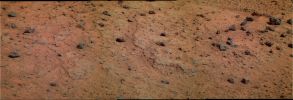
OPP-SOL1396-MF-LXTT.jpgRocks and Pebbles - Sol 1396 (Natural Colors; credits: Dr Marco Faccin - Lunexit Team)56 visitenessun commentoMareKromium
|
|
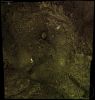
SOL1360-EB-LXTT.jpgMartian "Greenery" and an unsually-looking Pebble - Sol 1360 (credits: Elisabetta Bonora - Lunexit Team)56 visitenessun commentoMareKromium
|
|
| 25353 immagini su 2113 pagina(e) |
 |
|
|
|
|
1618 | |
|
|
|
|





