| Piú viste |
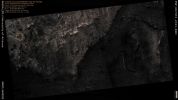
PSP_007055_2015_RED_abrowse-0.jpgVolcanic and Clay Materials near Nili Fossae (ctx frame - MULTISPECTRUM; credits: Lunexit)56 visiteThis image is located West of the Nili Fossae Trough, one of the proposed Landing Sites for the Mars Science Laboratory. Here, we combine information from two other MRO instruments, the Context Camera (CTX) and the Compact Reconnaissance Imaging Spectrometer for Mars (CRISM), to provide insight into the geology of the Region.
Nota Lunexit: sicuramente le informazioni NASA su questo frame sono interessanti e preziose, ma noi Vi invitiamo a prestare un PARTICOLARE ATTENZIONE alla struttura ed alla configurazione superficiale delle dune che caratterizzano tutta la zona ripresa.
Si tratta, in effetti, di dune che, in passato, a causa della loro conformazione ed albedo, hanno ingannato innumerevoli Ricercatori i quali le avevano scambiate per "tubazioni" affioranti.
L'edt n. 3 (elaborato in colori naturali) Vi permetterà di cogliere al meglio non solo la - riteniamo incredibile - conformazione di queste mega-dune, ma anche la loro del tutto peculiare colorazione.MareKromium
|
|

PHOE-SOL034-lg_8567-2.jpgIs there "Something" in the Trench?!? - Sol 34 (edm - Superdefinition; credits: Dr M. Faccin)56 visitenessun commentoMareKromium
|
|

PHOE-SOL038-3.jpgPossible "Audio Signals" from Vastitas Borealis - Sol 38 (credits: Dr M. Faccin)56 visitenessun commentoMareKromium
|
|

PHOE-SOL037-lg9455-9466-9467.jpgVastitas' Foreshortening - Sol 37 (Superdefinition + MULTISPECTRUM; credits: Dr G. Barca & Lunexit)56 visitenessun commentoMareKromium
|
|

OPP-SOL554-1.jpgMarble-like Rock on BerryLand - Sol 554 (Superdefinition + MULTISPECTRUM; credits: Dr G. Barca & Lunexit)56 visitenessun commentoMareKromium
|
|
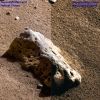
PHOE-SOL038-lg9776-9777-9779-2.jpgColor Techniques' Comparison - Sol 38 (credits: Dr G. Barca - Sx - and Lunexit - Dx)56 visitenessun commentoMareKromium
|
|

PHOE-SOL038-lg9714-9715-9716.jpgFrozen Landing Pad - Sol 38 (natural colors; credits: Dr G. Barca)56 visitenessun commentoMareKromium
|
|

Dione-PIA10409.jpgDione (MULTISPECTRUM-2; credits: Lunexit)56 visiteCaption NASA:"The bright fractures on Dione's Trailing Side slice across terrain that is darker than the rest of the surface. Cassini scientists are working to understand the nature of the dark material that appears to coat the surfaces of several of Saturn's moons. Only after the Cassini Spacecraft began imaging Dione did they realize that the prominent "streaks" shown here are fractures on the surface.
Lit terrain seen here is on the Saturn-Facing Side of Dione. North is up.
The image was taken in visible light with the Cassini spacecraft narrow-angle camera on May 17, 2008. The view was acquired at a distance of approx. 873.000 Km (such as about 543.000 miles) from Dione and at a Phase Angle of 47°.
Image scale is roughly 5 Km (a little less than 3 miles) per pixel".MareKromium
|
|

Dione-N00099381.jpgThe Cratered Surface of Dione (MULTISPECTRUM-2; credits: Lunexit)56 visitenessun commentoMareKromium
|
|
Tethys-W00047018.jpgTethys and the Stars beyond...56 visitenessun commentoMareKromium
|
|
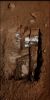
PHOE-SOL039-lg10082-10089-10090.jpgThe "Icy" Trench... - Sol 39 (natural colors; credits: Dr G. Barca)56 visitenessun commentoMareKromium
|
|
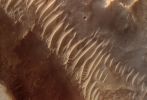
PSP_008523_2060_RED_abrowse-01.jpgSubchannels in Kasei Valles (EDM - MULTISPECTRUM; credits for the additional process. and color.: Dr Paolo C. Fienga - Lunexit Team)56 visiteCaption NASA:"This Region is very dusty, and therefore Dust Streaks can be seen covering the flat Mesas. Within the Channels, large Dunes of Dust have formed from Winds blowing through the Channels themselves. On the steep Slopes of the Dunes, smaller set of Ripples can be seen".MareKromium
|
|
| 25353 immagini su 2113 pagina(e) |
 |
|
|
|
|
1604 | |
|
|
|
|





