| Piú viste |

PSP_010047_1745_RED-01.jpgStar-like shaped Hill in Terra Tyrrhena (edm - possible True Colors; credits: Lunar Explorer Italia)57 visite...Pubblichiamo questo extra-detail magnification (edm) girando a Voi la domanda postaci dal nostro Caro Amico "Cano00": questa striscia di puntini (si direbbero dei mini-segmenti scuri) allineati, che cos'è? E' un intrigantissimo rilievo superficiale, oppure è un image-artifact?
Ed in ogni caso: COMPLIMENTI a Cano00 per l'occhio (straordinario) che ha avuto!...MareKromium
|
|
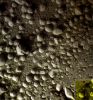
OPP-SOL1755-1MICRO_copia-3.jpgGreenish Smashed-up Berries - Sol 1755 (possible True Colors; credits: Dr G. Barca)57 visitenessun commentoMareKromium
|
|

OPP-SOL1748-2.jpgReddish Pebbles on the Paving - Sol 1748 (possible True Colors; credits: Dr G. Barca)57 visitenessun commentoMareKromium
|
|

ZZ-Z-P-PIA11738.jpgThe Way to the Giant Endeavour Crater - Sol 174257 visiteCaption NASA:"The red-and-white line on this image traces the route that NASA's Mars Exploration Rover Opportunity drove from its Landing inside Eagle Crater on Jan. 4, 2004 (Universal Time; Jan. 3 Pacific Standard Time) through the 1742nd Martian Day, or Sol, of the mission (Dec. 17, 2008). During that period, Opportunity drove 13,62 Km (about 8,5 miles).
Opportunity climbed out of the 800-meter-wide (half-mile-wide) Victoria Crater on Sol 1634 (Aug. 28, 2008). The Rover's next major destination is a much larger crater further South, Endeavour Crater, with a diameter of about 22 Km (approx. 14 miles).
The route and labels on this map are overlain on an image from the Thermal Emission Imaging System camera on NASA's Mars Odyssey Orbiter".MareKromium
|
|

The_Rings-Shadow-N00127582.jpgEclipsing the Rings (3)57 visitenessun commentoMareKromium
|
|

OPP-SOL1759-2.jpgLate Sun - Sol 1759 (3D - possible True Colors; credits: Dr G. Barca)57 visitenessun commentoMareKromium
|
|
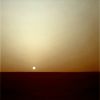
OPP-SOL1759-1P284357875EFF94BBP2629L4M1.jpgLate Sun - Sol 1759 (possible True Colors; credits: Dr Paolo C. Fienga)57 visitenessun commentoMareKromium
|
|
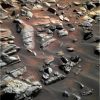
SOL1788-3.JPGRockland! - Sol 1788 (False Colors; credits: Dr G. Barca)57 visitenessun commentoMareKromium
|
|

The_Rings-PIA10556.jpgFantastic View (possible True Colors; credits: Lunar Explorer Italia)57 visiteCaption NASA:"Three of Saturn's satellites are visible in this snapshot from the Cassini Spacecraft. Janus (approx. 179 Km, or about 111 miles across) is in the top left of the image. Pandora (approx. 81 Km, or about 50 miles across) is just outside the F-Ring and Pan (approx. 28 Km, or about 17 miles across) is the small moon that has cut a path inside the Rings below the center of the image.
This view looks toward the unilluminated side of the Rings from about 27° above the Ring-Plane. The image was taken in visible light with the Cassini Spacecraft wide-angle camera on Dec. 7, 2008 using clear filters: CL1 (635 nm) and CL2 (635 nm). It was obtained from a distance of approx. 1 MKM (such as about 641.000 miles) from Pan and at a Sun-Pan-Spacecraft, or Phase, Angle of 33°. Image scale is roughly 62 Km (about 38 miles) per pixel".MareKromium
|
|
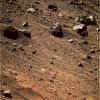
SOL1684-GB.jpgOn the Slope... - Sol 1684 (possible True Colors; credits: Dr G. Barca & Lunar Explorer Italia)57 visitenessun commentoMareKromium
|
|
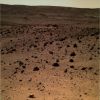
SOL1681-GB.jpgRocky Horizon - Sol 1681 (possible True Colors; credits: Dr G. Barca & Lunexit)57 visitenessun commentoMareKromium
|
|

PSP_005392_0995_RED_abrowse-01~0.jpgImpact Crater on the South Polar Layered Deposits (EDM n.1; MULTISPECTRUM - credits: Lunexit)57 visiteA problem with using craters to determine age on the icy SPLD is that erosion of the icy substrate and relaxation of crater topography (i. e., relief becoming more gentle) is probably more rapid on ice than on harder rocky surfaces.
A detailed study of craters in ice will help better to understand this process of how craters in ice degrade, or deteriorate, with time.
Perhaps then we will know how to use the number and distribution of craters over the icy polar layered deposits in constraining the geologic and climate history of the Mars Polar Regions.MareKromium
|
|
| 25353 immagini su 2113 pagina(e) |
 |
|
|
|
|
1596 | |
|
|
|
|





