| Piú viste |
PSP_001521_2025_RED_abrowse-00.jpgThe Viking Lander 1 Landing Site - Thomas Mutch Memorial Station (ctx frame - Natural Colors; credits: Lunar Explorer Italia)57 visiteViking Lander 1 (VL1) touched down in Western Chryse Planitia on July 20, 1976.
The Lander, which has a diameter of about 3 meters, has been precisely located in the HiRISE orbital image, and likely locations have been found for the Heat-Shield, Backshell and Parachute attached to the Backshell.
The Lander location has been confirmed by overlaying the lander-derived topographic contours on the HiRISE image, which provides an excellent match. VL1 was one element of an ambitious mission to study Mars, with a 4-spacecraft flotilla consisting of 2 Orbiters and 2 Landers.MareKromium
|
|

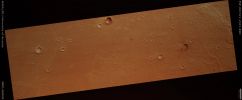
PSP_001513_1655_RED_abrowse-00.jpgThe MER Spirit Landing Site (ctx frame - Natural Colors; credits: Lunar Explorer Italia)57 visiteThis HiRISE image shows the Landing Site of the Mars Exploration Rover Spirit. The impact crater in the upper left-hand portion of the image is "Bonneville Crater", which was investigated by Spirit shortly after landing. In the lower right-hand portion of the image is "Husband Hill", a large hill that Spirit climbed and where it spent much of its now nearly five-year mission.
M.L.T.: 15:29 (early afternoon)
Latitude (centered): 14,6° South and Longitude 175,5° East
Range to target site: 270,7 Km (approx. 169,2 miles)
Original image scale range: 27,1 cm/pixel (with 1 x 1 binning) so objects ~81 cm across are resolved
Map projected scale: 25 cm/pixel and North is up
Map projection: EQUIRECTANGULAR
Emission angle: 15,8°
Phase angle: 73,6°
Solar Incidence Angle: 60°, with the Sun about 30° above the Local Horizon
Solar Longitude: 139,1° (Northern Summer)MareKromium
|
|
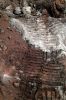
SOL429-GB.jpgRover Tracks - Sol 429 (possible True Colors; credits: Dr G. Barca)57 visitenessun commentoMareKromium
|
|

SOL1799-2N286070252EDNAZCJP1550L0M1.jpgOrange-Reddish Sun, in the sky of Gusev - Sol 1799 (natural colors; credits: Lunar Explorer Italia)57 visitenessun commentoMareKromium
|
|

ZZ-Mercury-Global_View_of_the_Surface-PIA11795_fig1.jpgVarious Mercurian Surface Features (natural colors; credits: Lunar Explorer Italia)57 visiteThis NAC image displays a number of interesting geologic features characteristic of Mercury’s Surface.
The Crater indicated by the yellow arrow has unusual bright material on its floor, likely due to rocks of a different chemical composition. Bright material also has been seen in the craters Sander and Kertész.
The pink arrows point to a pair of larger and older craters that have been flooded with now solidified volcanic lava, similar to flooding seen at the impact basin Raphael. In the lower right-hand corner of the image is a large peak-ring Basin, about 210 Km (approx. 130 miles) in diameter, which also appears to have been flooded with lava. There is also a small Scarp (or "Cliff") within that Basin that cuts through a smaller crater at the edge of the Basin's inner ring, at the point indicated by the blue arrow.
Scarps on Mercury are often seen intersecting Impact Craters, such as this dramatic, previously released image from the mission's second Mercury flyby (see, for example, PIA11358).
The green arrows on the left side of the image indicate a series of Secondary Crater Chains. Chains of small craters such as these are formed when ejecta are expelled from a Primary Crater after the initial impact. Secondaries are widespread across Mercury's Surface, as was also discussed in the caption to this previously released image (see PIA10178).
Unraveling Mercury's Geologic History requires investigating the complex and overlapping relationships of Volcanic Plains, Impacts and Scarps seen on the Planet's Surface.
Date Acquired: October 6, 2008
Image Mission Elapsed Time (MET): 131774026
Instrument: Narrow Angle Camera (NAC) of the Mercury Dual Imaging System (MDIS)
Resolution: 540 meters/pixel (0,33 miles/pixel)
Scale: This image is about 550 Km (approx. 340 miles) across
Spacecraft Altitude: about 21.000 Km (approx. 13.000 miles)MareKromium
|
|

SOL377-2P159833255EFFA2HPP2358R1M1.jpgPanorama (3) - Sol 377 (Natural Colors; credits: Lunar Explorer Italia)57 visitenessun commentoMareKromium
|
|
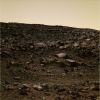
SOL541-2-GB-LXT.jpgRocky Landscape - Sol 541 (possible True Colors; credits: Dr G. Barca & Lunar Explorer Italia57 visitenessun commentoMareKromium
|
|

SOL8112P198357320EFFAR00P2408R1M1.jpgLooking up... - Sol 811 (Natural Colors; credits: Lunar Explorer Italia)57 visitenessun commentoMareKromium
|
|

Neptune-HST2.JPGNeptune and a few of His Moons (HST; Natural Colors; credits: NASA)57 visitenessun commentoMareKromium
|
|
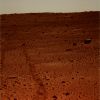
SOL103-2P135509210EFF2900P2383L7M1.jpgGusev Skyline - Sol 103 (Extremely Enhanced Natural Colors; credits: Lunar Explorer Italia)57 visitenessun commentoMareKromium
|
|
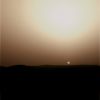
SOL569-2P176899706EFFADAEP2628L7M1-2.jpgIn the Midst of Sunset... - Sol 569 (possible True Colors; credits: Dr G. Barca)57 visitenessun commentoMareKromium
|
|
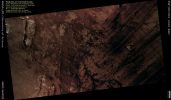
PSP_007095_2020_RED_abrowse~0.jpgInverted Dendritic Stream Channels in Antoniadi Crater (MULTISPECTRUM; credits: Lunexit)57 visiteThis observation is centered within Antoniadi Crater. This crater, even prior to the MRO mission, was identified as a likely ancient lake (now dry) that was supplied by both surface water and ground water.
The image provides further tantalizing evidence of a water-rich past. Most of the flat parts of the image have a polygonal texture, which commonly forms when mud dries. In the center of the image are branched (“dendritic”) features that connect Southward to a larger trunk-shaped landform; the branches resemble stream channels on Earth. Unlike active channels with water, these features are “inverted”, or elevated above the surrounding terrain.
Again, in analogy with such features seen on our Planet, these probably formed when materials deposited by the streams, such as coarse gravel, or chemical cementation after removal of the water, caused the channel bottoms to become resistant. Over time, natural erosion from wind and other processes left the inverted channels elevated above the surrounding terrain.
The branched features are probably remnants of small tributary streams that fed the larger trunk-shaped stream. It appears that the inverted streams lie on top of, and are therefore younger, than the polygons. This area may have first had a lake that later dried to form the polygons, followed by episodes of stream flow and erosion.MareKromium
|
|
| 25353 immagini su 2113 pagina(e) |
 |
|
|
|
|
1595 | |
|
|
|
|





