| Piú viste |
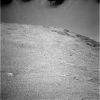
OPP-SOL957-1P213145702EFF76LJP2394L7M1.jpgVictoria Crater (7) - Sol 95757 visiteCaption NASA:"Left PanCam Non-linearized Full frame EDR acquired on Sol 957 of Opportunity's mission to Meridiani Planum at approx. 13:50:23 MLT, camera commanded to use Filter 7 (432 nm)".
|
|

S-PIA08812.jpgCape Verde and Cabo Frio (1)57 visiteThis image from the High Resolution Imaging Science Experiment on NASA's Mars Reconnaissance Orbiter shows the Mars Exploration Rover Opportunity near the rim of "Victoria Crater." Victoria is an impact crater about 800 meters (half a mile) in diameter at Meridiani Planum near the equator of Mars. Opportunity has been operating on Mars since January, 2004. Five days before this image was taken, Opportunity arrived at the rim of Victoria, after a drive of more than 9 kilometers (over 5 miles). It then drove to the position where it is seen in this image.
Shown in the image are "Duck Bay," the eroded segment of the crater rim where Opportunity first arrived at the crater; "Cabo Frio," a sharp promontory to the south of Duck Bay; and "Cape Verde," another promontory to the north. When viewed at the highest resolution, this image shows the rover itself, wheel tracks in the soil behind it, and the rover's shadow, including the shadow of the camera mast. After this image was taken, Opportunity moved to the very tip of Cape Verde to perform more imaging of the interior of the crater.
This view is a portion of an image taken by the High Resolution Imaging Science Experiment (HiRISE) camera onboard the Mars Reconnaissance Orbiter spacecraft on Oct. 3, 2006. The complete image is centered at minus7.8 degrees latitude, 279.5 degrees East longitude. The range to the target site was 297 kilometers (185.6 miles). At this distance the image scale is 29.7 centimeters (12 inches) per pixel (with 1 x 1 binning) so objects about 89 centimeters (35 inches) across are resolved. North is up. The image was taken at a local Mars time of 3:30 PM and the scene is illuminated from the west with a solar incidence angle of 59.7 degrees, thus the sun was about 30.3 degrees above the horizon. At a solar longitude of 113.6 degrees, the season on Mars is northern summer.
Images from the High Resolution Imaging Science Experiment and additional information about the Mars Reconnaissance Orbiter are available online at: http://www.nasa.gov/mro or http://HiRISE.lpl.arizona.edu.
|
|
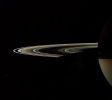
Saturn-PIA08282.jpgIn the darkness57 visiteSunlight filters through Saturn's Rings in sepia tones in this artful view from the Cassini spacecraft of the dark side of the Rings. Those rays from the Sun directly reflected from the lit side of the Rings onto the Planet strike and illuminate the night-side Southern Hemisphere.
The densely populated B-Ring blocks much of the Sun's light and thus looks quite dark and Tethys is a mere sliver below left.
Note that unprocessed wide-angle camera images taken in a high-phase viewing geometry generally contain stray light artifacts. These have largely been removed from this image by computer image processing.
Cassini was about 3° above the Ring-Plane when this image was obtained on Sept. 6, 2006. Images taken using red, green and blue spectral filters were combined to create this natural color view. The images were taken using the Cassini spacecraft wide-angle camera at a distance of approx. 1,8 MKM (about 1,1 MMs) from Saturn and at a phase angle of 154°. Image scale is roughly 106 Km/pixel.
|
|
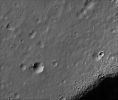
T-TRA_000866_1420_RED.jpgGorgonum Chaos57 visiteThis HiRISE image shows cratered plains along the edge of a large fracture to the south of Gorgonum Chaos. The wall of the fracture is in shadow and, at first glance, appears to reveal little detail about the geologic setting. In reality, the high quality of the HiRISE image, as shown in the stretched sub-image [below], demonstrates that considerable detail along the wall of the fracture can be discerned. A relatively dark layer extends along the upper wall of the fracture and approximately separates the exposed wall above from talus below. Some well defined talus chutes are also visible and are formed by the down slope movement of debris shed from higher along the fracture wall. The wind blown drifts of fine grained sediment accumulated along the base of the talus slope are relatively free of obvious talus. Hence, the wind likely accounts for much of the most recent modification of the scene in the sub image.
|
|
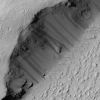
T-TRA_000853_1900_RED_MarteValles_01.jpgSeeps in Marte Vallis57 visiteMarte Vallis is a relatively young channel system on Mars that was carved by catastrophic floods of water. The HiRISE image samples just a small part of the valley system, but captures a variety of different landforms. The mesa in the eastern half of the image is a remnant of the pre-flood surface while the valley floor is covered by a surface with plates and ridges.
We highlight a piece from the southeastern portion of this HiRISE image, along the edge of the mesa. Some of the most striking features in this area are the dark streaks streaming down the cliff face. These mark locations where the layer of dust has been removed, exposing the darker surface underneath. The details of this cleaning process are not well-understood, but are thought to be driven by avalanches of dust. These avalanches appear to be more capricious than typical landslides or mudslides—they are sometimes able to surmount some large obstacles but in other cases are deflected by relatively small boulders. The darkness of the streaks vary, which suggests that they formed at different times. These streaks are expected to gradually fade as more dust will be deposited in the future. However, such fading has yet to be observed.
The role of dust is also clearly evident on the floor of the valley. The fluted mounds are characteristic of a thick dust deposit that is being gradually stripped away by wind. This extensive dust cover complicates any attempt to understand the details of the floods that carved the valley and the processes that formed the plates and ridges on the floor.
|
|
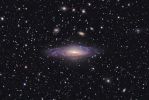
NGC-7331-0.jpgNGC 7331 - Spiral Galaxy57 visite"...insieme uniti tutti,
Entro il Patrio terren dolce è dormire:
Pace hanno i cuori, i pianti son rasciutti,
Sciolgonsi al vento gli amor nostri e l'ire..."
E. Severino Ferrari - "Versi"
|
|

Epsilon Eridani.jpgEpsilon Eridani57 visite"...Qualis dominus, talis et servus..."
(Petronio)
"...Come (è) il padrone, così (è) il servo..."
(detto riferito originariamente ai servitori di case private e poi esteso fino ad intendere i governanti ed i governati)
|
|

NGC-4435_and_4438.jpgNGC 4435 and 4438 - Interacting Galaxies57 visite"...Canis timidus vehementius latrat quam mordet..."
(Q. Curzio)
"...Il cane timido (pavido) abbaia più forte di quanto morda..."
|
|
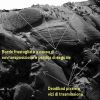
OPP-SOL967-1P214025987ESF76POP2594L7M1.jpgThe rim of Victoria (in a bad frame) - Sol 96757 visitenessun commento
|
|

Craters-Becquerel_Crater_mound_6m-03.jpgBeautiful Becquerel Crater (4)57 visitenessun commento
|
|
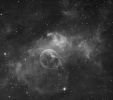
NGC-7635~2.jpgNGC 7635 - The "Bubble Nebula"57 visite"...On the White Stone is written a name that no one knows, except the one who receives it..."
- Revelation 2:17
|
|
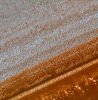
TRA_000825_2665_IRB-01.jpgNorth Polar Layers (2)57 visiteNOTA:
This color images cover only the center swath of the full image, and is composed of images acquired through infrared, red, and blue-green filters. The color has been enhanced to better show the subtle color differences.
It is NOT natural color or how it would appear to normal human vision.
|
|
| 25353 immagini su 2113 pagina(e) |
 |
|
|
|
|
1592 | |
|
|
|
|





