| Piú viste |

SOL687-00.jpgMartian Night-Sky (edited photo-composite - credits: Dr Marco Faccin) - Sol 68757 visitenessun commentoMareKromium
|
|
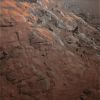
SOL1402-3.jpgThe "Cone-like Shell" and its surroundings - Sol 1402 (natural colors + MULTISPECTRUM; credits: Dr Gianluigi Barca & Lunexit)57 visitenessun commentoMareKromium
|
|

PSP_005788_1035_RED_abrowse.jpgRepeated Erosion and Deposition in the SPLD (MULTISPECTRUM; credits: Lunexit)57 visiteThis image of the SPLD shows evidence of multiple episodes of deposition and erosion near their base.
The SPLD, like the North Polar Layered Deposits (NPLD), are thought to contain a record of global climate changes on Mars. The surface of the outcrop shown here slopes generally toward the right. The layering is cut off by deposits that partly fill two broad valleys that were previously cut into the SPLD, probably by wind erosion. These more recent deposits appear to cover the flatter, upper part of the SPLD, and have also been eroded to expose layering with them.MareKromium
|
|

PSP_005418_1075_RED_abrowse-01.jpgDistorted Layers in the SPLD (extra-detail mgnf - MULTISPECTRUM; credits: Lunexit)57 visiteThis enhanced image (1,2 Km or 0.7 miles across) shows a section of the South Polar Layered Deposits, which are an accumulation of layers consisting mostly of water ice and dust. Perhaps their closest analog on Earth would be the Ice Caps of Greenland and Antarctica.
This image is particularly interesting because the layers are not flat-lying but rather appear "wavy" (---> ondeggianti).
This appearance could partly be an “illusion” due to erosion after the flat-lying layers were deposited. In that case, the wavy appearance is due to the fact that the layer edges are wavy, going into and out of the plane of the outcrop exposing the layers.
Alternatively, this waviness could be due to deformation of the layers folding caused by flow of the ice.
Here, the flow probably occurred long ago since current temperatures are too low to allow the ice to flow at a significant rate.MareKromium
|
|
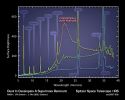
SN-Cassiopeia_A_-PIA10207.jpgCassiopeia "A": Dissecting the Wake of a Supernova Explosion57 visiteThe elements and molecules that flew out of the Cassiopeia A star when it exploded about 300 years ago can be seen clearly for the first time in this plot of data, called a Spectrum, taken by NASA's SST.
The Spectrum, which was created by splitting light into its basic components, reveals the composition of gas and dust that were synthesized in the explosion. It also provides some of the best evidence yet that stellar explosions, called Supernovae, were a significant source of fresh dust in the very young universe.
Prior to these observations, nobody was certain where this early dust — the same dust that ultimately made its way into future stars, planets and people — came from.
One of the most interesting features of the plot is a bump labeled Cassiopeia A Dust Feature. This bump is actually the signature of a collection of dust composed of proto-silicates, Silicon Dioxide and Iron Oxide. The Spectrum reveals that the brightness of the dust feature is correlated to that of Argon gas (yellow vertical line at left), known to have been expelled and synthesized during the star's explosion. The fact that the dust is associated with the expelled gas, or ejecta, tells astronomers that this Supernova manufactured new dust.
Each of the 3 lines of this plot represents a different layer of the Supernova remnant, with the top yellow and red line being the outermost layer.
Similar correlations between gas and dust are also seen in the middle layer (green line). For example, neon gas correlates with dust composed of Carbon and Aluminum Oxide.MareKromium
|
|

as08-14-2400.JPGAS 08-14-2401 - The Dark Side of the Moon (4 - natural colors; credits: Lunexit)57 visiteImage Collection: 70mm Hasselblad
Mission: 8
Magazine: 14
Magazine Letter: B
Latitude: approx. 3,0° South
Longitude: approx. 155,5° West
Lens Focal Length: 250 mm
Description: NEAR TERMINATOR; FARSIDE
Film Type: SO-368
Film Width: 70 mm
Film Color: color
MareKromium
|
|

SOL977.gifVideo Signal from Mars - Sol 977 (credits: Dr M. Faccin)57 visiteRingraziando il Dr Faccin per questa intrigante GIF-Animation, ci e Vi poniamo una domanda: ma da Marte arrivano solo "stills" (fotografie) oppure anche "filmati" veri e propri?
La risposta definitiva al riguardo, ovviamente, non ce l'abbiamo, però abbiamo un "segnale"...MareKromium
|
|
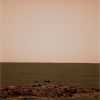
OPP-SOL421-1.jpgA light-pink sky over Meridiani Planum - Sol 421 (RAW Natural Colors; credits for the additional process. and color.: Dr G. Barca - Lunexit Team)57 visitenessun commentoMareKromium
|
|
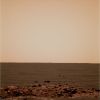
OPP-SOL419-1.jpgA slight-yellowish sky over Meridiani Planum - Sol 419 (RAW Natural Colors; credits for the additional process. and color.: Dr G. Barca - Lunexit Team)57 visitenessun commentoMareKromium
|
|
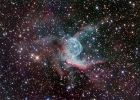
NGC-2359.jpgNGC 2359 - The "Thor's Helmet Nebula"57 visite"Sustine et Abstine"
(detto Stoico)
"Sopporta (il dolore) ed Astieniti (dal perseguire il piacere)"MareKromium
|
|

as15-96-13091.JPGAS 15-96-13091 - Craterland: Furnerius, Petavius and Stevinus57 visiteImage Collection: 70mm Hasselblad
Mission: 15
Magazine: 96
Magazine Letter: Q
Latitude: approx. 32,0° South
Longitude: approx. 52,0° East
Film Type: SO-368
Film Width: 70 mm
Film Color: color
Feature(s): FURNERIUS, PETAVIUS and STEVINUS CRATERMareKromium
|
|

as15-96-13098.jpgAS 15-96-13098 - Worden's EVA (NASA/L&PI Original)57 visitenessun commentoMareKromium
|
|
| 25353 immagini su 2113 pagina(e) |
 |
|
|
|
|
1591 | |
|
|
|
|





