| Piú viste |
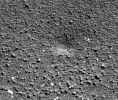
OPP-SOL907-1N208705917EFF746AP1962L0M1-B.jpgMini-crater or Martian Sandglass? (detail mgnf) - Sol 90757 visitenessun commento
|
|

Oberon-vg2_2683625.jpgLeaving Oberon (HR)57 visitenessun commento
|
|

NGC-1893-00.jpgThe Nebula IC 410 and Open Star Cluster NGC 189357 visite"...Populo, qui stultus honores
Saepe dat indignis et famae servit ineptus,
Qui stupet in titulis et imaginibus..."
(Orazio)
"...Il popol stesso
Il qual pur sai che spesse volte insano
Dà gli onori agli indegni, ed alla fama
Inetto serve, e ai titoli, ai ritratti
Goffo stupisce..."
(trad. di Vincenzo Monti)
|
|

Saturn-PIA08242.jpg"Flat and Ringless" Saturn...57 visiteCaption NASA originale:"Saturn's low density and fast rotation combine to give it its characteristic oblate shape. The dramatic crescent seen here demonstrates how the Ringed Planet is much wider at the equator than at the poles.
The Rings (seem to) disappear near the center into the darkness of the Planet's shadow.
The image was taken in visible light with the Cassini spacecraft wide-angle camera on July 11, 2006 at a distance of approx. 2,9 MKM (such as about 1,8 MMs) from Saturn and at a Sun-Saturn-spacecraft, or phase, angle of 163°.
Image scale is approx. 169 Km (about 105 miles) per pixel".
|
|

APOLLO 16-0692.jpgAS 16-0692 - Teophilus Crater57 visiteTheophilus is a relatively young crater similar in size but slightly older than Copernicus. It lies on the eastern edge of the Kant Plateau, an elevated area in the Central Highlands along the northwestern margin of Mare Nectaris. Part of Nectaris is visible as the smooth, dark area near the horizon at the left edge. Like Copernicus and Aristarchus, Theophilus has ruggedly terraced walls and a complex central peak protruding through a level floor. Smooth-surfaced material is present in "pools" at various levels on the terraces, on parts of the crater floor, and on the ejecta that blanket the near (North) side of the crater.
As one alternative, the pools may have been emplaced as fluid lava.
|
|
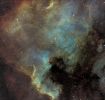
NGC-7000-00.jpgNGC 7000 - North America Nebula57 visite"...Excidunt etiam retinentibus lacrimae, et animum profusae levant..."
(Seneca)
"...Le lacrime vengono anche a chi si sforza di trattenerle e, una volta lasciate andare, alleviano la sofferenza (lett. "sollevano l'animo")..."
|
|

Rhea-N00064799-B.jpgMoments of Rhea (1) - detail mgnf: Squared Crater57 visiteUn dettaglio molto bello di uno dei rilievi superficiali più inriganti di questa Luna Saturniana: si tratta di un cratere dalla forma curiosa il quale pare presentare, sul suo versante Est (Dx dell'Osservatore), un'evidente Anomalìa di Superficie costituita da una sorta di "quadrangolo grigio" il quale ricopre nettamente un'ampia porzione della sua parete interna (la quale, come si vede bene, è di colore chiaro e ben illuminata, tranne che nella zona che abbiamo cerchiato in nero).
Che cosa può essere successo? Che cosa ha "oscurato" una porzione del versante Est del cratere? L'ipotesi della "valanga di polveri", e ce ne rendiamo conto, è "leggera" e discutibile; più plausibilmente si potrebbe trattare di un visio dell'immagine o di una manipolazione digitale. In ogni caso, ecco un nuovo "mistero" da valutare ed approfondire...
|
|

Rhea-N00064832-A.jpgMoments of Rhea (6) - Rhea's "Peak" (context image)57 visiteRiuscite a vederlo?!?...
|
|

Rhea-N00064852-A.jpgMoments of Rhea (7) - Squared Crater and anomalous "slope" (contex image)57 visiteLo stesso rilievo che abbiamo adocchiato nel quadro n. 1, si ripropone da un angolo visuale migliore, sebbene osservato e ripreso da una distanza maggiore (poco più di 191.000 Km rispetto ai 167.000 del quadro n.1): la regione Est del grande cratere (che qui ci appare ad ore 12 - essendo mutata la posizione di Cassini rispetto a Rhea) pare proprio aver subito un "trauma" di un qualche tipo, poichè la bianca parete del cratere, come poi vedrete meglio nel detail mgnf, effettivamente si interrompe e cambia tessitura e colore.
Difficile fare ipotesi, ma la sensazione che un evento cataclismico si sia (in epoche neppure troppo remote) verificato in quella regione di Rhea ci pare alquanto probabile (e per i Lettori più ferrati in Scienze Planetarie, suggeriamo di fare un raffronto tra questo cratere e le sue pareti ed il cratere Lunare "Jansen-B": le somiglianze, secondo noi, ci sono e sono molto nette).
|
|

Rhea-N00064852-B.jpgMoments of Rhea (7) - Squared Crater and anomalous "slope" (detail mgnf)57 visitenessun commento
|
|

Mimas-N00064753.jpgMimas is "looking down"...57 visiteCaption NASA:"N00064753.jpg was taken on August 16, 2006 and received on Earth August 18, 2006. The camera was pointing toward Mimas that, at the time, was approximately 219.272 Km away.
The image was taken using the P120 and UV3 filters".
|
|

Dione-N00064757.jpgThe "Night" of Dione (1)57 visiteDalla "modesta" distanza di circa 158.000 Km, Cassini fotografa Dione e, sovraesponendone le regioni su cui splende il Sole, è capace di regalarci una incredibile e suggestiva visione dei rilievi Dioniani immersi nella notte e vagamente rischiarati, con ogni probabilità, dal solo "Saturnshine", o "Chiaro di Saturno".
|
|
| 25353 immagini su 2113 pagina(e) |
 |
|
|
|
|
1585 | |
|
|
|
|





