| Piú viste |

Animazione_SOL626.gifLevitation? (GIF-Movie from frames taken during Sol 626; credits: Dr Gianluigi Barca)57 visite...Succede che Spirit continua a cercare il suo "vantage point" e, per farlo, continua a "spingere in avanti" (to push forward) ma...Le sue ruote anteriori restano perfettamente IMMOBILI.
Che ne pensate?
CONGRATULAZIONI al Dr Gianluigi Barca per l'occhio, la splendida intuizione e la provocazione: ma Spirit "levita", di quando in quando?!?...
E per gli Amici "scettici", che volessero controllare di persona, eccoVi i seriali dei frames usati per il GIF-Movie in questione (estratti dall'Archivio "Front Haz-Cam", per il "Sol 626" del "MER Spirit" - http://marsrovers.jpl.nasa.gov/gallery/all/spirit_f626_text.html):
2F181938396EFFAEUWP1205L0M1.JPG
2F181938455EFFAEUYP1206L0M1.JPG
2F181938816EFFAEV4P1206L0M1.JPG
2F181939108EFFAEV6P1206L0M1.JPG
2F181939506EFFAEVCP1205L0M1.JPG
2F181939798EFFAEVEP1206L0M1.JPG
2F181940195EFFAEVKP1206L0M1.JPG
2F181940480EFFAEVLP1206L0M1.JPG
2F181940831EFFAEVOP1214L0M1.JPGMareKromium
|
|
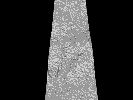
SHARAD-1.gifUnder the Ice... (1)57 visiteRadar Sounder Instruments orbiting Mars have looked beneath the Martian Surface and opened up the Third Dimension for Planetary Exploration.
The technique's success is prompting scientists to think of all the other places in the Solar System where they would like to use Radar Sounders.
The first Radar Sounder at Mars was the Mars Advanced Radar for Subsurface and Ionospheric Sounding (MARSIS) on the European Space Agency's Mars Express Orbiter. It has been joined by the complementary Shallow Subsurface Radar (SHARAD), operating at a different wavelength aboard NASA's Mars Reconnaissance Orbiter.
The data in this animation are from SHARAD.MareKromium
|
|
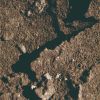
SOL177.jpgLayered Surface Feature - Sol 177 (True Colors + MULTISPECTRUM; credits: Dr G. Barca & Lunexit)57 visitenessun commentoMareKromium
|
|
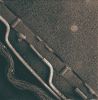
SOL1230-1239-1518-3.jpgWhat's on the Solar Panels? - Sol 1230 (Superdefinition; credits: Dr G. Barca)57 visitenessun commentoMareKromium
|
|
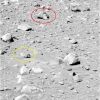
SOL106-2P135779309EFF3100P2294L5M1-1.jpgExtremely Unusual Landforms near Spirit (context-frame; credits: Dr G. Barca)57 visiteDal sempre più attento ed acuto occhio del nostro Dr Gianluigi Barca, due rilievi rocciosi davvero inusuali riemergono dalle "nebbie" dell'ormai lontano Sol 106 del Rover Spirit: li abbiamo battezzati "The Fin" (La Pinna) e "The Eel" (L'Anguilla).
Il motivo per cui abbiamo scelto questi nomi lo capirete osservando gli extra-detail mgnf che seguono...
Complimenti e nuove (ma sempre meritate!) Congratulazioni al Dr Barca!MareKromium
|
|
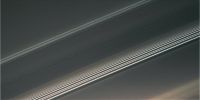
The_Rings-PIA09894.jpgThe A-Ring in 16:9 (natural colors + MULTISPECTRUM; credits: Lunexit)57 visiteCaption NASA:"Spiral density waves in Saturn's A-Ring reveal the gravitational signatures of distant moons as they subtly tug on the countless particles orbiting in the Ring-Plane.
Resulting from a process called orbital resonance, a spiral density wave is a spiral-shaped massing of particles that tightly winds many times around the Planet. Thus, the wave patterns seen here represent successive windings of each wave, like a close-up view of a watch spring.
Ring scientists can read these patterns, learning from them how quickly the Rings are spreading and the amount of mass contained in a region.
This view looks toward the sunlit side of the Rings from about 42° below the Ring-Plane. The image was taken in visible light with the Cassini spacecraft narrow-angle camera on April 1, 2008. The view was obtained at a distance of approx. 268.000 Km (about 167.000 miles) from Saturn.
Image scale is roughly 1 Km (0,6 miles) per pixel".MareKromium
|
|

Lost.jpgLost...57 visiteWandering through the Evening Sky, on May 4th, 2008, Planet Mars stood in line with Castor and Pollux, the two bright stars of the constellation Gemini.
In this time exposure of the celestial alignment, Mars actually takes on a distinct yellowish hue, contrasting in color with Pollux; a giant star known to have a Jupiter-class planet, and Castor; itself a multiple Star System.
Though in mythology Pollux and Castor are twin brothers, the two stars are physically unrelated and are about 34 and 50 LY distant respectively.
Included in the skyview are Procyon, alpha star of Canis Minor, and famous star cluster M44, also known as the Beehive Cluster. Dust in our own Solar System reflecting sunlight creates the faint band of Zodiacal Light emerging from the lower right corner of the frame. Just put your cursor over the picture for help with identifications.
Of course, bright Mars can still be found in the western evening skies and tonight wanders near the crescent Moon.MareKromium
|
|

as14-67-09367.JPGAS 14-67-9367 - Up-Sun (Special Processing by Lunexit)57 visiteCaption NASA:"117:19:37 MT - This up-Sun photo was taken from near the ALSEP Central Station back toward the LM in order to provide relative location information.
As with the Astronauts' bootprints, the track made by the MET tires are compact, smooth and, as can be seen so dramatically in this picture, more highly reflective than the rough undisturbed surface".MareKromium
|
|

as14-67-09368.JPGAS 14-67-9368 - Up-Sun (Special Processing by Lunexit)57 visiteSimilar to AS 14-67-9367.
MareKromium
|
|
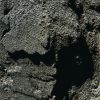
OPP-SOL025-1.jpgGreenish "dust" or "spores"? - Sol 25 (Superdefinition + MULTISPECTRUM; credits: Dr G. Barca & Lunexit)57 visitenessun commentoMareKromium
|
|

as10-27-3940.jpgAS 10-27-3940 - Mare Nectaris and Mare Smythii (Special Processing by Lunexit)57 visitenessun commentoMareKromium
|
|

as16-113-18321.JPGAS 16-113-18321 - Up-Sun (2 - Special Processing by Lunexit)57 visiteFrame taken by Charlie Duke during EVA-1.
MareKromium
|
|
| 25353 immagini su 2113 pagina(e) |
 |
|
|
|
|
1583 | |
|
|
|
|





