| Piú viste |
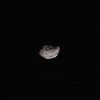
Hyperion-N00078277.jpgTumbling Hyperion (1 - natural colors, elab. Lunexit)57 visiteCaption NASA:"N00078277.jpg was taken on February 16, 2007 and received on Earth February 17, 2007. The camera was pointing toward Hyperion that, at the time, was approximately 214.446 Km away.
The image was taken using the P60 and GRN filters". MareKromium
|
|
as15-85-11476.jpgAS 15-85-11476 - Hadley Delta Summit57 visiteCaption NASA:"143:38:21 MT - Rightward of 11475. Blurred by camera motion".
MareKromium
|
|
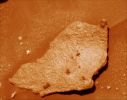
SOL1113-2P225171890EFFASNUP2560L2M1-01.jpgLook who's there... - Sol 1113 (Old Martian Colors/elab. Lunexit)57 visiteMa guarda un pò "chi" - o forse sarebbe meglio dire "che cosa" - si rivede!
La sensazione che la pseudo-roccia da noi già evidenziata qualche giorno fa potesse avere degli oggettivi motivi di interesse c'era ed era palese, ma che anche la NASA si interessasse a questo rilievo al punto da avvicinarsi e riprenderlo così bene...no, non lo credevamo proprio possibile.
Di che si tratta? Secondo noi si potrebbe trattare di un "frammento" di qualcosa (un qualcosa di rotondeggiante e non molto resistente) e non di un semplice sasso dalla forma e tessitura bizzarre. La nostra ipotesi? Si tratta di un frammento di "Guscio Marziano" - e, per i più distratti, ricordiamo che i "Gusci Marziani" sono tutti quei rilievi superficiali che abbiamo battezzato, così sposando la definizione del Dr Alessio Feltri, come "pseudo-rocce".
Si tratta, insomma, di "simil-pietre" le quali, atipiche per forma e tessitura (ossìa per fattezze e composizione), potrebbero rappresentare sia un residuo fossile di antiche forme Vitali le quali vivevano "attaccate" alla superficie delle pietre stesse (come, ad esempio, i "Martian Berries"), sia delle forme vitali indigene vere e proprie (in sè, nella loro completezza e totalità) ed aventi una Natura Bio-Magnetica.
Qualcosa di "alieno" per definizione, insomma.
Ma non restate sorpresi nè delusi se la NASA stessa ci dirà (prima o poi) che quello che stiamo guardando era, in realtà:
1) solo il frammento di un bolide caduto nei pressi;
2) solo la scheggia di una roccia vulcanica andata in frantumi;
3) niente di strano e, comunque, nulla che meritasse attenzioni o commenti "ad hoc".
In fondo, a che cosa è più facile credere?!?...MareKromium
|
|
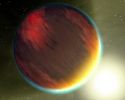
HD189733b-PIA09200.jpgJust like Jupiter...57 visiteThis artist's concept shows a cloudy Jupiter-like planet that orbits very close to its fiery hot star. NASA's Spitzer Space Telescope was recently used to capture spectra, or molecular fingerprints, of two "hot Jupiter" worlds like the one depicted here. This is the first time a spectrum has ever been obtained for an exoplanet, or a planet beyond our solar system.
The ground-breaking observations were made with Spitzer's spectrograph, which pries apart infrared light into its basic wavelengths, revealing the "fingerprints" of molecules imprinted inside. Spitzer studied two planets, HD 209458b and HD 189733b, both of which were found, surprisingly, to have no water in the tops of their atmospheres. The results suggest that the hot planets are socked in with dry, high clouds, which are obscuring water that lies underneath. In addition, HD209458b showed hints of silicates, suggesting that the high clouds on that planet contain very fine sand-like particles.
Capturing the spectra from the two hot-Jupiter planets was no easy feat. The planets cannot be distinguished from their stars and instead appear to telescopes as single blurs of light. One way to get around this is through what is known as the secondary eclipse technique. In this method, changes in the total light from a so-called transiting planet system are measured as a planet is eclipsed by its star, vanishing from our Earthly point of view. The dip in observed light can then be attributed to the planet alone.
This technique, first used by Spitzer in 2005 to directly detect the light from an exoplanet, currently only works at infrared wavelengths, where the differences in brightness between the planet and star are less, and the planet's light is easier to pick out. For example, if the experiment had been done in visible light, the total light from the system would appear to be unchanged, even as the planet disappeared from view.
To capture spectra of the planets, Spitzer observed their secondary eclipses with its spectrograph. It took a spectrum of a star together with its planet, then, as the planet disappeared from view, a spectrum of just the star. By subtracting the spectrum of the star from the spectrum of the star and planet together, astronomers were able to determine the spectrum of the planet itself.
Neither of the parent stars for HD 209458b or HD 189733b can be seen with the naked eye. HD 209458b is located about 153 light-years away in the constellation Pegasus, while HD 189733b is about 62 light-years away in the constellation Vulpecula. Both planets zip around their stars in very tight orbits; HD 209458b circles once every 3.5 days, while HD 189733b orbits once every 2.2 days.
Of the approximately 200 known exoplanets, there are 12 besides HD 209458b and HD 189733b whose orbits are inclined in such a way that, from our point of view, they pass in front of their stars. At least three of these transiting exoplanets are bright enough to follow in the footsteps of HD 209458b and HD 189733 and reveal their infrared spectra to Spitzer. Astronomers hope to use Spitzer's spectrograph in the future to study HD 209458b and HD 189733b again in much greater detail, and to examine some of the other candidates for the first time.
|
|

Spectrum-PIA09196.jpgHow to get a Spectrum of an Alien World57 visiteThis diagram illustrates how astronomers using NASA's Spitzer Space Telescope can capture the elusive spectra of hot-Jupiter planets. Spectra are an object's light spread apart into its basic components, or wavelengths. By dissecting light in this way, scientists can sort through it and uncover clues about the composition of the object giving off the light.
To obtain a spectrum for an object, one first needs to capture its light. Hot-Jupiter planets are so close to their stars that even the most powerful telescopes can't distinguish their light from the light of their much brighter stars.
But, there are a few planetary systems that allow astronomers to measure the light from just the planet by using a clever technique. Such "transiting" systems are oriented in such a way that, from our vantage point, the planets' orbits are seen edge-on and cross directly in front of and behind their stars.
In this technique, known as the secondary eclipse method, changes in the total infrared light from a star system are measured as its planet transits behind the star, vanishing from our Earthly point of view. The dip in observed light can then be attributed to the planet alone.
To capture a spectrum of the planet, Spitzer must observe the system twice. It takes a spectrum of the star together with the planet (first panel), then, as the planet disappears from view, a spectrum of just the star (second panel). By subtracting the star's spectrum from the combined spectrum of the star plus the planet, it is able to get the spectrum for just the planet (third panel).
This ground-breaking technique was used by Spitzer to obtain the first-ever spectra of two planets beyond our solar system, HD 209458b and HD 189733b. The results suggest that the hot planets are socked in with dry clouds high up in the planet's stratospheres. In addition, HD 209458b showed hints of silicates, indicating those high clouds might be made of very fine sand-like particles.
|
|

as15-91-12386.jpgAS 15-91-12386 - Lunar Basin with channels57 visitenessun commento
|
|

as11-36-5336.jpgAS 11-36-5336 - Earth's going away...57 visitenessun commento
|
|

as15-94-12773.jpgAS 15-94-12773 - The Moon is not too far away... (2)57 visitenessun commento
|
|

as15-94-12772.jpgAS 15-94-12772 - The Moon is not too far away... (1)57 visitenessun commento
|
|

Psp_002538_1720_red.jpgJust like Thaumasia: more "bright" dunes in Ius Chasma57 visiteIus Chasma is one of several canyons that make up Valles Marineris, the largest canyon system in the Solar System.
The canyons likely formed by extension in association with the development of the Tharsis plateau and volcanoes to the West. Wind and possibly water have modified the canyons after they formed.
This HiRISE image shows the floor of Ius Chasma. The floor is bounded to the North and South by higher standing wallrock, with a few exposures of wallrock seen in the North (Sx) of the picture. Much of the floor is covered by ripples that are oriented approximately North-South, indicating an East to West wind flow, parallel to the orientation of Ius Chasma.
Layered deposits and bright patches of material are also seen along portions of the Ius Chasma floor. The layered deposits appear distinct in morphology from the nearby wallrock. These layered deposits could be lava flows, sediments deposited in a former lake, or fines that settled out from the atmosphere over time, such as dust or volcanic ashes.
The bright outcrops visible further south in the image have been seen elsewhere in Valles Marineris as well as other locations on Mars and tend to have mineral signatures consistent with sulfates. Data from the CRISM instrument (also on Mars Reconnaissance Orbiter) of the composition of these bright patches in Ius Chasma could shed insight into their origin. MareKromium
|
|

Psp_001481_2410_red-01.jpgEolian and Periglacial Activities in Vastitas Borealis (polygons)57 visiteThe polygons shown in this image's subset, which covers approximately 400 x 250 mt (350 x 225 yards), are in the order of 10 mt (0.9 yards) across; in some cases they are delimited by aligned rocks. Similar features in both shape and scale are found in Terrestrial Periglacial Regions such as Antarctica, where ice is present at or near the surface.
Antarctica's polygons and rock alignments are produced by repeated expansion and contraction of the soil-ice mixture due to seasonal temperature oscillations; dry soil falling into the cracks form sand wedges and amplify this effect. This results in polygonal networks of stress fractures and in the resurfacing and sorting of rocks along these fractures.
|
|

as10-27-3906.jpgAS 10-27-3906 - Approaching the Terminator57 visitenessun commentoMareKromium
|
|
| 25353 immagini su 2113 pagina(e) |
 |
|
|
|
|
1564 | |
|
|
|
|





