| Piú viste |

PHOE-SOL137-lg39703-39704-39705-2.jpgMicroscopic Vastitas - Sol 137 (Superdefinition and possible True Colors; credits: Dr G. Barca & Lunexit)57 visitenessun commentoMareKromium
|
|
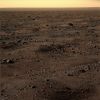
PHOE-SOL131-PIA11132.jpgDust Storm over Vastitas - Sol 131 (possible True Colors; credits: Lunexit)57 visitenessun commentoMareKromium
|
|

PHOE-SOL138-lg40031-40032-40033-2.jpgThe "Trenches" - Sol 138 (Superdefinition and possible True Colors; credits: Dr G. Barca)57 visitenessun commentoMareKromium
|
|
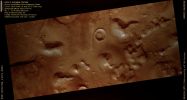
PSP_009708_2205_RED_abrowse-00.jpgHills in Acidalia Planitia (CTX Frame - Enhanced and Darkened Natural Colors; credits for the additional process. and color.: Dr Paolo C. Fienga - Lunexit Team)57 visiteThe hilly landscape visible in this observation may appear at first rather bleak, due to the pervasive soils of uniform brightness blanketing most of the area.
However, upon closer examination, the image reveals rocky outcrops at the top of some of the hills.
These rocks contain clues pointing to a watery past.MareKromium
|
|

ZZ-Mercury-Limb-CW0131772818A_web.jpgMercury, during MESSENGER's 2nd Fly-By (natural, but enhanced colors; credits: Lunexit)57 visiteDate Acquired: October 6, 2008
Image Mission Elapsed Time (MET): 131772818
Instrument: Wide Angle Camera (WAC) of the Mercury Dual Imaging System (MDIS)
WAC Filter: 1 (700 nanometers)
Resolution: 2,6 Km/pixel (about 1,6 miles/pixel)
Scale: The left side of the image is about 2700 Km tall (approx. 1700 miles)
Spacecraft Altitude: about 15.000 Km (approx. 9300 miles)
Of Interest: One week ago, no spacecraft had ever seen the majority of the surface visible in this image. Today, one week after MESSENGER’s successful second Mercury flyby, about 95% of Mercury’s surface has been viewed by spacecraft, resulting in nearly global spacecraft imaging coverage of Mercury’s surface for the first time. This WAC image is just one of 99 in a set of 3 columns by 3 rows by 11 color filters that is being combined into a color mosaic of the departing planet. Kuiper crater, with its bright ejecta rays, is visible on the left edge of the image and was seen by Mariner 10, but most of the terrain east of Kuiper was not. A newly imaged crater with an unusual halo of dark material is visible at about the same latitude but toward Mercury’s limb. The long, bright rays that can be seen extending across the surface emanate from a crater just north of this image.MareKromium
|
|

ZZ-Mercury-Limb-CN0131766454M.pngSigns of Aging... (natural colors; credits: Lunexit)57 visiteDate Acquired: October 6, 2008
Image Mission Elapsed Time (MET): 131766454
Instrument: Narrow Angle Camera (NAC) of the Mercury Dual Imaging System (MDIS)
Resolution: 420 meters/pixel (0,26 miles/pixel) on the right side of the image
Scale: The small crater superimposed on the long cliff is about 30 Km (approx. 19 miles) in diameter
Spacecraft Altitude: about 16.500 kilometers (approx. 10.300 miles)
Of Interest: This dramatic NAC image was acquired about 56 minutes prior to MESSENGER’s closest approach during the mission’s recent Mercury flyby, as the spacecraft approached the Planet's illuminated crescent. Prominent toward the horizon in this view of newly imaged terrain is a long cliff face. A small impact crater (about 30 Km, or approx. 19 miles, in diameter) overlies this lengthy scarp. The scarp extends for over 400 Km (about 250 miles) and likely represents a sign of aging unique to Mercury among the planets in the Solar System.
As time passes, the interior of a planet cools. However, the relative size of Mercury's central metallic core is larger than that of the other planets and hence has significantly affected the planet’s geologic evolution. The numerous long scarps on Mercury are believed to be the surface expression of faults formed in the rocks of Mercury's crust as the interior of the planet cooled and contracted. This contraction compressed the surface and thrust some sections of crust over others, creating long curving cliffs like the one shown here.MareKromium
|
|

ZT-Mercury-WAC_1x1_color.pngThe "True Colors" of Mercury?57 visite...Ed alla fine, anche la NASA (almeno per quanto riguarda la Missione MESSENGER) si è "arresa" alla Logica Generale dei Colori adottata - tempo fa - da Lunexit.
Citiamo (come da nostro Sondaggio) "I colori di un Mondo dipendono (o, se volete, stanno) dagli (negli) occhi di chi lo guarda".
Una considerazione che potrà anche sembrarVi stupida e scontata ma che, va detto per Onestà Intellettuale, è stata oggettivata e fatta propria da Lunar Explorer Italia da tempo ed attraverso l'articolo "True Colors", che potete trovare nell'archivio del nostro blog TrePlanets.
A nostro avviso, questa considerazione NASA (che riprende Lunexit) deve farci ancora una volta sentire fieri del Lavoro che svolgiamo e dei risultati che otteniamo.
Anche se, a parte Voi Lettori e noi STAFF, non sembra essersene accorto nessun altro (specie in Italia)...
Caption NASA:
Date Acquired: October 6, 2008
Image Mission Elapsed Time (MET): 131775256, 131775260, 131775264, 131775268
Instrument: Wide Angle Camera (WAC) of the Mercury Dual Imaging System (MDIS)
Resolution: 5 Km/pixel (about 3 miles/pixel)
Scale: Mercury’s diameter is roughly 4880 Km (approx. 3030 miles)
Spacecraft Altitude: about 27.000 Km (approx. 17.000 miles)
Of Interest: Given the WAC’s ability to take images through 11 narrow-band color filters, it is natural to wonder what does Mercury look like in “true” color such as would be seen by the human eye. However, creating such a natural color view is not as simple as it may seem. Shown here are four images of Mercury. The image in the top left is the previously released grayscale monochrome single WAC filter (430-nanometer) image; the remaining three images are three-color composites, produced by placing the same three WAC filter images with peak sensitivities at 480, 560, and 630 nanometers in the blue, green, and red channels, respectively. The differences between the color representations result from how the brightness and contrast of each individual WAC filter image was adjusted before it was combined into a color picture. In the top right view, all of the three filter images were stretched using the same brightness and contrast settings. In the bottom left picture, the brightness and contrast of each of the three filter images were determined independent of the others. In the bottom right, the brightness and contrast settings used in the upper right version were slightly adjusted to make each of the three filter images span a similar range of brightness and contrast values.
So which color representation is “correct” for Mercury? The answer to that would indeed DEPEND ON THE EYES OF THE BEHOLDER. Every individual sees color differently; the human eye has a range of sensitivities that vary from person to person, resulting in different perceptions of “true” color. In addition, the three MDIS filter bands are narrow, and light at wavelengths between their peaks is not detected, unlike the human eye. In general, in light visible to the human eye, Mercury’s surface shows only very subtle color variations, as seen in the three images here. However, when images from all 11 WAC filters are statistically compared and contrasted, these subtle color variations can be greatly enhanced, resulting in extremely colorful representations of Mercury’s surface.MareKromium
|
|

M-033-GB.JPGM-33: The "Triangulum Galaxy" (also "The Pinwheel") Spiral Galaxy in Triangulum57 visiteMareKromium
|
|

The_Helix_Nebula.JPGThe "Helix Nebula"57 visiteMareKromium
|
|

PHOE-SOL140-lg40164-40165-40166-2.jpgMicroscopic Vastitas - Sol 140 (Superdefinition and possible True Colors; credits: Dr G. Barca)57 visitenessun commentoMareKromium
|
|
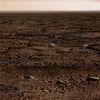
PHOE-SOL139-lg40083-40084-40086-2.jpgHorizon... - Sol 139 (possible True Colors; credits: Dr G. Barca)57 visitenessun commentoMareKromium
|
|

OPP-SOL372-3~0.jpgDeep-down in the trench... - Sol 372 (possible true-colors - version 2; credits: Dr G. Barca)57 visitenessun commentoMareKromium
|
|
| 25353 immagini su 2113 pagina(e) |
 |
|
|
|
|
1553 | |
|
|
|
|





