| Piú viste |

as16-114-18454.JPGAS 16-114-18454 - Lunar Rover58 visitenessun commentoMareKromium
|
|

Rhea-N00098758.jpgGibbous Rhea (natural colors; credits: Lunexit)58 visiteCaption NASA (relativa al frame di Sx):"Bright, wispy markings cover the Trailing Hemisphere of Rhea. The features are thought to be similar in nature to the bright, icy canyons seen on Dione.
North on Rhea is up and rotated 17° to the left.
The image was taken in visible green light with the Cassini spacecraft narrow-angle camera on July 22, 2007. The view was acquired at a distance of approx. 1,2 MKM (about 700.000 miles) from Rhea and at a Sun-Rhea-spacecraft, or phase, angle of 42°.
Image scale is roughly 7 Km (approx. 4 miles) per pixel".MareKromium
|
|

OPP-SOL1388-1F251413689EFF8800P1144R0M1-0.jpgWhat a View! - Sol 1388 (MULTISPECTRUM; credits: Lunexit)58 visitenessun commentoMareKromium
|
|

IC-1396~1.jpgIC 1396 - Emission Nebula (Mid IR)58 visite"...Vir vituperatur ultimo vituperio, quando nihil facit nisi propter se ipsum..."
(Averroè)
"...L'uomo è marcato dall'infamia più grande allorchè non fa nulla che non sia per se stesso..." (trad. libera)MareKromium
|
|

Saturn-PIA08396.jpgSquashed and Colourful (natural colors; credits: NASA)58 visiteCaption NASA:"Saturn in the Cassini era has proved to be an unexpectedly colorful place, compared to the browns and golds imaged by the two Voyager spacecraft. Saturn is headed toward Equinox in 2009, followed by Springtime in the Northern Hemisphere. Having a spacecraft in orbit while such changes occur will be of great benefit in scientists' quest to understand the atmospheres of the Giant Planets.
The Planet's oblate, or squashed, shape is clearly visible in this view.
The low-density Planet rotates so fast (in about 10,5 hours) that it flattens out slightly around its middle. The bluish tint of the Northern Latitudes is presumed to be a seasonal effect and will likely disappear entirely as the North receives increasingly greater amounts of sunlight.
Images taken using red, green and blue spectral filters were combined to create this natural color view.
The images were obtained with the Cassini spacecraft wide-angle camera on July 29, 2007 at a distance of approx. 3,1 MKM (about 2 MMs) from Saturn"MareKromium
|
|

as08-13-2267.jpgAS 08-13-2267 - Beautiful Vision (2 - MULTISPECTRUM; credits: Lunexit)58 visiteLatitude: approx. 13,5° South
Longitude: approx: 78,5° EastMareKromium
|
|
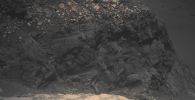
OPP-SOL1213-PIA10211-1.jpgCape St. Mary (natural - but highly darkened - colors; MULTISPECTRUM processing; credits: Lunexit)58 visiteCaption NASA:"Another of the best examples of spectacular cross-bedding in Victoria Crater are the outcrops at Cape St. Mary, which is an approx. 15 mt (45 foot) high promontory located along the Western Rim of Victoria Crater and near the beginning of the Rover's traverse around the rim. Like the Cape St. Vincent images, these Pancam Super-Resolution images have allowed scientists to discern that the rocks at Victoria Crater once represented a large dune field that migrated across this region.
This is a Mars Exploration Rover Opportunity PanCam image mosaic acquired on Sol 1213 (June 23, 2007), and was constructed from a mathematical combination of 32 different blue filter (480 nm) images".
Nota Lunexit: attraverso il darkening del frame originale e l'esaltazione dei contrasti, riteniamo di poter dire - con un ragionevole margine di certezza - che il "Paving" (di Victoria come di Endurance) ed il "Boulders Carpet" (tappeto di macigni) che paiono caratterizzare l'outer rim di questi Crateri, posseggono un'albedo molto più alta delle pareti dei Crateri stessi ed un colore molto più vicino all'argento/arancio, piuttosto che al giallo/cenere. Questi indizi, a nostro parere, sono il possibile indice di una matrice cristallina dei rilievi in questione (vetrificazione?); una matrice che potrebbe essere "responsabile" dei curiosi giochi di colore che i Crateri Victoria ed Endurance sembrano generare allorchè viene tentata la colorizzazione di frames ottenuti in particolari ore del giorno (e cioè con luci radenti e/o con luci perpendicolari al rim dei Crateri).MareKromium
|
|

OPP-SOL1167-PIA10210-1.jpgCape St. Vincent (natural - but sligthly darkened - colors; MULTISPECTRUM processing; credits: Lunexit)58 visiteCaption NASA:"The cliff in this image from Opportunity's PanCam is informally named Cape St. Vincent. It is a promontory approx. 12 mt (39 feet) tall on the Northern Rim of Victoria Crater, near the farthest point along the Rover's traverse around the rim. Layers seen in Cape St. Vincent have proven to be among the best examples of meter scale cross-bedding observed on Mars to date. Cross-bedding is a geologic term for rock layers which are inclined relative to the horizontal and which are indicative of ancient sand dune deposits. In order to get a better look at these outcrops, Pancam Super-Resolution (SR) imaging techniques were utilized.
SR is a type of imaging mode which acquires many pictures of the same target to reconstruct a digital image at a higher resolution than is native to the camera.
These SR images have allowed scientists to discern that the rocks at Victoria Crater once represented a large Dunefield, not unlike the Sahara desert on Earth, and that this Dunefield migrated with an ancient wind flowing from the North to the South across the Region. Other Rover chemical and mineral measurements have shown that many of the ancient sand dunes studied in Meridiani Planum were modified by surface and subsurface liquid water long ago.
This is a Mars Exploration Rover Opportunity PanCam image acquired on Sol 1167 (May 7, 2007), and was constructed from a mathematical combination of 16 different blue filter (480 nm) images".MareKromium
|
|

PSP_005788_1035_RED_abrowse.jpgRepeated Erosion and Deposition in the SPLD (MULTISPECTRUM; credits: Lunexit)58 visiteThis image of the SPLD shows evidence of multiple episodes of deposition and erosion near their base.
The SPLD, like the North Polar Layered Deposits (NPLD), are thought to contain a record of global climate changes on Mars. The surface of the outcrop shown here slopes generally toward the right. The layering is cut off by deposits that partly fill two broad valleys that were previously cut into the SPLD, probably by wind erosion. These more recent deposits appear to cover the flatter, upper part of the SPLD, and have also been eroded to expose layering with them.MareKromium
|
|

PSP_005418_1075_RED_abrowse-01.jpgDistorted Layers in the SPLD (extra-detail mgnf - MULTISPECTRUM; credits: Lunexit)58 visiteThis enhanced image (1,2 Km or 0.7 miles across) shows a section of the South Polar Layered Deposits, which are an accumulation of layers consisting mostly of water ice and dust. Perhaps their closest analog on Earth would be the Ice Caps of Greenland and Antarctica.
This image is particularly interesting because the layers are not flat-lying but rather appear "wavy" (---> ondeggianti).
This appearance could partly be an “illusion” due to erosion after the flat-lying layers were deposited. In that case, the wavy appearance is due to the fact that the layer edges are wavy, going into and out of the plane of the outcrop exposing the layers.
Alternatively, this waviness could be due to deformation of the layers folding caused by flow of the ice.
Here, the flow probably occurred long ago since current temperatures are too low to allow the ice to flow at a significant rate.MareKromium
|
|
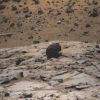
SOL1214-5.jpgMartian Balance - Sol 1214 (natural colors + MULTISPECTRUM; creduts: Dr Gianluigi Barca & Lunexit)58 visitenessun commentoMareKromium
|
|
OPP-SOL1395.jpgReddish dust, bluish pebbles... - Sol 1395 (natural colors + MULTISPECTRUM; credits: Dr Gianluigi Barca + Lunexit)58 visitenessun commentoMareKromium
|
|
| 25353 immagini su 2113 pagina(e) |
 |
|
|
|
|
1552 | |
|
|
|
|





