| Piú viste |
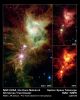
NGC-2264.jpgNGC 2264 - The "Snowflake Cluster" versus the "Cone Nebula"57 visiteCaption NASA:"Strange shapes and textures can be found in the neighborhood of the Cone Nebula.
These patterns result from the tumultuous unrest that accompanies the formation of the open cluster of stars known as NGC 2264, the Snowflake Cluster. To better understand this process, a detailed image of this Region was taken in two colors of infrared light by the orbiting Spitzer Space Telescope (SST). Bright stars from the Snowflake cluster dot the field. These stars soon heat up and destroy the gas and dust mountains in which they formed. One such dust mountain is the famous Cone Nebula, visible in the above image on the left, pointing toward a bright star near the center of the field.
The entire NGC 2264 Region is located about 2500 LY away toward the constellation of the Unicorn (Monoceros)".MareKromium
|
|

Dunes-Migrating_Dunes-PCF-LXTT.JPGUnnamed Southern Crater with Migrating Dunefield (Extremely Saturated and Enhanced Natural Colors; credits for the additional process. and color.: Dr Paolo C. Fienga - Lunexit Team)57 visitenessun commentoMareKromium
|
|

as15-96-13013.JPGAS 15-96-13013 - Autolycus Crater57 visiteImage Collection: 70mm Hasselblad
Mission: 15
Magazine: 96
Magazine Letter: Q
Latitude: 30,5° North
Longitude: 1,5° East
Film Type: SO-368
Film Width: 70 mm
Film Color: color
Feature(s): AUTOLYCUS CraterMareKromium
|
|

as15-93-12717.JPGAS 15-93-12717 - Gruithuisen "B"57 visiteImage Collection: 70mm Hasselblad
Mission: 15
Magazine: 93
Magazine Letter: P
Latitude: 36,0° North
Longitude: 40,5° West
Film Type: SO-368
Film Width: 70 mm
Film Color: color
Feature(s): GRUITHUISEN "B"MareKromium
|
|

as15-93-12704.JPGAS 15-93-12704 - The "Herschel" Legacy57 visiteImage Collection: 70mm Hasselblad
Mission: 15
Magazine: 93
Magazine Letter: P
Latitude: 38,0° North
Longitude: 33,0° West
Film Type: SO-368
Film Width: 70 mm
Film Color: color
Feature(s): HERSCHEL "C", HERSCHEL "U" and HERSCHEL "V"MareKromium
|
|

Saturn-PIA08936.jpgA Planetary "Smile", from Saturn...57 visiteCaption NASA:"Brooding Saturn seems to be missing its rings, but their shadows on the Planet betray their presence. The inner rings are in fact contained within this scene, but they are so tenuous as to be nearly invisible.
This view looks toward the unilluminated side of the Rings from about 52° above the Ring-Plane. Some motion is apparent in Saturn's clouds between the exposures used to create this color composite, as evidenced by the 'rainbow' effect seen here and there across the face of the Planet.
Images taken using red, green and blue spectral filters were combined to create this natural color view. The images were taken with the Cassini spacecraft wide-angle camera on April 5, 2007 at a distance of approx. 1,5 MKM (about 900.000 miles) from Saturn.
Image scale is roughly 84 Km (about 52 miles) per pixel".MareKromium
|
|
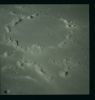
as16-119-19121.JPGAS 16-119-19121 - Crater Lubiniezky "E"57 visiteImage Collection: 70mm Hasselblad
Mission: 16
Magazine: 119
Magazine Letter: RR
Latitude: 16,3° South
Longitude: 27,2° West
Camera Altitude: 124 Km
Film Type: SO-368
Film Width: 70 mm
Film Color: color
Feature(s): LUBINIEZKY "E"MareKromium
|
|
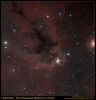
LDN-1622.jpgLDN 1622: Dark Nebula in Orion57 visite"...Licet sapere sine pompa et sine invidia..."
(Seneca)
"...E' cosa magnifica la Conoscenza che sia priva di arroganza e di invidia..."MareKromium
|
|
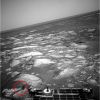
OPP-SOL1173-1N232320087EFF82__P1911L0M1-00.jpgThe "Martian Ace-of-Spades" (3) - context image - Sol 117357 visitenessun commentoMareKromium
|
|

as17-148-22630.JPGAS 17-148-22630 - Kubango River57 visitenessun commentoMareKromium
|
|

as17-148-22631.JPGAS 17-148-22631 - Grootfontain57 visitenessun commentoMareKromium
|
|

OPP-SOL1176-1M232582439EFF82__P2936M2M1.jpg"Newborn" Berries in the crack? - Sol 1176 (False Colors; credits: Lunexit)57 visiteNella crepa (crack) di questa roccia (che - presumiamo - potrebbe anche essere una porzione della Pavimentazione Marziana più prossima ad Opportunity) si distinguono piuttosto chiaramente dei Martian Berries. L'ipotesi tradizionale (e, sicuramente, la più accreditata) ci dice che si tratta di mini-berries (ossìa di sferule rocciose appena più grandi dei granelli di sabbia che potremmo trovare su qualsiasi spiaggia terrestre) i quali, trasportati/spinti dal vento, sono rimasti intrappolati nelle fenditure delle rocce e pavimentazioni vicine al margine di Victoria Crater. Sarà andata realmente così?
Forse. O forse no.
Ci piacerebbe capire, infatti, per poter rispondere adeguatamente, se questa crepa che vediamo è effettivamente una crepa, oppure se si tratta di una fenditura la quale congiunge la superficie di Marte ad un (probabilmente molto attivo, caldo e, forse, in parte vitale) sottosuolo.
Insomma, la nostra (esotica, lo ammettiamo) domanda è: questi "berries" si sono infilati nella crepa dall'esterno (ribadiamo, poichè spinti dal vento e/o da altre forze che appartengono all'ambiente marziano "aperto"), oppure essi stanno fuoriuscendo dall'interno della roccia?
Pensateci anche Voi...MareKromium
|
|
| 25353 immagini su 2113 pagina(e) |
 |
|
|
|
|
1549 | |
|
|
|
|





