| Piú viste |
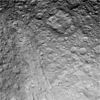
Tethys-N00040044.jpgTethys Fly-By (2)57 visiteSiamo a 67.000 Km circa dalla superficie di Tethys: le "striations", come le chiamano alla NASA sembrano caratterizzare questo ruvido panorama, fatto di centinaia di crateri, un grande canalone che 'taglia' il paesaggio dall'alto in basso (a Sx) e svariati mini-canali che, a loro volta, tagliano il canalone maggiore (nonchè tantissimi altri rilievi) e che, a ben vedere, non sembrano essere molto antichi.
Qualche striscia di crateri che segna il possibile impatto, sul suolo di Tethys, di corpi celesti già frammentati (comete?), si riesce a scorgere, in particolare sul quadrante alto a Sx del frame. Molto intrigante, poi, il bacino di forma vagamente quadrata (cerchiato in grigio), che contiene una serie di crateri dalle forme veramente curiose e che difficilmente possono essere ricondotte ad attività di impatto.
|
|
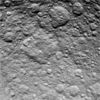
Tethys-N00040064.jpgTethys Fly-By (3)57 visiteLa stessa area di cui al frame precedente, ma ora siamo a circa 44.000 Km di distanza.
|
|
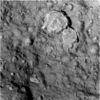
Tethys-N00040106.jpgTethys Fly-By (11)57 visiteSiamo a 18.700 Km da Tethys e questo frame, molto buono e di grande impatto, ci mostra un rilievo che a noi ricorda davvero moltissimo il Gula e/o anche il Maat Mons, su Venere.
Fantastichiamo? Verificate di persona: i due rilievi Venusiani sono stati inseriti nella Galleria dedicata a Venere.
Molto interessante, poi, in basso a Sx, il dettaglio di uno dei più grandi canyons che attraversano, un pò ovunque ed in tutte le direzioni, la superficie tormentatissima di Tethys.
|
|
OPP-SOL593-1P180820969EFF6200P2381L7M1.jpgErebus Crater (2) - Sol 59357 visitenessun commento
|
|
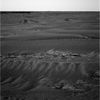
OPP-SOL593-1P180821044EFF6200P2381L7M1.jpgErebus Crater (3) - Sol 59357 visitenessun commento
|
|
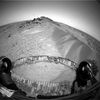
SOL616-2F181052876EFFAEOTP1214R0M1.jpgDigging & digging... - Sol 61657 visitenessun commento
|
|

Hyperion-N00040251.jpgHyperion (5)57 visiteIl Fly-By di Hyperion, compiutosi durante l'ultimo week-end di Settembre 2005 è, forse, il più spettacolare - in termini di immagini ottenute dalla Sonda Cassini - fra tutti quelli sino ad ora effettuati. In questa (lunga) sequenza di frames - abbiamo estratto quelli, a nostro parere, più belli e significativi fra i tanti inviati a Terra - passeremo accanto ad Hyperion e guarderemo "dentro" ai suoi stranissimi crateri "conici" i quali, allorchè saremo davvero vicini alla superficie di questo piccolo mondo, ci faranno intuire la presenza di "qualcosa" sul loro fondo. Qualcosa di scuro che, in qualche immagine, potrebbe ricordare un fluido. Che i crateri di Hyperion sìano pieni di idrocarburi? Tutto può essere, ma una sola cosa è certa: queste immagini sono fra le più belle mai arrivate sino alla Terra...
Adesso siamo a poco più di 51.000 Km da Hyperion.
|
|

Hyperion-N00040382.jpgHyperion (23)57 visiteSono solo 2555 i Km che dividono Cassini da questa zona di Hyperion la quale sembra stendersi fra un rilievo montuoso a Nord, due grandi crateri (da impatto, probabilmente) ad Est e, a Sud, un'area che sembra essere ricoperta da abbondantissimi depositi di questo materiale di colore scuro.
E' un vero peccato che Cassini non riesca a scrutare proprio "dentro" al grande cratere il cui bordo copre il lato Sud del frame...
|
|
SOL616-2P181094659EFFAEOTP2744L1M1.jpgThe "Dancers" (3) - Sol 61657 visitenessun commento
|
|
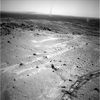
SOL616-2N181053592EFFAEOTP0607R0M1.jpgTennessee Valley (7) - Sol 61657 visiteAllora: quanto sarà alto, secondo Voi, il DD che vediamo circa al centro del frame e che "passeggia" sul suolo di Gusev Crater (diremmo a circa 2 Km di distanza dal Rover, o poco più)?
|
|
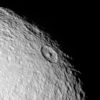
Tethys-PIA07735.jpgTelemachus and Teiresias57 visiteOriginal caption:"The Northern Polar Region of Saturn's moon Tethys seen in this Cassini flyby image is a ponderously ancient surface.
Above the prominent peaked crater Telemachus are the remnants of a very old crater (at the 10 o'clock position relative to Telemachus) named Teiresias. The ancient impact site is so badly overprinted and eroded by impact weathering and degradation that all that remains is a circular pattern of hummocks that mark where the old crater rim existed.
This view is centered on terrain at approximately 1,2° South Latitude and 342° West Longitude on Tethys. The view is rotated so that North is about 40° to the right.
This clear filter view was taken during Cassini's close approach to Tethys on Sept. 24, 2005. The image was acquired using the Cassini spacecraft narrow-angle camera at a distance of approximately 69,200 kilometers (43,000 miles) from Tethys and at a Sun-Tethys-spacecraft, or phase, angle of 21°. Image scale is 410 mt per pixel".
|
|

Tethys-PIA07737.jpgLandslides on Tethys (HR & false colors)57 visiteOriginal caption:"This false-color image, created with infrared, green and ultraviolet frames, reveals a wide variety of surface colors across this terrain. The presence of this variety at such small scales may indicate a mixture of different surface materials. Tethys was previously known to have color differences on its surface, especially on its trailing side, but this kind of color diversity is new to imaging scientists.
This view is centered on terrain at approx. 4,2° South Latitude and 357° West Longitude on Tethys. The view has been rotated so that North on Tethys is up.
The images for this view were obtained using the Cassini spacecraft narrow-angle camera at distances ranging from approx. 18.400 to 19.000 Km (about 11.400 to 11.800 miles) from Tethys and at a Sun-Tethys-spacecraft, or phase, angle of 17°. Image scale is 213 mt (700 feet) per pixel".
|
|
| 25353 immagini su 2113 pagina(e) |
 |
|
|
|
|
1535 | |
|
|
|
|





