| Piú viste |
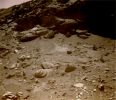
OPP-SOL1613-1N271377429EFF90DCP1935L0M2.jpgFrom inside Victoria - Sol 1613 (trichromatic version; credits: Lunexit)58 visitenessun commentoMareKromium
|
|
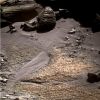
OPP-SOL1605-1.jpgFrom inside Victoria - Sol 1605 (True Colors; credits: Dr G. Barca)58 visitenessun commentoMareKromium
|
|

PHOEBE-PIA06064_modest.jpgPhoebe (Extremely Ehnanced and Saturated Natural Colors; credits: Lunexit Team)58 visitenessun commentoMareKromium
|
|
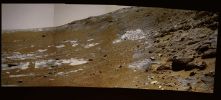
OPP-SOL1615-MF-LXT.jpgPanorama from inside Victoria - Sol 1615 (True Colors; credits: Dr M. Faccin & Lunexit)58 visitenessun commentoMareKromium
|
|

PHOEBE-PIA06068_modest.jpgPhoebe (Extremely Ehnanced and Saturated Natural Colors; credits: Lunexit Team)58 visitenessun commentoMareKromium
|
|
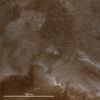
PSP_009138_2025_RED-01.jpgMineralogical Diversity in Nili Fossae (edm - natural colors; credits: Lunexit)58 visitenessun commentoMareKromium
|
|

OPP-SOL1623-1N272267018EFF90IKP0713R0M1.jpgFrom inside Victoria - Sol 1623 (trichromatic; credits: Lunexit)58 visitenessun commentoMareKromium
|
|
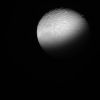
Rhea-N00118975.jpgRhea's Eclipse58 visiteCaption NASA:"N00118981.jpg was taken on August 19, 2008 and received on Earth August 21, 2008. The camera was pointing toward RHEA that, at the time, was approx. 455.227 Km away; the image was taken using the CL1 and CL2 filters. This image has not been validated or calibrated".MareKromium
|
|

North_Polar_Features-The_Erg-PCF-LXTT-3.jpgNorth Polar Erg (Absolute Natural Colors; credits for the additional process. and color.: Dr Paolo C. Fienga - Lunexit Team)58 visiteCaption NASA:"A vast Region of sand dunes is located on the margin of the North Polar Cap of Mars. This 'sea' of sand is call "Polar Erg".
Coord.: 80,5° North Lat. and 183,5° East Long.
MareKromium
|
|

ZP-Mercury-PIA10394.jpgFirst "Laser Altimetry" for Mercury58 visiteCaption NASA:"At top center is the first Laser Altimeter Profile of Mercury's topography, taken by MESSENGER's Mercury Laser Altimeter (MLA) instrument during the Spacecraft's flyby of Mercury on January 14, 2008.
At bottom center is the MLA ground projected onto a mosaic of radar images obtained by Harmon and others at the Arecibo Observatory in Puerto Rico.
The interval during which MESSENGER was sufficiently close to the Planet to be within measurement range of the MLA was when the Spacecraft was on the night side, so there are no corresponding images of this Region acquired by MESSENGER during this flyby; this Region was also unseen by Mariner 10.
The length of the profile is about 3200 Km (about 2000 miles), and the dynamic range in elevation across the profile is about 5 Km (about 3 miles). The profile sampled numerous craters and basins. The vertical exaggeration in the figure is equal to 105:1.
At top left is a photograph of the MLA flight unit".MareKromium
|
|

ZP-Mercury-PIA10381.jpgTopographic "Close-up"58 visiteCaption NASA:"A close-up of the Mercury Laser Altimeter (MLA) profile of Mercury acquired during MESSENGER's first Mercury flyby on January 14, 2008.
Comparison with an Arecibo radar image mosaic (bottom) provided by Harmon and co-workers shows that the two largest depressions are adjacent impact craters.
The craters have rim-to-rim diameters of 107 Km (left) and 122 Km (right).
The root mean square roughness of the floor the larger crater is ~35 m.
The vertical exaggeration in the figure is equal to 35:1".MareKromium
|
|

ZP-Mercury-PIA10380.jpgMercury's Internal Magnetic Field58 visiteCaption NASA:"This depiction of a simulated Mercury Magnetosphere shows representations of the distortions of the Planetary Magnetic Field Lines (blue) by the Solar Wind. Mariner 10 data showed the first evidence for a Magnetic Field at Mercury, an unexpected result. The equatorial pass of MESSENGER during quiet solar conditions provided better data than were available from Mariner 10.
MESSENGER saw an Internal Magnetic Field that is well described by the field from a dipole nearly aligned with the Planet's Spin Axis (dipole tilt ~ 10°). This geometry is similar to that observed by Mariner 10 during its first flyby. The field strength is weaker by about one third than that detected by Mariner 10 during its third (and last) flyby, owing primarily to the difference in trajectories (Mariner 10 flow directly over the magnetic pole where the field strength is greatest). When corrected for our best estimate for the external field, the MESSENGER observations and the two Mariner 10 passes are consistent with very similar solutions for the mean Planetary Magnetic Dipole. The Dipolar Field is consistent with an active electrical dynamo in which the magnetic field is produced by electrical currents flowing in an outer core of molten metal.
The observations do not yet allow us to identify whether a small secular variation may have occurred, determine higher order structure in the field, or assess whether crustal magnetic signatures may be present at other longitudes.
A combination of the next two flybys and the orbital phase of MESSENGER's mission will be required to sort out all of these possible effects".MareKromium
|
|
| 25353 immagini su 2113 pagina(e) |
 |
|
|
|
|
1532 | |
|
|
|
|





