| Piú viste |
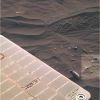
SOL960-2P211586798EDNAS00P2265L6M1.jpgExtremely anomalous Surface Feature: the "Seep" - Sol 960 (credits: Dr Marco Faccin)57 visitenessun commentoMareKromium
|
|
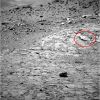
SOL1398-2P250473418EFFAW4ZP2430R1M1-1.jpgAnybody's under there? - Sol 1398 (credits: Dr Gianluigi Barca)57 visitenessun commentoMareKromium
|
|
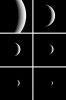
Venus-PIA10125.jpgFarewell to Venus57 visiteCaptio NASA:"After acquiring hundreds of HR images during close approach to Venus, the MESSENGER Spacecraft turned its wide-angle camera back to the Planet and acquired a departure sequence. These images provide a spectacular good-bye to the cloud-shrouded Planet while also providing valuable data to the camera calibration team. The MESSENGER Spacecraft was 60.688 Km (about 37.710 miles) from the Planet at the start of the sequence and 89.310 Km (approx. 55.495 miles) at the end. Initially, images were acquired at a rate of one of every 20', and then as Venus shrank the timing interval was increased to 60'.
The first image was taken on June 6, 2007, at 12:58 UTC (8:58 p.m. EDT on June 5), and the final image on June 7 at 02:18 UTC (10:18 p.m. EDT on June 6). During this 25 h, 20' period the Spacecraft traveled 833.234 Km (about 517.748 miles-more than twice the distance from the Earth to the Moon) with respect to Venus at an average speed of 9,13 Km-per-second (such as 5,67 miles-per-second).
These images represent the last view of Venus by the MESSENGER Spacecraft, but they also point toward the spacecraft's first encounter with Mercury in January 2008".MareKromium
|
|
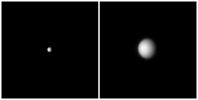
Venus-PIA10123.jpgApproaching Venus57 visiteCaption NASA:"On Oct. 24, 2006, the MESSENGER Spacecraft came within 2990 Km (such as about 1860 miles) of Venus during its second planetary encounter.
Twenty days before closest approach to Venus the MESSENGER Dual Imaging System snapped pictures of the Planet from a distance of about 16,5 MKM (about 10,3 MMs). Despite the low resolution of the image on the left, one can see that Venus is shrouded in a thick blanket of clouds that hides its surface.
The picture on the right is the same image expanded 4 times, clearly showing the dense Venusian cloud cover".MareKromium
|
|
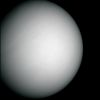
Venus-PIA10124.jpgVenus (natural colors; credits: NASA)57 visiteCaption NASA:"The Planet Venus is enshrouded by a global layer of clouds that obscures its surface to the MESSENGER Dual Imaging System (MDIS) cameras.
This single frame is part of a color sequence taken to help the MESSENGER team calibrate the camera in preparation for the spacecraft's first flyby of Mercury on January 14, 2008. Over the next several months the camera team will pore over the 614 images taken during this Venus encounter to ascertain color sensitivity and other optical properties of the instrument. These tasks address two key goals for the camera at Mercury: understanding surface color variations and their relation to compositional variations in the crust, and ensuring accurate cartographic placement of features on Mercury's surface.
Preliminary analysis of the Venus flyby images indicates that the cameras are healthy and will be ready for next January's close encounter with Mercury".MareKromium
|
|
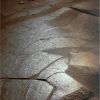
OPP-SOL1385-1P251136149EFF8800P2407R1M1.jpgEffects of dusty "color/filters" on the "color vision" (2 - MULTISPECTRUM; credits: Lunexit)57 visitenessun commentoMareKromium
|
|
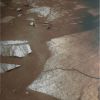
OPP-SOL1385-1P251136098EFF8800P2407L2M1.jpgEffects of dusty "color/filters" on the "color vision" (1 - MULTISPECTRUM; credits: Lunexit)57 visitenessun commentoMareKromium
|
|

Ophir_Chasma-IR-20071219a.jpgLandslide in Ophir Chasma (IR) - coloring: Lunexit57 visiteCaption NASA: “The large landslide that can be seen on the right side (Dx) of this InfraRed (IR) image is located in Ophir Chasma. Although the resolution is less than the one that can be obtained from an image taken in Visible Light (VL), the large size of the feature is more completely covered by the wider frame size of the THEMIS infrared camera”.
Nota Lunexit: un esempio concreto di caption NASA "non sense".
Perchè vengono scattate le fotografie in IR? Beh – e questo lo sanno anche i bambini e gli “Scienziati da Salotto”… – non certo per avere una "qualità visiva migliore" (in senso stretto) del frame, né per "coprire meglio la superficie ripresa" (in termini di area inquadrabile).
A tal ultimo proposito Vi rammentiamo che il quantum di superficie inquadrabile dipende, in buona sostanza, non solo e non tanto dall'estensione del rilievo che interessa riprendere (attenzione: per questo tipo di frames si parla di rilievi aventi dimensioni comprese fra i 4 ed gli 8 Km di estensione in lunghezza ed i 2/3 Km di estensione in larghezza, e NON di rilievi grandi quanto possono esserlo dei continenti...), né dal tipo di "imaging strip" che la camera dell'Orbiter può ottenere.
Il quantum di cui sopra dipende, essenzialmente, DALL'ALTEZZA da cui la ripresa viene effettuata e dalla capacità di magnificazione della camera che riprende (ed ecco la semplicissima regola generale: per coprire una maggiore superficie con un singolo scatto, occorre aumentare l'altezza dell'Orbiter rispetto al suolo e ridurre la capacità di magnificazione della camera che riprende).
Tutto ciò premesso, e quindi tornando al quesito originale, Vi ricordiamo che le riprese orbitali in IR si fanno, di regola, di notte (o, comunque, in ore nelle quali la luminosità della superficie e bassissima e/o tendente a zero) e per verificare se un certo rilievo EMETTE o RITIENE (e, se SI, QUANTO) CALORE.
La spiegazione NASA, nei termini in cui viene esposta nella riportata caption, quindi – a nostro umile parere –, è totalmente priva di significato.
Anzi, peggio: è fuorviante.
Ed ora provate a rileggerla...
MareKromium
|
|

PSP_005388_1975_RED_abrowse-01.jpgPang Boche Crater (EDM; False Colors; credits for the additional process.: Dr Paolo C. Fienga - Lunexit Team)57 visiteThe interior of Pang Boche Crater contains material that likely slumped off the walls during late stages of its formation. The north wall of the crater has material that has not slumped to the floor, instead forming a terrace.
Also noteworthy is the abundance of small craters that surround, but do not occur within, Pang Boche. These are mostly Secondary Craters that formed when ejecta from an impact hit the surface. If the small craters were Primary Craters (formed from an impactor from space), then they would be expected to be within Pang Boche as well. Secondaries commonly occur in clumps as seen in this extra-detail mgnf (which is approx. 2 km across).
The strong clustering indicates that these craters are Secondaries.MareKromium
|
|
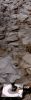
SOL1401-4.jpgLayered Rocky Paving near Home Plate - Sol 1401 (MULTISPECTRUM; credits: Dr Gianluigi Barca & Lunexit)57 visitenessun commentoMareKromium
|
|

as16-114-18454.JPGAS 16-114-18454 - Lunar Rover57 visitenessun commentoMareKromium
|
|

Rhea-N00098758.jpgGibbous Rhea (natural colors; credits: Lunexit)57 visiteCaption NASA (relativa al frame di Sx):"Bright, wispy markings cover the Trailing Hemisphere of Rhea. The features are thought to be similar in nature to the bright, icy canyons seen on Dione.
North on Rhea is up and rotated 17° to the left.
The image was taken in visible green light with the Cassini spacecraft narrow-angle camera on July 22, 2007. The view was acquired at a distance of approx. 1,2 MKM (about 700.000 miles) from Rhea and at a Sun-Rhea-spacecraft, or phase, angle of 42°.
Image scale is roughly 7 Km (approx. 4 miles) per pixel".MareKromium
|
|
| 25353 immagini su 2113 pagina(e) |
 |
|
|
|
|
1528 | |
|
|
|
|





